
2026 Best Outdoor Circuit Breakers for Global Buyers?

Choosing the right Outdoor Circuit Breaker in 2026 requires more than comparing prices or interrupting ratings. Global buyers face different climates, grid conditions, installation practices, and certification requirements. A breaker installed beside a dusty solar inverter needs different protection from one mounted near a saltwater harbor. Small details matter.

The strongest models combine reliable fault interruption, UV-resistant housings, corrosion protection, and clear mechanical status indicators. Buyers should examine rated voltage, short-circuit capacity, operating temperature, altitude limits, and enclosure protection. IEC, UL, and regional approvals also deserve careful checking. A familiar logo does not guarantee suitability for every project.

Electrical safety specialist John Cadick reminds buyers, “Electrical safety is not a spectator sport.” His warning fits outdoor equipment especially well. A poorly selected breaker can overheat inside a sealed cabinet, trip during harmless surges, or fail when a serious fault occurs. Field experience shows that installation quality matters as much as the product label. Cable sizing, terminal torque, ventilation, and maintenance access can change real-world performance.

This guide reviews the 2026 best Outdoor Circuit Breaker options for global buyers. It considers industrial plants, commercial buildings, renewable-energy systems, and remote utility sites. The comparison will not pretend that one model suits everyone. That would be convenient, but inaccurate. Buyers should confirm local regulations and consult qualified electrical professionals before ordering. Some product data may also change during the year, so verification remains necessary.
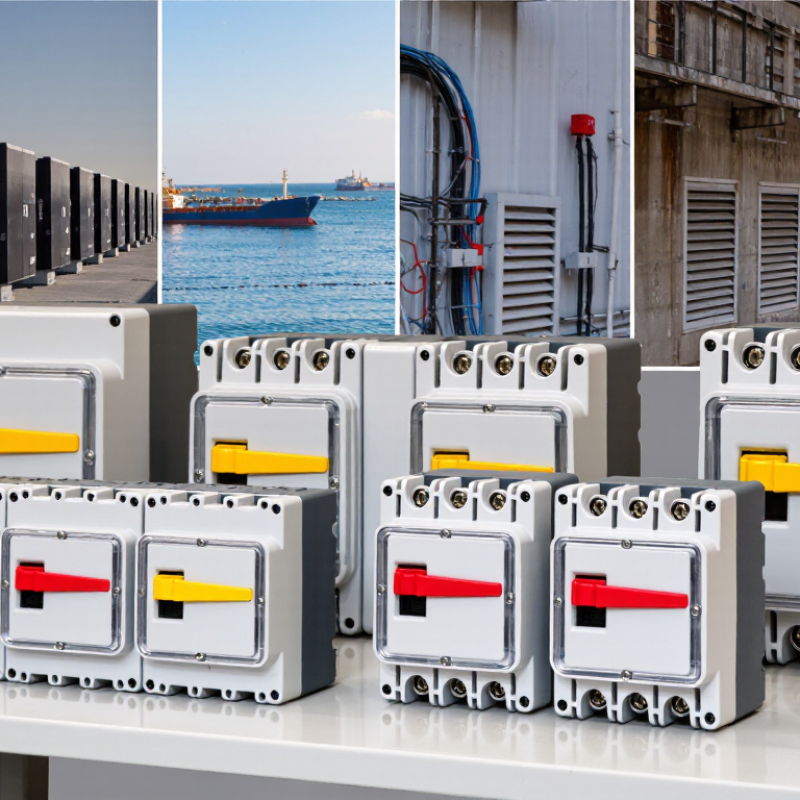
2026 Best Outdoor Circuit Breakers for Global Buyers?

What Are Outdoor Circuit Breakers and Why Do Global Buyers Need Them?

2026 Best Outdoor Circuit Breakers for Global Buyers?

Outdoor circuit breakers are switching and protection devices installed outside buildings. They interrupt fault currents, isolate equipment, and protect circuits from overloads and short circuits. Their sealed enclosures resist rain, dust, sunlight, and temperature changes. Some designs also manage condensation and salt exposure near coastal sites.

The need is expanding. IRENA’s Renewable Capacity Statistics 2025 reports 585 gigawatts of renewable capacity were added worldwide in 2024. Solar farms, wind projects, utility substations, and industrial facilities therefore require dependable outdoor protection. The IEA’s Electricity 2024 report forecasts global electricity demand will grow by about 3.4% annually from 2024 to 2026. More outdoor equipment means more switching points and higher fault-management demands.

Global buyers should check rated voltage, short-circuit capacity, operating temperature, altitude, enclosure protection, and corrosion resistance. IEC 62271 requirements can support medium-voltage equipment selection, but local certification may still apply. An IP rating is not a complete weather guarantee. Installation quality matters.

I would not approve a purchase from a datasheet alone. Buyers should request routine-test records, temperature-rise data, mechanical endurance results, and clear maintenance instructions. A breaker suitable for a dry inland substation may perform poorly beside a humid shoreline. Even delivery conditions deserve attention. Long storage, vibration, and weak packaging can quietly damage seals before commissioning.

Which Types of Outdoor Circuit Breakers Are Available in 2026?

Outdoor circuit breakers in 2026 fall into several practical categories. Low-voltage installations commonly use thermal-magnetic molded-case breakers, combining overload and short-circuit protection. Air circuit breakers serve larger facilities, where adjustable trip settings and easier maintenance matter. Medium-voltage outdoor networks often use vacuum circuit breakers, especially in compact substations and feeder panels. Their interrupters avoid oil handling and usually require limited routine servicing.

Automatic reclosers are another important type. They detect temporary faults, open the circuit, and close it again after a programmed delay. This suits overhead distribution lines exposed to branches, birds, and lightning. Outdoor air-insulated switchgear provides visible clearances and simpler inspection. Gas-insulated designs save space, but buyers should examine gas management, service procedures, and environmental reporting. The IEC 62271 series defines key requirements for high-voltage switchgear, including insulation, testing, and mechanical performance.

Selection should match voltage, fault current, altitude, humidity, and maintenance access. The IEA’s Electricity Grids and Secure Energy Transitions report estimates that over 80 million kilometres of grids must be added or refurbished globally by 2040. That scale increases demand for reliable, field-serviceable protection equipment. Still, no single breaker wins everywhere. I would not specify a vacuum unit for every coastal site without checking condensation and enclosure design. A neglected detail can become the expensive detail. Engineers should verify type-test evidence, ingress protection, local certification, spare-part availability, and switching duty before purchase.

2026 Best Outdoor Circuit Breakers for Global Buyers? - Which Types of Outdoor Circuit Breakers Are Available in 2026?

Outdoor Circuit Breaker Type Typical Voltage Class Typical Current Range Typical Interrupting or Fault-Clearing Capability Outdoor Suitability Common Applications Main Advantages Key Selection Considerations Relevant International Standards
Outdoor MCB in a Weatherproof Enclosure 230/400 V AC Typically 0.5–125 A Typically 4.5–15 kA, depending on the model and installation system Enclosure required
Use a UV-resistant, sealed enclosure, commonly IP54–IP65.
Outdoor lighting, small pumps, control panels, residential auxiliary circuits and small commercial loads Compact, economical, easy to install and suitable for branch-circuit protection Confirm ambient-temperature derating, moisture resistance, short-circuit rating, pole configuration and compatibility with the enclosure IEC 60898-1; IEC 60529 for enclosure ingress protection
Outdoor MCCB Up to approximately 1,000 V AC Typically 16–1,600 A Typically 18–100 kA at low voltage, depending on frame size and voltage Enclosure required
Suitable for outdoor switchboards with corrosion, UV and condensation protection.
Industrial feeders, photovoltaic combiner systems, motor protection, generators and commercial distribution Adjustable protection, higher fault ratings and better selectivity than most MCBs Check trip-unit type, interrupting rating at the operating voltage, thermal derating, coordination and enclosure ventilation IEC 60947-2; IEC 60529 for enclosure ingress protection
Outdoor ACB Up to approximately 1,000 V AC Typically 630–6,300 A Typically 42–150 kA at low voltage, depending on the rating and test voltage Outdoor switchgear
Normally installed inside a weatherproof, ventilated switchboard or kiosk.
Main incoming protection, utility substations, large industrial plants, data centers and generator paralleling systems High continuous-current capacity, advanced protection, measurement and communication options Consider arc-flash protection, draw-out or fixed construction, short-time withstand rating, maintenance access and climate control IEC 60947-2; IEC 61439 for low-voltage assemblies
Outdoor Vacuum Circuit Breaker Typically 3.6–40.5 kV Typically 630–3,150 A Common short-circuit interruption ratings are approximately 16–40 kA at medium voltage Purpose-built outdoor models
Usually supplied in sealed or weather-resistant pole-mounted or ground-mounted assemblies.
Medium-voltage distribution feeders, substations, transformers, motors and renewable-energy collection systems No SF₆ gas, low contact wear, long mechanical life and good performance for frequent operation Verify insulation level, altitude correction, operating mechanism, anti-condensation heating, phase spacing and local wildlife protection IEC 62271-100; IEC 62271-1; IEC 60529 where an enclosure rating applies
Automatic Circuit Recloser Typically 11–38 kV Typically 200–1,200 A Common fault-interruption ratings are approximately 8–25 kA, depending on voltage and design Designed for outdoor use
Mounted on poles or compact substation structures with weather-resistant controls.
Overhead distribution feeders, rural networks, agricultural areas, storm-prone circuits and utility automation Automatically restores service after temporary faults and reduces outage duration Check trip and reclose sequences, minimum operating temperature, control-power supply, communication protocol and coordination with fuses and upstream protection IEC 62271-111; IEEE C37.60
Outdoor SF₆ Circuit Breaker Typically 72.5–800 kV Typically 1,250–4,000 A Common short-circuit ratings are approximately 31.5–63 kA for high-voltage applications Purpose-built outdoor model
Installed in high-voltage substations with sealed gas compartments and monitoring systems.
Transmission substations, high-voltage lines, transformers and grid interconnection points High dielectric strength, compact substation layout and reliable interruption at high voltage Evaluate gas-leak monitoring, SF₆ handling requirements, environmental regulations, seismic rating, service support and end-of-life gas recovery IEC 62271-100; IEC 62271-1; IEC 62271-203 for gas-insulated equipment where applicable
Outdoor Minimum-Oil Circuit Breaker Historically approximately 3.6–145 kV Commonly 400–3,000 A Varies widely; many legacy units were rated approximately 12.5–40 kA Legacy technology
Requires a suitable oil containment and fire-safety arrangement.
Older substations and replacement-in-kind projects where existing infrastructure is retained Established operating principle and compatibility with some legacy installations Check oil condition, fire risk, environmental containment, spare parts availability and whether a vacuum replacement is more practical Applicable historical editions of IEC 62271-100 and local utility specifications
Outdoor DC Circuit Breaker Typically 250–1,500 V DC Typically 10–1,600 A Common ratings range from approximately 5–100 kA DC, depending on voltage, polarity and circuit time constant Application-specific
Requires a weatherproof enclosure and a breaker specifically tested for DC interruption.
Battery energy storage, solar photovoltaic systems, electric-vehicle infrastructure, telecom power and industrial DC networks Designed to interrupt DC current without relying on AC current zero crossings Confirm DC voltage per pole, polarity, series-pole arrangement, battery fault current, isolation requirements and arc-energy performance IEC 60947-2; IEC 60947-3 where switching and isolation functions apply; IEC 60529 for enclosures
Buyer note: The values shown are typical market ranges for 2026 selection work, not universal ratings. Final selection should be based on the system voltage, prospective short-circuit current, load current, altitude, ambient temperature, pollution level, enclosure rating, applicable grid code and certification requirements in the destination country.

How to Compare Outdoor Circuit Breakers for Different Climates

Outdoor circuit breakers must match the climate, not just the voltage and current rating. A humid coastal site needs strong corrosion resistance and sealed cable entries. Salt spray can attack terminals within months. Look for tested enclosure ratings, such as IP or NEMA classifications, and verify the test conditions.

Hot regions require thermal derating because high ambient temperatures reduce breaker capacity. A panel exposed to direct sunlight can become much hotter than the surrounding air. UV-stabilized materials help prevent cracking and brittle covers. In cold climates, check the operating range, condensation control, and gasket flexibility. Frost can damage a poorly fitted seal. Very dusty areas may need tighter enclosures and carefully protected ventilation paths.

Altitude also matters because thinner air reduces cooling and can affect interruption performance. Request temperature-rise data, short-circuit ratings, and installation instructions from the manufacturer. Independent test reports are more useful than vague marketing claims. A common mistake is treating a high IP rating as complete protection. It does not prove resistance to salt, UV exposure, or freezing cycles. My comparison would remain provisional until local weather data, mounting position, and maintenance access are reviewed. A shaded wall-mounted enclosure may outperform a stronger box installed under constant sun. Check the terminals after installation, especially before the first wet season. Small installation details often decide long-term reliability.

What Standards and Safety Features Should Buyers Check?

Outdoor breaker selection begins with standards, not catalog photos. IEC 60947-2 covers low-voltage circuit-breaker performance and testing. For North American projects, UL 489 is a common reference for molded-case breakers. Check rated voltage, continuous current, short-circuit interrupting rating, and trip curve. The rating must exceed the prospective fault current at the installation point. It sounds basic. Yet site calculations are often copied from older drawings.

Weather exposure changes the risk. IEC 60529 IP ratings describe enclosure resistance to dust and water, but IP ratings do not prove UV or salt-spray durability. Ask for temperature derating tables, corrosion testing, terminal torque values, and enclosure material data. Outdoor equipment may face condensation at dawn and 45°C cabinets by afternoon. Select residual-current or ground-fault protection where local rules require it. NFPA’s report Home Fires Involving Electrical Distribution and Lighting Equipment, 2016–2020, recorded an estimated 32,950 U.S. home fires annually involving this equipment, with about 470 deaths. Protection is not a paperwork detail.

Global buyers should verify certification scope, not just a printed logo. Confirm whether testing covers the complete assembly, accessories, and intended mounting position. Compare IEC, UL, or national requirements with the project authority having jurisdiction. Ask for accredited laboratory reports and traceable production records. A breaker that passes indoors may fail outdoors. I would also inspect cable glands, drainage paths, and locked handles before purchase. IP66 alone cannot guarantee long service life. That assumption deserves challenge.

2026 Best Outdoor Circuit Breakers for Global Buyers

IEC 60898-1 Instantaneous Tripping Ranges

For IEC 60898-1 miniature circuit breakers, Type B devices typically trip instantaneously at 3–5 times rated current (In), Type C at 5–10 times In, and Type D at 10–20 times In. Type B is generally suited to low inrush loads, while Type C and Type D are intended for progressively higher starting currents.

Outdoor buyers should also verify the required breaking capacity, rated voltage, pole configuration, temperature derating, terminal protection, and an enclosure rating under IEC 60529. IPX4 indicates protection against splashing water, IPX5 against water jets, IPX6 against powerful water jets, IPX7 against temporary immersion, and IPX8 against continuous immersion under specified conditions. Local rules may also require residual-current protection.

Reference framework: IEC 60898-1 for household and similar circuit breakers; IEC 60529 for IP enclosure protection. Trip ranges are characteristic bands, not guaranteed operating times for every installation.

How to Choose the Best Outdoor Circuit Breaker Supplier Worldwide?

When global buyers compare outdoor circuit breaker suppliers, the cheapest quotation rarely tells the full story.

Start with the installation environment. A coastal cabinet faces salt mist, while a mountain site faces freezing nights and strong sunlight. Ask for the operating temperature range, enclosure rating, corrosion protection, and ultraviolet resistance. Small details matter. A supplier should explain how the breaker handles moisture, dust, vibration, and repeated switching. Product photographs are useful, but they are not evidence.

Request current datasheets, routine test records, and traceable production information. Check rated voltage, current, short-circuit breaking capacity, pole configuration, terminal design, and compatible accessories. The supplier must identify which international or regional standards apply to your project, then provide documents matching the exact model. Generic certificates can mislead buyers. Independent laboratory reports add confidence, especially when they show test conditions and sample references. Ask how failed units are isolated, repaired, and recorded. Reliable suppliers usually answer clearly, without hiding behind sales language.

Communication is another practical test. Can the supplier respond accurately across time zones? Can engineers review drawings before production? Confirm lead times, spare parts, packaging, warranty limits, and after-sales support in writing. I have seen projects delayed because a “standard” breaker had different terminals. That mistake was avoidable. No checklist is perfect. Still, a factory audit, sample inspection, and witnessed testing can expose weak processes before shipment. Choose a supplier willing to discuss limitations, not one promising that every environment is easy.

Product Added

Go to Quote Request Form

Continue Product Search