
Cargo Bike designs are changing quickly, but the best choice still depends on the work it must do. A parent carrying two children may value a stable frame, secure seats, and room for a rain cover. A small business might need a long, low cargo box for groceries or parcels. Fit matters. The bicycle should suit its rider, route, and parking space—not just its load rating.
This guide introduces the main cargo bike types global buyers are likely to compare in 2026, including front-loader, longtail, and compact utility models. Each layout handles weight differently. Front-loaders make cargo easy to see and reach, while longtails often feel closer to a conventional bicycle. Compact models can suit tighter storage areas, though their carrying capacity may be limited. These are useful distinctions, not guarantees; frame geometry and component quality vary between brands.
When evaluating a model, check its stated payload, braking system, tire size, service access, and battery specifications if it has electric assistance. Ask how those details fit your actual route. A steep street, rough pavement, or frequent stops can change what feels practical. Real routes differ. Published range estimates may not match daily use, especially with heavy loads or cold weather. I would not choose from a specification sheet alone. A test ride with representative cargo can reveal awkward steering, difficult loading, or a frame that feels less stable than expected. There are trade-offs, and some are easy to overlook. The sections ahead offer a grounded starting point for comparing options and asking better questions before purchase.
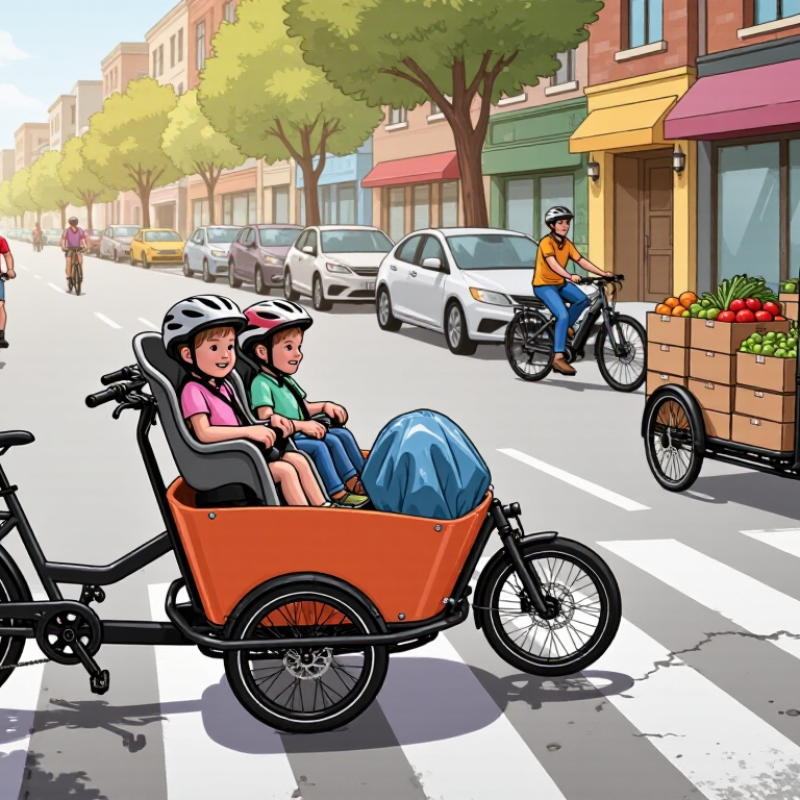
Cargo-bike types solve different loading problems. A longtail extends the rear rack, keeping the bicycle relatively narrow for errands, child transport, and small parcel runs. Its load sits behind the rider, so heavy cargo can affect balance. A Long John places a low platform between the handlebars and front wheel. The rider can see the load, but the longer frame needs room to turn. A front box is a cargo body, not a separate chassis: it may be mounted on a Long John or a three-wheel design. Open boxes suit bulky parcels; covered ones help shield goods from rain. Small details matter.
Three-wheel designs stand steadily at stops and can carry wide, heavy loads, but their extra width complicates narrow paths and tight corners. The OECD International Transport Forum’s 2020 report on urban freight highlights the emissions and congestion burden of city deliveries. A 2020 Possible and University of Westminster analysis of London operations estimated cargo-bike deliveries could cut emissions by up to 90% compared with diesel vans. That figure depends on route, load, and depot distance; it is not a universal result. For buyers, measure the actual doorway, ramp, and turning space before choosing capacity. A larger box looks useful, but empty volume earns nothing.
For global buyers comparing 2026 cargo bike types, payload claims need context. DIN 79010:2020 specifies requirements and test methods for transport and cargo bicycles. Its load-related checks help assess whether a frame, fork, and braking system can handle the manufacturer’s declared limits. A high payload figure alone is not proof of safe handling. A loaded front box can shift steering feel; a rear-heavy longtail may respond differently under braking.
The European Cyclists’ Federation’s Cyclelogistics research estimated that about 51% of motorized goods trips in European cities could potentially shift to bicycles. That is an opportunity, not a promise that every route or bike will suit the task. Buyers should compare the rated gross mass, usable load area, and test documentation for the exact configuration. A test report still cannot reproduce every wet curb or rough delivery lane. Small details matter.
Tips: Ask for the DIN 79010 test scope and the tested loading configuration. Check whether the stated limit includes rider, accessories, and cargo. For a practical trial, load the bike with secured boxes, then test a slow turn and controlled stop on a closed, level area. One detail is easy to miss: accessories can change the bike’s total mass and load distribution.
For global cargo-bike buyers, the 250 W and 25 km/h figures describe a specific pedal-assist category, not every electric cargo bike. Under EN 15194, continuous rated motor power is limited to 250 W; assistance must taper and stop at 25 km/h, or when pedaling stops. The standard is a useful specification baseline, but buyers should confirm the rules in each destination market. One number can change the classification.
CONEBI’s 2024 European Bicycle Industry and Market Profile reports about 5.1 million e-bikes sold in Europe in 2023, down from 5.5 million in 2022. That broad market figure does not isolate cargo models, but it shows how common e-assist has become. For a loaded bike, test starts on a ramp, braking with cargo, and assistance cut-off near 25 km/h. A motor’s wattage alone says little about hill performance; gearing, battery condition, load, and control tuning matter too. Check the label. A tidy specification sheet cannot reveal every awkward low-speed turn, and I would not treat compliance figures as a substitute for a real load test.
For EPAC-style electric assistance covered by EN 15194, the key limits are a maximum continuous rated power of 250 W and assistance that cuts off at 25 km/h. These are separate measurements, shown on their own vertical scales; cargo-bike configuration does not change the limits shown here.
Choosing a cargo bike starts with the job, not the frame style. For family transport, a long-tail model can carry children behind the rider, while a box-style bike keeps smaller passengers low and contained. Check seat belts, footrests, the parking stand, and the total load rating before comparing accessories. Measure the doorway. A loaded bike can be awkward to store.
For business use, match the cargo area to the goods. A front box suits frequent loading of crates or tools, while a rear platform may work better for bulky, irregular items. Check how the load affects steering and braking on a test ride. A bigger box looks useful, but it may be cumbersome on narrow streets. That trade-off is easy to underestimate.
For last-mile delivery, prioritize easy handling, reliable brakes, and practical range under a realistic load. Hills, cold weather, and repeated stops can reduce battery range, so do not rely only on a maker’s best-case figure. Ask about local servicing and replacement parts before buying internationally. I would also test the bike over the roughest section of the planned route; a smooth showroom floor tells you little.
| Cargo Bike Type | Best-Fit Use Case | Typical Configuration | Key Advantages | Points to Check Before Buying |
|---|---|---|---|---|
| Longtail | Family transport, school runs, and mixed everyday errands | Two wheels with an extended rear rack; compatible with child seats, passenger pads, footrests, or panniers, depending on the frame design. | Handles much like a conventional bicycle and is generally narrower and easier to park than a box-style cargo bike. | Confirm the permitted rear-rack load, passenger-seat compatibility, wheel and frame limits, and whether the bike remains manageable when fully loaded. |
| Front-loader / box bike | Carrying children, groceries, or business goods that need a dedicated front cargo area | Two wheels with a load box or platform ahead of the rider; some designs use steering linkages to turn the front wheel or wheels. | The cargo is easy to access and can be kept in view. A box can provide a defined space for passengers or goods. | Check box dimensions, weather protection, permitted cargo and passenger loads, turning behavior, storage space, and overall length. |
| Cargo tricycle | Business transport, market deliveries, and riders who value a stable parked loading platform | Three wheels, commonly with a front cargo box or rear cargo platform; steering and turning layouts vary. | Can stand without a kickstand and offers a broad cargo platform. A practical option for frequent stops and loading. | Compare turning radius, width, curb and doorway access, braking performance, and stability on uneven or sloped surfaces. Three wheels do not eliminate the need to balance safely while moving. |
| Midtail / compact cargo bike | Urban commuting with occasional passenger or cargo carrying | Two wheels with a moderately extended rear rack or reinforced frame, usually shorter than a longtail. | Offers more carrying flexibility than a standard bicycle while remaining relatively compact for storage and everyday riding. | Check the usable rack length, approved accessories, total weight rating, and whether the intended load fits without interfering with pedaling or steering. |
| Commercial delivery cargo bike | Last-mile parcel, food, or local business deliveries | May use a longtail, front-loader, tricycle, or purpose-built cargo frame, with a lockable or weather-resistant cargo compartment. | Can support frequent urban stops and carry purpose-specific equipment or delivery containers. The best layout depends on route and parcel size. | Match the cargo area to actual shipment dimensions. Assess loading access, security, braking, serviceability, battery range under load, and local road-use rules. |
Buyer note: Cargo-bike capacity, dimensions, passenger approval, and equipment vary by model. Check the manufacturer's rated limits and local regulations before carrying passengers or commercial loads.
Compare Global-Buying Factors: Payload, Battery, Service, and Local Rules
Longtail bikes carry passengers or bulky bags behind the rider, while front-loaders place a box between the handlebars and front wheel. Compact utility models suit tighter storage spaces and lighter daily loads. Compare the rated payload, including the rider, passengers, accessories, and cargo. A heavy load can change braking distance and handling. The largest box is not always the most useful choice.
Battery capacity matters, but advertised range alone can mislead. Hills, cold weather, stop-start traffic, and a full load all affect how far a bike travels. Check charging needs and whether replacement batteries and compatible parts are available near the delivery location.
Service access matters too: ask who handles routine repairs, how warranty claims work, and whether common parts can be sourced locally. A spreadsheet may still miss the inconvenience of a long wait for a small component.
Tips: Before ordering, check local rules for assisted-bike speed, permitted dimensions, passenger use, lighting, and helmet requirements. These vary by location, so confirm details with the relevant local authority. Measure the intended parking space, too. It sounds minor, but a wide front-loader may not fit through a narrow gate.