2026 Top Rod Breakdown Machines for Global Buyers
For global buyers, selecting a Rod Breakdown Machine in 2026 is not simply a price comparison. The right line must match rod material, inlet diameter, finished wire size, output targets, and local power conditions. Copper and aluminum behave differently under drawing pressure. A machine that performs smoothly with one alloy may create surface marks with another. Small details matter. Die alignment, capstan cooling, lubrication control, and take-up tension can influence scrap, energy use, and maintenance time.
This guide introduces leading machine types and explains how buyers can compare them with greater confidence. It considers single-wire and multi-wire configurations, automatic controls, motor efficiency, safety guarding, spare-part access, and commissioning support. Real purchasing decisions also require evidence. Ask for technical drawings, verified test results, reference installations, warranty terms, and a clear list of included components. Supplier claims deserve checking. A polished brochure cannot replace a factory acceptance test or a conversation with operators who use the equipment daily.
The 2026 market is changing, although not always predictably. Digital monitoring may improve visibility, but it cannot fix poor die selection or weak maintenance habits. Total cost should include installation, training, tooling, downtime, and future upgrades. Buyers should also confirm applicable electrical, workplace safety, and import requirements in their destination country. No ranking fits every plant. That is the uncomfortable part. The best choice depends on measurable production needs, credible service, and honest evaluation after the first quotation.
What Rod Breakdown Machines Are and How They Work
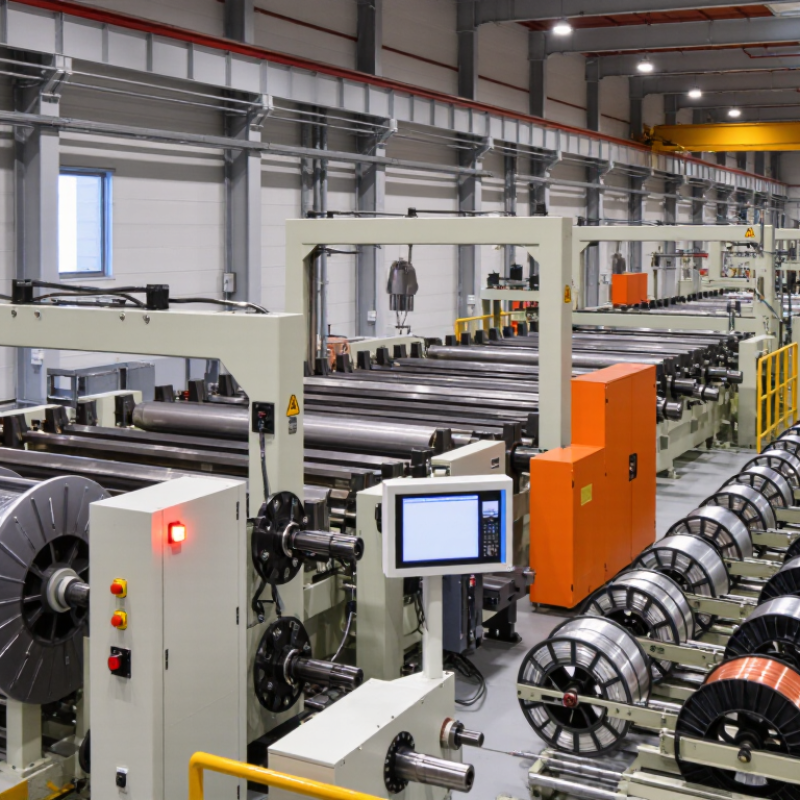
Rod breakdown machines convert thick metal rod into smaller, round wire through controlled cold drawing. Copper and aluminum rod commonly enter at several millimeters in diameter. The machine reduces that size through a series of dies. Each die removes a measured amount of material. It also improves dimensional accuracy and surface consistency.
A powered capstan pulls the rod through carbide or diamond dies. Tension must remain stable. Excessive force can cause cracks, die wear, or oval wire. Lubrication reduces friction and limits heat around the drawing zone. Cooling systems protect the dies and keep the metal within a workable temperature range. Many modern machines include sensors for tension, speed, temperature, and wire break detection. The take-up system then winds the finished wire onto a drum or coil.
The machine does more than pull metal. Die alignment, reduction planning, lubrication quality, and annealing control all affect the final result. In practical evaluations, buyers should inspect trial-wire data rather than trust speed claims alone. Ask for diameter tolerance, energy use, noise levels, maintenance intervals, and spare-part availability. A clean catalog number is never enough. Real production conditions are messier. Rod chemistry, incoming surface defects, and operator settings can change performance. I would also check whether the control system records faults clearly, because a fast machine is less useful when troubleshooting becomes guesswork.
Essential Performance Factors for Global Buyers to Compare
Global buyers should assess rod breakdown machines through measurable production evidence, not brochure speed alone. Start with finished-wire diameter range, inlet rod size, reduction schedule, and target tonnes per hour. Ask for trial data using comparable steel grades and entry temperatures. Throughput matters, but stable output matters more. A fast line with frequent adjustments can lose an entire shift.
Check capstan torque, die cooling, lubrication control, and tension accuracy. These factors influence surface quality, die life, and break frequency. Energy use deserves a real measurement. Request kilowatt-hours per tonne under a defined load, rather than an ideal figure. Inspect the control system during acceleration and emergency stopping. Smooth response protects operators and reduces scrap. Small details matter. A spreadsheet can hide them.
Global service capability is equally practical. Confirm spare-parts availability, remote diagnostics, training hours, and local electrical compatibility. Review noise, guarding, dust control, and maintenance access against applicable site requirements. Ask for references from plants with similar humidity, power stability, and workforce skills. A factory acceptance test is useful, though it cannot reproduce every field condition. No comparison is perfect. During commissioning reviews, overlooked access space often creates avoidable maintenance delays. Suppliers should document tolerances, testing methods, and operator responsibilities clearly.
Safety, Automation, Maintenance, and Energy Considerations
2026 Top Rod Breakdown Machines for Global Buyers
Safety, automation, maintenance, and energy efficiency should guide every rod breakdown machine purchase. A guarded payoff, reliable emergency stop, and secure die enclosure protect operators during high-speed drawing. Interlocked doors matter. Clear sightlines also help workers detect rod misalignment before damage spreads. Noise, heat, and metal dust require practical controls, not merely paperwork. Buyers should verify training procedures and local compliance requirements before installation.
Automation improves consistency when it supports skilled operators. Closed-loop tension control can reduce surface defects and unexpected breaks. Diameter monitoring provides useful feedback during production. Data logging helps maintenance teams identify rising motor loads or unstable lubrication. Manual adjustment remains valuable during setup. Too much automation can confuse teams when sensors drift or alarms become frequent. That risk deserves honest testing.
Maintenance access often decides long-term productivity. Choose machines with reachable lubrication points, replaceable wear parts, and clear inspection panels. Dies, bearings, belts, and guides need scheduled checks. A small alignment error can waste material quickly. Keep critical spares nearby, even when the supplier promises fast delivery. Promises sometimes fail.
Energy use depends on motor sizing, drawing speed, cooling demand, and idle time. Efficient drives can lower consumption, while regenerative braking may recover energy during deceleration. Measure actual load profiles instead of trusting catalog estimates. A machine that runs efficiently at full capacity may perform poorly during short production runs. Commissioning data should challenge the original assumptions.
2026 Top Rod Breakdown Machines for Global Buyers
Buyer evaluation index based on safety, automation, maintenance accessibility, and energy efficiency requirements.
The index uses a 0–100 scale, where higher values indicate stronger suitability for global procurement. Safety reflects guarding, emergency-stop coverage, and interlock readiness; automation covers digital controls, tension regulation, and process monitoring; maintenance measures access, service simplicity, and condition monitoring; energy efficiency reflects motor control, cooling demand, and optimized line operation.
How to Select the Right Rod Breakdown Machine for Your Market
Selecting a rod breakdown machine starts with the product, not the catalogue. Define incoming rod diameter, final wire size, alloy, tensile target, and required output. Copper, aluminium, and specialty alloys react differently under compression and heat. A machine rated for steel may perform poorly on soft copper. The International Copper Study Group reported continued volatility in refined copper supply forecasts, so material availability should influence your operating plan.
Energy conditions matter too. The IEA’s Electricity 2024 report projects global electricity demand to grow by about 3.4% annually from 2024 to 2026. Buyers should compare motor efficiency, cooling load, standby consumption, and compatibility with local voltage systems. A high-speed line can look attractive, yet unstable power may create more downtime than revenue. Check this carefully.
Production data should include die life, pass-line stability, dimensional tolerance, noise, and changeover time. Ask for test results using your actual rod grade. Request sample coils, maintenance records, and failure-response procedures. ISO 9001 certification supports process control, but it does not guarantee suitable machine performance. That distinction is often missed. I would also inspect bearing access, lubrication points, guarding, and spare-part lead times. Remote diagnostics help, but they cannot replace trained local technicians. A perfect specification rarely exists; the most reliable choice is usually the machine that fits your market’s materials, power quality, workforce, and service capacity.