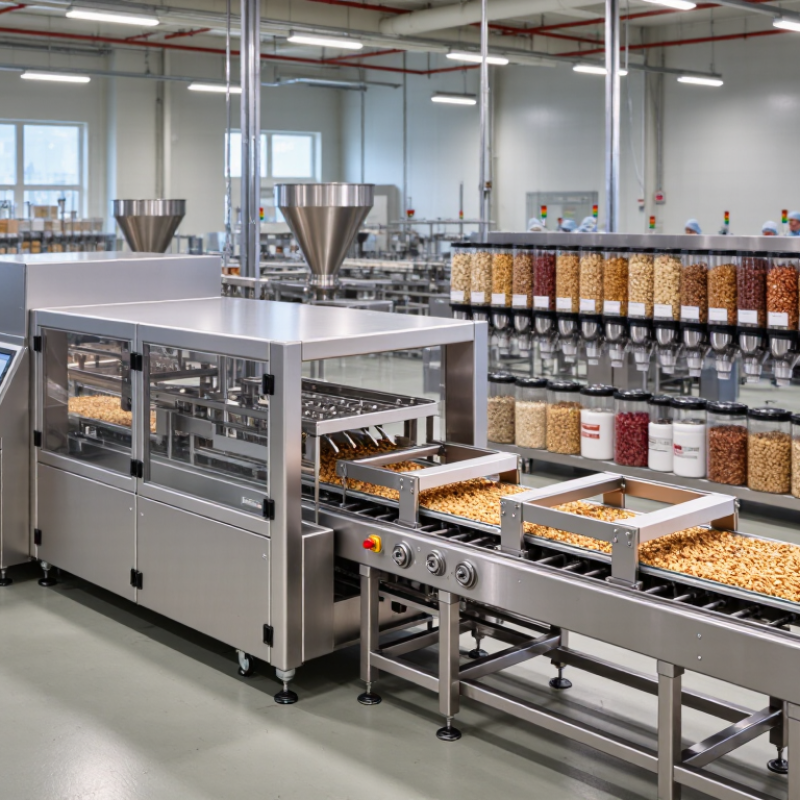
2026 Best Cereal Bar Machine for Global Buyers?

Choosing the 2026 best Cereal Bar Machine requires more than comparing speed, price, or stainless-steel appearance. Global buyers need dependable forming, accurate dosing, gentle conveying, and cleanable contact surfaces. A bar may look simple, yet syrup viscosity, inclusions, slab temperature, and cutting pressure can change hourly.

Market intelligence from Grand View Research and Mordor Intelligence continues to show strong interest in cereal, granola, and snack bars. Their reports connect demand with convenience, healthier formulations, portion control, and premium ingredients. PMMI packaging research also highlights automation, labor efficiency, hygienic design, and flexible changeovers as major investment concerns. Exact market values differ between reports. That difference matters.

Professor Peter Fellows, a recognized food-processing authority, describes food processing as “the transformation of raw materials into food products.” This principle applies directly to machine selection. A Cereal Bar Machine must protect texture, control weight, and support repeatable production. It should also handle oats, nuts, seeds, dried fruit, protein powders, and reduced-sugar binders without excessive product loss.

No machine wins everywhere. A compact line may suit a startup, while a high-speed servo system may better serve a multinational factory. Buyers should test real recipes, not only standard samples. Ask for sanitation records, spare-parts availability, energy data, operator training, and verified output under production conditions. The overlooked detail is often the costly one: difficult cleaning, unstable cutting, or long changeover time.

This 2026 guide compares practical machine features, supplier credibility, regional service, and total ownership cost. It also questions attractive specifications that may not survive daily factory pressure.

2026 Best Cereal Bar Machine for Global Buyers?

What Is a Cereal Bar Machine? Process Scope and 2026 Industry Demand

2026 Best Cereal Bar Machine for Global Buyers?

What Is a Cereal Bar Machine? Process Scope and 2026 Industry Demand

A cereal bar machine is an integrated system for mixing, forming, cooling, cutting, and packaging cereal-based snacks. It handles ingredients such as oats, puffed grains, nuts, dried fruit, and binding syrup. Some lines also support chocolate coating or individual wrapping.

The process usually begins with controlled syrup heating and ingredient blending. The warm mixture then moves through a roller or slab former. Accurate thickness matters because uneven slabs create weak edges and inconsistent portions. Cooling tunnels stabilize the product before guillotine cutters divide it into retail sizes. Packaging equipment must protect texture, especially in humid shipping conditions.

In practical line evaluations, buyers should check throughput, changeover time, cleaning access, and temperature control. A higher speed is not always better. That assumption deserves testing. A smaller line may reduce waste during product trials. In 2026, demand is expected to grow around convenient breakfast products, sports nutrition, and portion-controlled snacks. Buyers also increasingly request flexible machines for multiple recipes and pack sizes. Energy use, spare-part availability, operator training, and food-contact materials deserve equal attention. These details often decide whether a line performs reliably after installation. Regional demand can differ, so production forecasts should include local tastes, climate, labor costs, and packaging requirements. Some specifications look impressive on paper. Real factory trials remain essential.

Capacity Benchmarks: Comparing 100–1,500 kg/h Production Lines

2026 Best Cereal Bar Machine for Global Buyers?

Capacity Benchmarks: Comparing 100–1,500 kg/h Production Lines

Capacity should be measured at the cutter, not copied from a brochure. A 100–300 kg/h line suits regional production, seasonal launches, and several product recipes. It usually needs a compact mixer, slab former, cooling tunnel, cutter, and wrapper. Operators can inspect changes quickly. That matters when syrup viscosity shifts with temperature.

Lines producing 500–800 kg/h fit established food processors with stable orders. They require stronger conveying systems and more consistent ingredient feeding. A 1,000–1,500 kg/h line demands serious floor space, electrical planning, and warehouse coordination. Cooling time becomes critical. A thick bar may look firm outside while remaining soft inside.

Real output is rarely the headline number. Moisture variation, cleaning stops, changeovers, and packaging faults can reduce hourly production by 10–20 percent. One practical test is a four-hour trial using the intended oats, nuts, binder, and film. Record kilograms produced, rejected bars, labor, and unplanned pauses. Do not test only with an easy recipe.

A mistake is selecting capacity from future optimism. I would rather see a 700 kg/h line running near its useful range than a 1,500 kg/h system waiting for orders. Still, growth plans deserve space, utilities, and modular upgrades. The numbers are useful, but they are not the whole factory.

Core Technologies: Mixing, Forming, Cutting, Cooling, and Coating

2026 Best Cereal Bar Machine for Global Buyers?

A reliable cereal bar machine should manage five connected processes: mixing, forming, cutting, cooling, and coating. Mixing controls texture. A paddle mixer must distribute grains, syrup, and oil without crushing fragile pieces. Temperature matters. A syrup that is too cool creates dry pockets, while excessive heat can soften the cereal.

Forming equipment uses pressure rollers or a compression plate to create a stable slab. Even thickness is essential for accurate cutting. A wire cutter or rotary knife should produce clean edges without pulling the bar apart. After cutting, a cooling tunnel reduces stickiness and stabilizes the shape. Airflow must remain even across the belt. Otherwise, center bars may stay soft. Coating systems then apply chocolate, yogurt, or compound layers through a curtain or enrober. Poor temperature control can cause cracking, dull surfaces, or uneven coverage.

Tips: Request a full product trial before purchase. Test your actual cereal, syrup, bar size, and coating material. Check stainless-steel contact parts, washdown access, sensor accuracy, and spare-part availability. Ask for records showing output, temperature stability, and cutting precision. In real production, the first batch is rarely perfect. Small changes in moisture or compression can affect the final texture. A machine may look impressive, yet require difficult cleaning. That detail is easy to overlook.

Food Safety Requirements Under HACCP and Codex CXC 1-1969

For global buyers, the best cereal bar machine is not simply the fastest model. It must support HACCP controls and Codex CXC 1-1969 hygiene principles. Operators should inspect product-contact surfaces, conveyors, hoppers, cutters, and sealing areas without hidden gaps. Smooth stainless steel surfaces matter. So does tool-free access.

A practical factory test should measure clean-down time, allergen changeover, temperature stability, and foreign-body control. The machine should allow documented monitoring of critical limits, especially moisture, baking temperature, cooling, and seal integrity. Metal detection and calibrated weighing systems can strengthen verification, but they cannot replace sanitation. Small errors remain important.

The World Health Organization estimates that contaminated food causes about 600 million illnesses and 420,000 deaths each year worldwide. This figure shows why food safety cannot be treated as a final inspection task. Codex places responsibility on preventive control, hazard analysis, validation, and records. Buyers should request cleaning instructions, material certificates, calibration records, and commissioning evidence before purchase.

Energy use also deserves attention. The International Energy Agency reports that industry accounts for roughly 37% of global final energy consumption. Efficient heating and standby controls may reduce operating costs, although efficiency claims need site testing. I would question any machine promising zero contamination risk. Real production has dust, sticky syrup, rushed changeovers, and human mistakes. A strong design makes those mistakes easier to detect.

2026 Best Cereal Bar Machine for Global Buyers? - Food Safety Requirements Under HACCP and Codex CXC 1-1969
Machine Area Measurable Requirement or Target Food-Safety Relevance Buyer Verification Method Acceptance Evidence
Product Contact Surfaces Use food-contact materials suitable for the intended food, temperature, moisture, fats, and cleaning chemicals. Stainless steel 304 is commonly used; stainless steel 316 may be selected for higher chloride exposure. Reduces contamination, corrosion, material migration, and foreign-body risks under Codex good hygiene practices. Review material certificates, food-contact declarations, weld specifications, and chemical-resistance information. Complete material traceability and written suitability documentation for every product-contact component.
Hygienic Design Avoid food traps, dead legs, exposed threads, unsealed hollow sections, sharp internal corners, and inaccessible product-contact areas. Supports prerequisite programs and prevents microbial growth or allergen accumulation. Perform a documented design review, visual inspection, and cleaning-access assessment before purchase. All product-contact zones are accessible for inspection, cleaning, sanitation, and drying.
Ingredient Feeding and Dosing Provide controlled dosing for cereals, binders, nuts, seeds, inclusions, and coatings; define target weight and permitted process tolerance during commissioning. Controls formulation accuracy, allergen segregation, nutritional declarations, and batch consistency. Run a representative trial using the buyer’s actual recipes and record dose repeatability over multiple cycles. Trial results meet the approved recipe tolerance and produce a documented batch record.
Mixing and Binding Control mixing time, temperature, binder addition, and product residence time. Record critical operating limits in the HACCP plan where applicable. Helps control uneven binder distribution, inadequate process control, texture defects, and potential microbial hazards. Conduct process validation with minimum, nominal, and maximum operating settings. Validated operating ranges, alarm limits, and corrective actions are documented and reproducible.
Forming, Slabbing, and Cutting Provide adjustable thickness, width, length, and cutting speed with safe guarding around moving parts. Supports weight control and prevents physical hazards from damaged blades, loose parts, or equipment fragments. Check dimensions, net weight, cut accuracy, guard interlocks, and emergency-stop operation during factory acceptance testing. Product dimensions and weights meet the approved specification; safety devices stop hazardous motion as designed.
Thermal Processing or Cooling Measure and record time and temperature where heating, baking, drying, or controlled cooling is part of the process. Provides objective evidence for validated process controls and helps manage moisture-related stability risks. Use calibrated sensors and conduct temperature mapping or time-temperature validation under loaded conditions. Validated critical limits, sensor calibration records, and defined deviation procedures are available.
Allergen Changeover Design for tool-free or controlled dismantling where practical, with separate utensils or verified cleaning procedures for allergen-containing recipes. Controls unintended allergen cross-contact involving ingredients such as peanuts, tree nuts, milk, soy, sesame, or wheat. Review the allergen matrix, conduct cleaning validation, and test representative post-cleaning surfaces or product samples. Approved changeover procedure, acceptance limits, verification records, and corrective actions are established.
Cleaning and Sanitation Define wet-cleaning, dry-cleaning, or combined procedures according to the formulation and equipment design. Avoid residual water in areas not designed for wet cleaning. Supports Codex sanitation programs and reduces biological, chemical, and allergen contamination. Measure cleaning time, chemical concentration where used, rinse requirements, visual cleanliness, and microbiological or allergen verification. Validated sanitation standard operating procedures and completed sanitation records are available.
Foreign-Body Control Allow integration or placement of suitable sieves, magnets, metal detection, or X-ray inspection according to the hazard analysis. Controls physical hazards from metal, stones, glass, hard plastic, damaged tools, or equipment parts. Complete challenge tests using approved test pieces and define testing frequency, reject confirmation, and product isolation procedures. Detection sensitivity, rejection function, alarms, and verification frequency are documented and validated for the product.
Utilities and Compressed Air Specify hygienic water, air, steam, electrical, and drainage requirements. Air that contacts food or food-contact surfaces requires appropriate filtration and quality control. Prevents contamination from utilities and supports the Codex prerequisite programs. Review utility specifications, filtration arrangements, water quality records, air-quality testing, and drainage design. Utility quality limits, maintenance schedules, test results, and connection diagrams are provided.
Calibration and Monitoring Identify instruments used for temperature, weight, pressure, speed, moisture, and detection controls; define calibration intervals based on risk and performance history. Ensures measurements used for critical limits and verification are reliable. Review calibration certificates, traceability to recognized standards, out-of-tolerance procedures, and instrument identification. All critical instruments have current calibration status and documented corrective actions for failures.
Traceability and Data Records Record batch identification, recipe version, operating parameters, alarms, operator actions, cleaning status, and inspection results. Supports Codex traceability, recall readiness, HACCP verification, and investigation of deviations. Test data export, user permissions, time stamps, backup procedures, and record-retention settings. Records are legible, protected from unauthorized alteration, retrievable, and linked to the finished-product lot.
Safety Guards and Emergency Controls Provide fixed or interlocked guards, emergency stops, safe access points, lockout provisions, and appropriate electrical protection for the installation environment. Protects personnel and reduces the possibility of contamination caused by unsafe intervention during operation or cleaning. Conduct a documented risk assessment and verify guard, interlock, emergency-stop, and restart-prevention functions. Safety functions pass commissioning tests and are supported by operating and maintenance instructions.
Documentation Package Supply food-contact declarations, manuals, electrical drawings, pneumatic diagrams, spare-parts lists, cleaning instructions, risk assessment, and validation protocols. Enables the buyer to implement prerequisite programs, HACCP controls, training, maintenance, and verification. Use a document checklist during design qualification, factory acceptance testing, and site acceptance testing. All required documents are supplied in the agreed language and revised to match the installed machine.
HACCP and Codex Alignment Integrate the machine into the site’s hazard analysis, prerequisite programs, monitoring procedures, corrective actions, verification, and recordkeeping system. Codex CXC 1-1969 establishes the General Principles of Food Hygiene and the HACCP system framework; the machine itself does not automatically create HACCP compliance. Complete a site-specific hazard analysis and confirm controls during commissioning and routine production. Signed commissioning records show that identified hazards, critical limits, monitoring, corrective actions, and verification activities are operational.
Reference basis: Codex Alimentarius, General Principles of Food Hygiene, CXC 1-1969, including the HACCP system and application guidelines. Final acceptance criteria must be confirmed against the buyer’s recipe, process validation, destination-market regulations, and site-specific hazard analysis.

Global Buyer Metrics: Energy Use, ROI, CE Compliance, and Service Support

2026 Best Cereal Bar Machine for Global Buyers?

Energy use should be measured per finished kilogram, not only by motor size. The IEA Energy Efficiency 2023 report estimates that industry consumes about 37% of global final energy. This makes heating efficiency a serious purchasing metric.

A practical test should record electricity during mixing, cooking, cooling, and cutting.

For example, a 18 kW machine producing 500 kilograms hourly uses 0.036 kWh per kilogram at full output.

Real production may be less efficient. Start-up losses, recipe changes, and idle heating can distort the result.

Measure the baseline carefully.

ROI should include labor, rejected bars, maintenance, and downtime. A machine saving 0.012 kWh per kilogram may appear modest. At 1,000 tonnes annually, it saves 12,000 kWh. The financial result depends on local electricity prices and utilization. Payback calculations often look too optimistic. I would request a witnessed factory trial before approving the purchase.

CE compliance requires more than a printed mark. For European sales, buyers should review the risk assessment, declaration of conformity, technical file access, guarding, emergency stops, and applicable EMC and electrical safety requirements.

The EU Machinery Regulation 2023/1230 applies from 20 January 2027, so 2026 contracts should clarify transition responsibilities.

Service quality also needs measurable terms. Request remote diagnosis, response within 24–48 hours, training records, and critical spare-part availability. ISO 55001 principles support lifecycle asset management, but they do not guarantee fast repairs. A low price is not low risk.

Product Added

Go to Quote Request Form

Continue Product Search