How to Choose the Best Electric Scooter Bike?
Choosing an Electric Scooter Bike begins with an honest look at your daily routes. Do you ride three flat miles to work, or climb a steep hill with a backpack? Those details matter more than glossy photos or a large range number. Transportation researcher Chris Cherry has studied micromobility and travel behavior. In paraphrase, his research points to this practical rule: “Choose around real trips, not ideal conditions.”
A useful buying guide should explain how to compare motor power, battery capacity, braking, tire size, weight, and comfort. It should also separate manufacturer claims from the range and speed riders may experience in ordinary conditions. A cold morning, a heavy load, or frequent stops can change the ride. Small details count.
The best choice is not always the fastest or most expensive model. Check how easily it folds, where you can store it, and whether its controls feel clear during a short test ride. Listen for rattles. Notice the brake response. I still find range estimates frustratingly easy to overtrust, and that deserves a closer look. This guide will help readers weigh real-world needs, compare key features, and spot trade-offs before choosing an Electric Scooter Bike. A little doubt is useful. A purchase should fit the rider, not just the spec sheet.
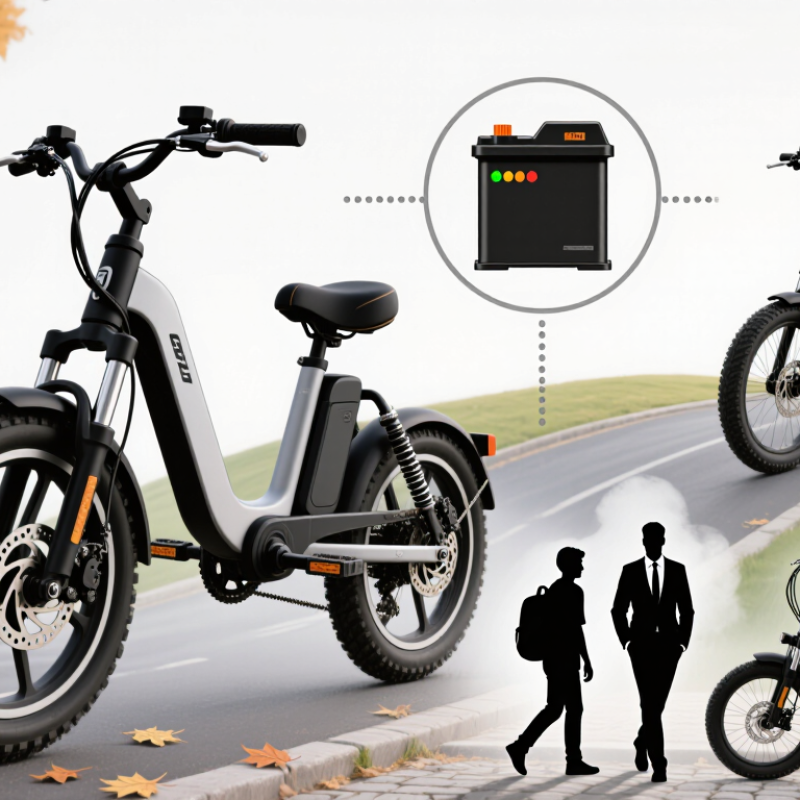
Define Your Use and Vehicle Type Before Comparing Electric Scooter Bikes
Start with the trip, not the spec sheet. A short, smooth ride to a train station may suit a compact standing scooter; longer journeys, hills, or carrying groceries may favor a seated electric bike. NACTO’s 2023 Shared Micromobility Report recorded 133 million shared bike and scooter trips across North America. That scale shows varied demand, but shared-ride patterns cannot predict your personal needs. Think about your route’s distance, surface, hills, storage, and whether you must carry the vehicle upstairs.
Vehicle type changes the trade-offs. A standing scooter is often easier to store, while a bicycle-style model offers a familiar seated position and room for a rack. The U.S. Census Bureau reported a 26.8-minute average one-way commute in 2023; that is useful context, not a range target. Check real-world range under your likely load and terrain, then leave a battery reserve. A specification can look reassuring. Cold weather, hills, and frequent stops may change the ride more than expected.
Tips: Measure your route and doorway, then test the vehicle on a similar surface. Check braking feel, tire size, lighting, and total weight. Be honest about comfort: a fast model you dislike riding is a poor fit. NACTO and Census figures provide context, but your own route should make the final call.
Check Local Classification: EU EPAC Assistance Stops at 25 km/h and 250 W
When comparing an electric scooter bike in Europe, check how it is classified locally before judging its speed or motor figures.
An EU EPAC generally provides pedal assistance only, with assistance cutting out at 25 km/h and a maximum continuous rated motor power of 250 W. The motor should stop assisting when you stop pedalling. These limits describe assistance, not how fast you can travel downhill or under your own effort.
Look beyond the headline numbers. A 250 W motor may feel different on a steep street than on a flat cycle path, depending on the bike’s weight, gearing, battery condition, and your load. Test the pedal response if possible. Does assistance fade smoothly near 25 km/h, or does it feel abrupt? Small details matter.
Also check the manual and local transport guidance: terms such as “scooter” and “EPAC” can refer to different vehicle categories, and rules may differ by location. A display showing 25 km/h is not proof of classification. I’d be cautious about assuming two similar-looking models follow the same rules; specifications can be easy to misread. Verify the rated continuous power, pedal-assist operation, and speed cut-off before buying.
Compare Battery Energy Using the Industry Formula: Watt-Hours = Volts × Amp-Hours
How to Choose the Best Electric Scooter Bike?
Compare battery energy with the industry formula: watt-hours = volts × amp-hours . For example, a 36-volt battery rated at 10 amp-hours stores about 360 watt-hours. A 48-volt battery rated at 7.5 amp-hours also stores about 360 watt-hours. That matters. Amp-hours alone can mislead when batteries use different voltages. Check that the listed voltage and capacity refer to the same battery, and treat watt-hours as a comparison point, not a complete measure of performance.
Watt-hours estimate stored energy, not guaranteed riding distance. Motor demand, rider weight, hills, tire pressure, temperature, and speed all affect how far a scooter can travel. Small details matter. When comparing models, note the battery’s watt-hours and consider whether your usual route includes steep climbs or frequent stops. Ask whether the stated capacity is nominal, since usable energy may differ. I still find it tempting to treat a bigger number as a promise; it isn’t. Use the formula to compare batteries fairly, then weigh the real conditions you expect to ride in.
Assess Electrical Safety: UL 2272 Covers Personal E-Mobility Electrical Systems
When choosing an electric scooter bike, check its electrical safety before comparing speed or range. UL 2272 covers electrical systems in personal e-mobility devices, including areas such as electrical shock and fire risks. A tested system matters because the battery, wiring, and charger work together. One weak connection can create trouble.
Look for documentation that names the exact model, not just a similar product or battery. Ask whether the complete device’s electrical system was evaluated to UL 2272, and verify the claim with the certification organization’s records when possible. A label alone can be hard to interpret. Keep the charger supplied or specified for that model, and stop using the device if you notice unusual heat, a damaged cable, or a burning smell. Small clues matter.
UL 2272 is not a promise that a scooter will never fail, and it does not assess every feature, such as braking or frame strength. It is one useful safety measure, not the whole decision. I would still inspect the charging port and cables in person; paperwork cannot show every mark or loose fit. That extra check is easy to skip. Don’t.
Verify Brakes, Payload, Tire Size, and Service Support Before Purchase
Before buying an electric scooter bike, inspect both brakes and test them at walking speed in a clear area. The levers should feel firm, and the scooter should slow predictably without pulling sharply or making grinding sounds. Ask how often pads, cables, or hydraulic parts need service, and whether replacements are readily available. A smooth showroom floor can hide weak braking on wet pavement.
Check the rated payload against your body weight plus a backpack, lock, or groceries; do not treat the limit as a comfort target. Tire size affects how the scooter handles cracks and curb cuts, but larger tires can add bulk. NACTO’s 2023 Shared Micromobility Report recorded 133 million shared micromobility trips in North America that year. That scale shows how often these vehicles are used, but it does not identify one ideal tire size. Match the tire to your usual route, and inspect the tread and sidewalls before each ride. Small details matter.
Finally, verify service support before paying. Get clear answers about repair locations, replacement-part availability, warranty coverage, and typical turnaround time. Ask whether routine adjustments are included or billed separately. Keep the answers in writing. I once assumed a nearby seller could handle repairs; that assumption may not hold for every model or town. A short support call now can prevent a long wait later.
How to Choose the Best Electric Scooter Bike?
Verify these four essentials before purchase.
Each bar represents one required verification, not a product rating. Test the brakes, check the manufacturer’s rated payload against rider and cargo weight, confirm tire size suits your routes, and ask about warranty coverage, replacement parts, and local service.
