10 Essential Tips for Choosing the Right Pavement Marking Systems
Choosing the right pavement marking systems is crucial for road safety and traffic efficiency. According to the Federal Highway Administration, well-marked roadways can reduce accidents by up to 30%. Effective markings guide drivers and enhance visibility, particularly in adverse weather conditions. However, selecting the appropriate system can be challenging.
Various types of pavement marking materials exist, ranging from paint to thermoplastics. Each has unique benefits and limitations. For instance, paint is cost-effective but may require more frequent maintenance. In contrast, thermoplastic markings offer durability but come with a higher initial investment. Understanding these differences is essential for informed decision-making.
As industry standards evolve, staying updated is vital. The American Traffic Safety Services Association highlights the importance of regulatory compliance in pavement marking. Not all products meet necessary safety qualifications. Failing to choose suitable materials can lead to visibility issues. This underlines the need to evaluate options carefully. Making an informed choice can create safer roads for everyone.

Understanding the Importance of Pavement Marking Systems
Pavement marking systems are vital for road safety and efficiency. They guide vehicles and pedestrians, ensuring smoother traffic flow. Clear markings reduce confusion and potential accidents at intersections or road merges. When done correctly, they direct movements effectively, minimizing risks on the road.
Choosing the right system is not as straightforward as it seems. Different materials and technologies exist, each with unique properties. Some markings fade quickly in sunlight, while others may be ineffective in wet conditions. It's crucial to assess local climate and traffic patterns before making a choice. Also, consider feedback from road users. Their experiences can reveal what works well and what doesn't.
Incorporating durable materials may seem beneficial upfront, but initial costs can be high. Maintenance is another aspect that often gets overlooked. Regular inspections are essential to ensure markings remain visible and effective. Understanding these nuances is key to implementing a successful pavement marking strategy.
Importance of Pavement Marking Systems
Types of Pavement Marking Materials and Their Applications
When it comes to pavement marking materials, understanding their different types and applications is crucial. This is not just about aesthetics; it's a matter of safety and compliance. According to the Federal Highway Administration, proper pavement markings can reduce accidents by up to 30%. The right material ensures visibility and durability, addressing various environmental conditions.
Thermoplastic markings are among the most widely used. They offer excellent adhesion and can last over five years with proper maintenance. Their bright colors enhance visibility, especially in low-light conditions. However, their application requires the right technique to avoid premature wear. On the other hand, water-based paints are more eco-friendly, suitable for temporary markings. They typically last less than a year, making them ideal for short-term traffic needs.
Reflective materials play a significant role in night visibility. Studies indicate that retroreflective pavement markings can improve nighttime safety by 50%. Yet, these materials need regular assessment. Over time, their effectiveness diminishes. It's vital to balance cost, durability, and safety when selecting a marking system. Understanding the strengths and limitations of each material helps in making informed decisions. This awareness can lead to better road conditions and enhanced driver safety.
Factors to Consider When Selecting Pavement Marking Systems
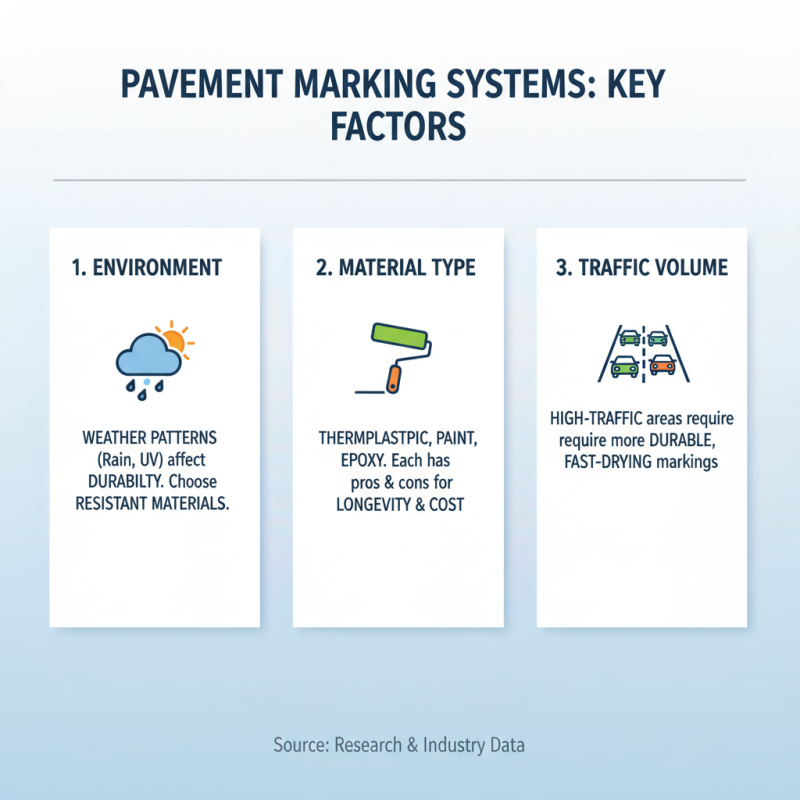
When selecting pavement marking systems, several factors play a crucial role. First, consider the environment. Weather patterns significantly impact marking durability. Research indicates that markings in regions with heavy rainfall can fade faster. The right materials can ensure longevity against these elements.
Visibility is another essential element. Studies show that highly visible markings reduce accident rates by up to 40%. Urban areas may require reflective options. This enhances nighttime visibility, making them safer for drivers and pedestrians.
Cost is a noteworthy aspect but should not overshadow quality. Investing in superior materials often results in long-term savings. Cheaper options might require frequent repaints, negating initial savings. Ultimately, while aesthetics matter, the efficiency and safety of pavement markings cannot be overlooked. Choosing wisely can lead to safer roads for all.
Evaluating Durability and Maintenance Requirements
When choosing pavement marking systems, durability and maintenance are critical factors. A recent study shows that pavement markings can wear out within 6 to 18 months, depending on traffic volume and weather conditions. Understanding these factors helps in making informed decisions.
Regular maintenance can enhance the lifespan of pavement markings. The Federal Highway Administration recommends frequent inspections, especially in high-traffic areas. High-performance materials offer better durability, yet they may require more upfront investment. On the flip side, lower-cost options might deteriorate faster, leading to increased long-term costs.
Did you know that reflective markings can improve night visibility by up to 50%? However, they often demand more maintenance. Rain and dirt can quickly diminish their effectiveness. Planning for regular cleaning and repainting is essential. If budgets are tight, it’s vital to prioritize based on traffic levels and safety needs. Balancing cost with durability and maintenance effectively is a key challenge for decision-makers.
10 Essential Tips for Choosing the Right Pavement Marking Systems - Evaluating Durability and Maintenance Requirements
| Criteria |
Description |
Durability Rating |
Maintenance Frequency |
| Thermoplastic |
A durable option suitable for high-traffic areas, resistant to wear and tear. |
High |
Every 3-5 years |
| Paint |
A cost-effective solution, but typically has a shorter lifespan. |
Medium |
Annually |
| Epoxy |
High-performance marking system that offers superior adhesion and resistance. |
Very High |
Every 5-7 years |
| Cold Plastic |
Ideal for areas exposed to harsh conditions, providing a strong finish. |
High |
Every 2-4 years |
| Reflective Markings |
Enhances visibility at night and during poor weather conditions. |
Medium |
Every 3 years |
Cost Considerations and Budgeting for Pavement Marking Projects
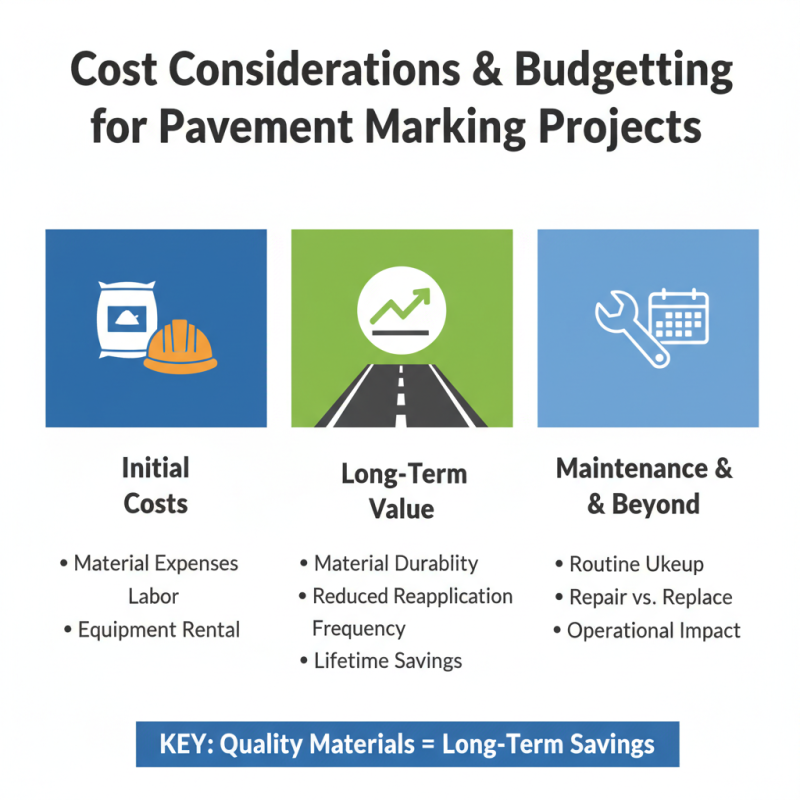
When budgeting for pavement marking projects, cost considerations are crucial. The initial material costs, labor expenses, and maintenance budgets can significantly impact overall spending. It is important to assess the long-term durability of materials. Higher-quality options might save money in the long run, reducing the need for frequent reapplication.
Tip: Always compare material types. Some choices might seem cheap upfront but require more labor later. A well-planned budget takes into account potential hidden costs, such as permits or traffic control measures. These can add up quickly, affecting your project's financial health.
Review your existing markings. Determine what needs replacement versus what can stay. This assessment helps prioritize spending. Analyzing traffic patterns will also guide you in deciding where to invest more in visibility. Investing in the right technology, like reflective materials, can enhance safety and visibility while managing costs effectively. A well-structured budget will optimize your pavement marking project, ensuring each dollar is spent wisely.