10 Essential Tips for Enhancing Urban Traffic Safety
Urban traffic safety is a growing concern in metropolitan areas worldwide. With increasing vehicle numbers and diverse transportation modes, the risk of accidents rises. Each year, thousands face injuries or worse due to traffic mishaps. Improving road safety requires collective efforts from authorities, drivers, and pedestrians.
Many people overlook basic practices that can enhance urban traffic safety. For instance, simple actions like using crosswalks or obeying speed limits can make a significant difference. Cities often implement changes but may struggle to engage the community. Awareness and education are essential for fostering a culture of safety.
Reflections on current practices reveal gaps that need addressing. How can we improve public transport safety? Are we doing enough to ensure pedestrian safety? These are vital questions as we strive to create safer environments. Focusing on practical solutions will help us better navigate urban areas.
Importance of Urban Traffic Safety in Reducing Accident Rates
Urban traffic safety plays a crucial role in minimizing accident rates and saving lives. When cities invest in safety measures, they create a more secure environment for all. Data shows that well-designed crosswalks and bike lanes reduce collisions significantly. People feel safer when they know there are visible markers signaling safe zones.
Education also shapes attitudes toward traffic safety. Public awareness campaigns remind drivers to slow down and watch for pedestrians. Yet, not all drivers respect the rules. This inconsistency creates danger on crowded streets. Community involvement in traffic safety initiatives can further empower citizens.
Regular audits of traffic systems help identify blind spots in safety protocols. For example, neglected intersections often become hotspots for accidents. Careful analysis can reveal patterns in traffic incidents. While technology offers solutions, human behavior remains unpredictable. Continuous reflection on our traffic habits is necessary to improve safety measures effectively.
Impact of Traffic Volume on Urban Safety: Statistical Insights
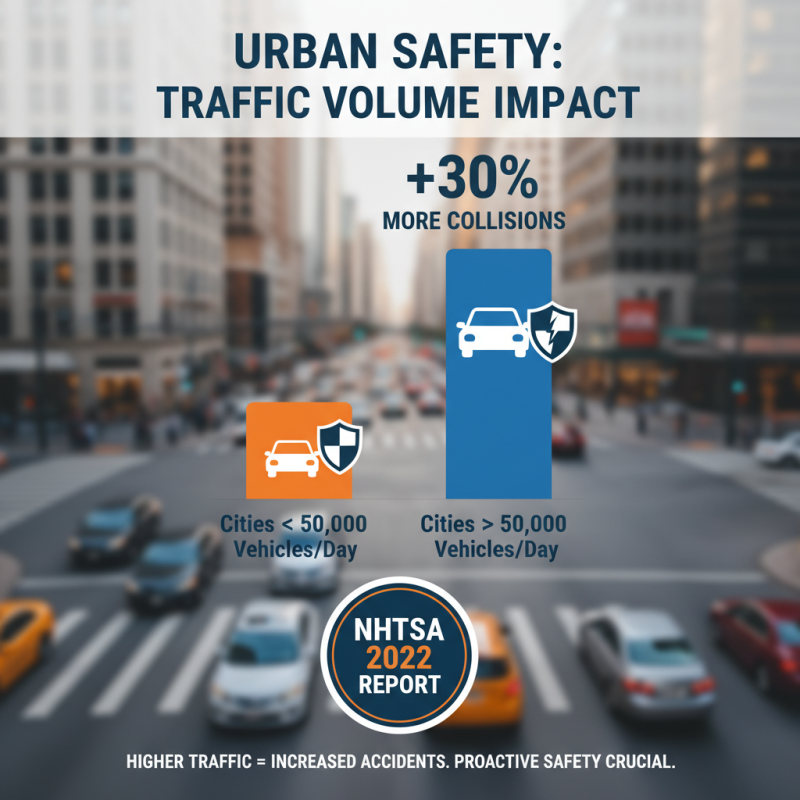
Urban traffic safety is a significant concern, heavily influenced by traffic volume. According to the National Highway Traffic Safety Administration (NHTSA), higher traffic volumes correlate with increased accident rates. In fact, a 2022 report revealed that cities with over 50,000 vehicles per day experienced an average of 30% more collisions. This data underscores the necessity of proactive safety measures.
To mitigate risks, consider the following tips. Implementing better traffic signal systems can improve flow and reduce congestion. Marked crosswalks encourage pedestrian safety while clearly indicating where to walk. While these solutions are effective, urban planners often overlook the need for regular audits of these systems. Adjustments based on real-time data can dramatically enhance safety.
Another important element to address is driver behavior. Statistically, distracted driving is responsible for nearly 20% of all crashes. Education campaigns can help reduce this issue. Creating safe zones can offer additional refuge areas for drivers and pedestrians alike. However, the challenge remains in consistently enforcing these regulations. Balancing active enforcement with public awareness is a complex task that demands ongoing attention and innovation.
Effective Traffic Management Strategies: Case Studies and Data Analysis
Urban traffic safety remains a pressing challenge that requires innovative management strategies. Effective traffic management combines data analysis with real-world case studies to identify successful interventions. Cities across the globe have adopted various approaches. For instance, some implemented real-time traffic monitoring systems. These systems collect data to optimize traffic light timing, reducing congestion and accidents. Real-world applications of this technology have shown promising results, improving the flow of vehicles and enhancing pedestrian safety.
Another effective strategy involves community engagement in traffic planning. Urban planners often overlook local insights and experiences. In one city, residents participated in workshops to share their concerns about dangerous intersections. Planners then used this feedback to install speed bumps and improve signage. While not all initiatives yielded immediate results, many highlighted the importance of collaborative efforts. Collecting and analyzing traffic accident data can pinpoint high-risk areas needing intervention. This evidence-based approach is not flawless; however, it serves as a valuable tool for making informed decisions.
Utilization of Technology: Smart Solutions for Safer Urban Environments
Urban traffic safety has become a pressing concern as cities grow and congestion worsens. The utilization of technology presents innovative solutions.
Smart traffic management systems are essential for modern urban planning. Reports indicate that cities using adaptive signal control can reduce delays by up to 30%. These systems adjust signals based on real-time traffic conditions, improving flow and reducing accidents.
Smart surveillance technology also plays a critical role. Cameras equipped with artificial intelligence can identify traffic violations. A study revealed that these systems can lower collision rates by 15% in monitored areas.
However, reliance on technology raises data privacy concerns. Citizens often feel uneasy about constant surveillance, questioning the trade-off between safety and privacy.
Moreover, pedestrian safety must not be overlooked. Intelligent crosswalk systems can alert drivers about crossing pedestrians. Research shows these systems can cut pedestrian injuries by nearly 40%.
Still, cities face challenges in widespread implementation. Budget constraints and infrastructure limitations often hinder progress. Ensuring equitable access to these technologies remains a significant hurdle for urban planners.
Community Engagement: Role of Public Awareness Campaigns in Safety Improvement
Public awareness campaigns are crucial for enhancing urban traffic safety. Research by the National Highway Traffic Safety Administration (NHTSA) shows that effective awareness campaigns can reduce traffic accidents by 25%. These campaigns educate the community on safe practices, such as the importance of wearing seatbelts and obeying speed limits. They encourage dialogue among residents, fostering a collective responsibility towards traffic safety.
Engaging communities through social media and local events increases outreach. A report from the Centers for Disease Control and Prevention notes that communities with active safety campaigns experience fewer pedestrian fatalities. Visual reminders, such as banners and road signs, reinforce safety messages. However, some campaigns fail to reach diverse populations, resulting in a gap in safety awareness. Continuous assessment and adjustment are vital to ensure inclusivity.
Moreover, feedback from community members can highlight the effectiveness of these initiatives. Surveys reveal that people often overlook potential hazards in their neighborhoods. Acknowledging these gaps allows for better-targeted safety measures. It's essential not to underestimate the power of informed citizens; they can become advocates for safer streets. Collaboration with local organizations can amplify the impact. Building a network of concerned residents can lead to sustainable improvements in urban traffic safety.
Impact of Public Awareness Campaigns on Urban Traffic Safety