
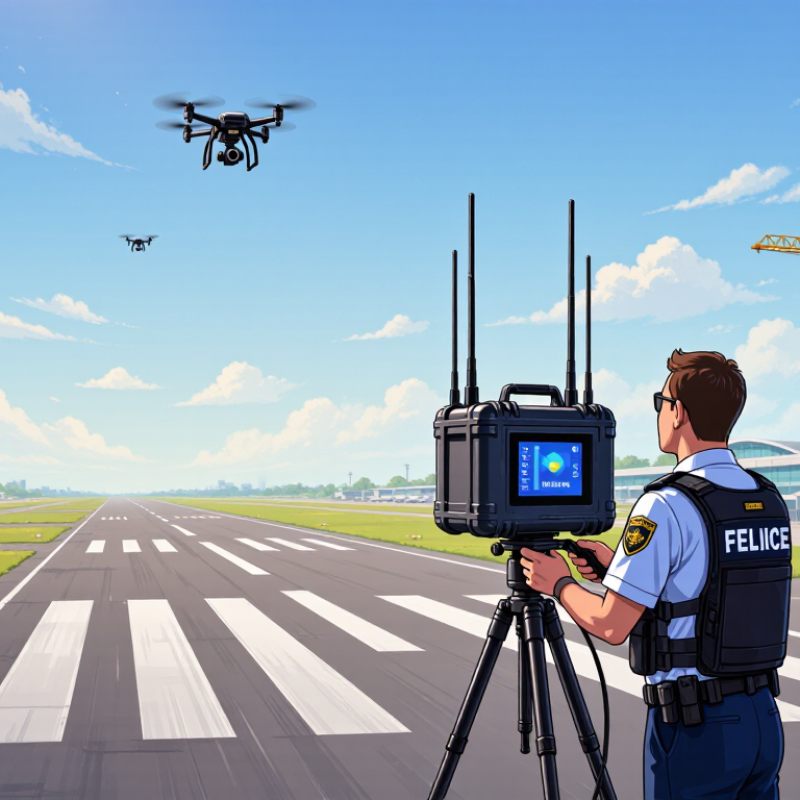
How to Choose the Best Drone Detector?
Choosing a drone detector starts with the site, not the feature list. In practical assessments, I map launch areas, buildings, trees, radio noise, and privacy boundaries.
Radio-frequency detection can identify control links and remote identifiers quickly. It may struggle when signals are weak, encrypted, or absent. Radar measures movement independently of radio transmissions. It can perform well in open spaces, but birds, cranes, and moving branches may create false alerts.
Short sentence.
Optical cameras add visual confirmation, especially during daylight. Thermal cameras help with low light, though heat sources can confuse classification. Acoustic sensors listen for rotor signatures and can support detection between buildings. They are sensitive to traffic, wind, and machinery.
These technologies work better as layers than as isolated tools.
A radar alert followed by camera verification is more useful than a vague alarm. Detection range is not the only measure. Ask about track continuity, alert latency, object classification, weather tolerance, and coverage gaps.
Test realistically.
During evaluation, use authorized flight tests and record results at different distances, heights, and angles. Check whether the system distinguishes a drone from birds, helicopters, and harmless radio devices.
Review who can access stored images, logs, and location data. Reliable systems provide audit trails, clear confidence scores, and maintenance guidance.
A weakness remains: performance claims often use ideal conditions. Independent testing may reveal blind spots. Choose the system whose limits are documented, understood, and acceptable for your site.