7 Tips for Choosing the Right Wheel Carrier Casting

Choosing the right Wheel Carrier Casting is not a simple matter of comparing prices. This component supports wheel loads, braking forces, steering movement, and repeated road shocks. A small internal defect can become a serious performance concern. Therefore, material quality, casting accuracy, strength, and supplier control deserve close attention.

Casting authority John Campbell has observed, “Castings are made in the liquid state, but they fail in the solid state.” His statement explains why visual inspection alone is insufficient. A reliable evaluation should examine alloy selection, filling design, solidification control, heat treatment, dimensional stability, and non-destructive testing. It should also consider machining allowances around bearing seats, mounting holes, and steering joints. These details affect assembly accuracy. They also influence long-term fatigue resistance.

The seven tips in this guide offer a practical way to assess Wheel Carrier Casting suppliers and designs. They focus on evidence, not attractive claims. Ask for material certificates, process records, sample inspection reports, and traceability details. Check whether the supplier understands your actual load conditions. A lightweight casting may reduce cost, yet poor geometry can increase distortion or porosity. That trade-off is easy to miss.

No checklist is perfect. Real production includes variation, delays, and occasional assumptions. I have seen evaluations focus heavily on unit price while overlooking machining rework and rejected batches. That approach often becomes expensive later. A better decision combines engineering data, factory capability, field experience, and honest risk review. Small questions matter. The right casting should perform consistently, not merely look acceptable during a brief inspection.
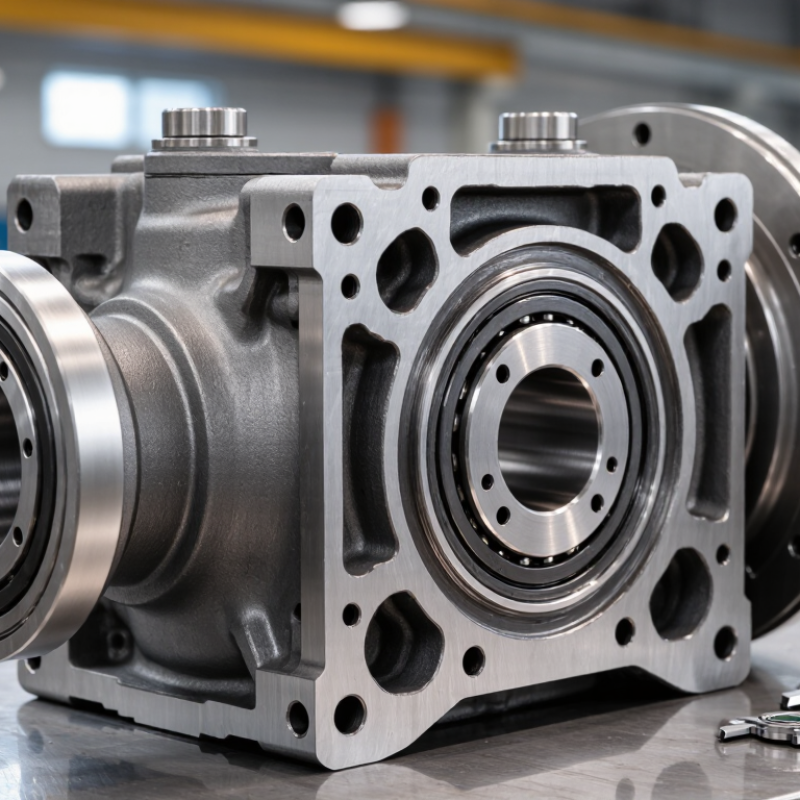
7 Tips for Choosing the Right Wheel Carrier Casting

Understand the Role and Load Requirements of a Wheel Carrier Casting

7 Tips for Choosing the Right Wheel Carrier Casting

Understand the Role and Load Requirements of a Wheel Carrier Casting

A wheel carrier casting connects the wheel assembly to the suspension and steering system. It transfers vertical, braking, cornering, and impact loads. This role demands more than a high strength rating. The casting must manage repeated forces without cracking, excessive deflection, or premature wear.

Begin with real operating data, not only the vehicle’s static weight. Include uneven roads, emergency braking, cornering, and temporary overloads. Calculate both peak loads and fatigue cycles. A component can survive one severe impact yet fail after thousands of smaller events. That detail is easy to overlook.

I have found that load paths deserve close inspection. Forces should move smoothly through ribs, mounting bosses, and bearing seats. Sharp transitions may create stress concentrations. Generous fillets often improve durability. However, thicker sections can increase shrinkage defects and cooling problems. It is a trade-off, not a shortcut.

Review the alloy’s yield strength, fatigue performance, impact resistance, and corrosion behavior. Confirm that the material suits the expected temperature and environment. Ask for casting process records, dimensional reports, and traceable inspection results. Non-destructive testing can reveal hidden porosity or cracks. Machined surfaces also need controlled datums and tolerances.

Do not ignore installation conditions. Incorrect bearing fits or fastener torque can change the load distribution. Verify interfaces with practical assembly checks. A design that looks excellent on paper may still need revision after testing. Prototype testing, road simulation, and periodic inspection provide stronger evidence than assumptions.

Compare Casting Materials for Strength, Weight, and Corrosion Resistance

Choosing the right wheel carrier casting starts with balancing strength, weight, and corrosion resistance. Ductile iron offers excellent impact strength and fatigue performance. It suits heavy loads and rough roads, but its weight can increase suspension mass. Aluminum casting reduces weight significantly, helping handling and fuel efficiency. However, it may need thicker sections or careful heat treatment to resist repeated stress.

Material choice depends on actual service conditions. Carbon steel provides high strength and good toughness, yet exposed surfaces require reliable coating and drainage. Stainless steel resists moisture, salt, and chemical exposure better. It also costs more and can demand tighter control during casting. That trade-off is easy to underestimate.

Look closely at the wheel carrier’s load paths. Sharp transitions can create stress concentrations. I have seen lightweight designs fail because corrosion protection was treated as an afterthought. Salt spray testing, fatigue testing, dimensional checks, and impact testing provide stronger evidence than a material datasheet alone. Ask for traceable chemical analysis and mechanical test results from each casting batch. Real use can be less predictable. A carrier exposed to mud, water, and winter grit may need more protection than laboratory data suggests. Even experienced engineers should review the choice after field feedback.

7 Tips for Choosing the Right Wheel Carrier Casting - Compare Casting Materials for Strength, Weight, and Corrosion Resistance

Material Typical Density
(g/cm³)
Typical Tensile Strength
(MPa)
Yield Strength
(MPa)
Relative Weight Corrosion Resistance Typical Characteristics Best-Fit Use
Ductile Iron
Common grades: 60-40-18 to 100-70-03
7.0–7.3 414–690 276–483 High Moderate High strength, good impact resistance, and useful ductility. Graphite nodules reduce brittleness compared with gray iron. Heavy-duty wheel carriers exposed to high loads, impacts, and road vibration.
Gray Iron
Common grades: Class 30–50
7.0–7.3 205–345 Not normally specified High Moderate Excellent vibration damping, good machinability, and low cost, but limited ductility and impact resistance. Low-impact applications where stiffness, damping, and cost are more important than minimum weight.
Cast Aluminum Alloy
Common grades: A356-T6 and similar
2.65–2.75 220–320 160–275 Low Good About one-third the density of iron. Offers good machinability and natural oxide-film protection, but lower stiffness and wear resistance. Weight-sensitive passenger vehicles and assemblies requiring corrosion resistance and moderate loads.
Cast Magnesium Alloy
Common grades: AZ91D and similar
1.75–1.85 230–280 150–165 Very low Low without protection The lightest option listed, with good castability and damping. Requires careful coating and galvanic-isolation design. Specialized lightweight components operating in controlled environments with robust surface protection.
Cast Carbon Steel
Typical low-alloy or carbon grades
7.7–7.9 450–700 250–450 Very high Moderate to low High strength and toughness with strong weldability potential. Heavier than aluminum and typically needs paint, plating, or other protection. Severe-duty carriers where strength, toughness, and repairability outweigh weight reduction.
Austenitic Stainless Steel
Typical corrosion-resistant cast grades
7.7–8.0 485–620 170–275 Very high Very good Strong resistance to moisture, salts, and many chemicals. Higher material and machining costs are common. Marine, coastal, winter-road, or chemical environments where corrosion protection is the primary requirement.
Selection Tips
  1. Define the maximum wheel load, braking load, impact load, and fatigue-life requirement before selecting a material.
  2. Compare strength-to-weight ratio rather than tensile strength alone; geometry and section thickness strongly affect carrier performance.
  3. Choose ductile iron or cast steel for high impact and severe-duty applications; consider aluminum when mass reduction is a primary objective.
  4. Evaluate corrosion exposure, including salt spray, humidity, mud, chemicals, and galvanic contact with fasteners or hubs.
  5. Check fatigue strength, not only static strength, because wheel carriers experience repeated loads and vibration.
  6. Review casting design, wall thickness, draft angles, shrinkage control, porosity limits, and heat-treatment requirements.
  7. Confirm that the selected material meets the applicable engineering specification and validate the final design through inspection and testing.

Note: Values are representative ranges for common cast alloys and grades. Actual properties vary with chemical composition, casting process, heat treatment, section size, and applicable material standards.

Evaluate Manufacturing Quality, Precision, and Surface Finish

7 Tips for Choosing the Right Wheel Carrier Casting

Evaluate Manufacturing Quality, Precision, and Surface Finish

A reliable wheel carrier casting starts with controlled material and process records. Ask for alloy certificates, melt temperatures, and heat-treatment details. Traceability matters when a defect appears months later. Review the mold design and feeding system for shrinkage control. Experienced foundries monitor porosity, inclusions, and cold shuts through visual and non-destructive inspection. A bright surface can hide internal weakness.

Measure critical areas, not just overall dimensions. Check bearing bores, mounting faces, bolt holes, and alignment references. A coordinate measuring machine can confirm position accuracy across several samples. Compare results with the approved drawing and stated tolerances. Also inspect flatness and concentricity. Small deviations may create vibration, uneven loading, or difficult assembly. Request capability data, but question unusually perfect results. Real production varies.

Surface finish needs a defined standard. Ask for roughness values, edge conditions, and acceptable casting marks. A rough bore may damage a fitted component, while excessive polishing can remove useful material. Look closely at fillets, corners, and machined transitions. These areas often collect defects or retain abrasive residue. I once approved a visually clean casting too quickly; its hidden bore variation caused rework. That mistake changed my inspection habits. Keep sample parts, inspection photos, and measurement reports together. Verify consistency between early and later batches, because one excellent sample proves very little.

7 Tips for Choosing the Right Wheel Carrier Casting

Evaluation score based on manufacturing quality, dimensional precision, inspection coverage, and surface finish.

Use this 0–100 scoring framework to compare wheel carrier castings. Higher scores indicate stronger control of material traceability, mold design, dimensional accuracy, internal integrity, heat treatment, surface roughness, and quality documentation.

Check Compatibility With the Vehicle and Installation Requirements

7 Tips for Choosing the Right Wheel Carrier Casting

Check compatibility with the vehicle before comparing casting prices. Confirm the vehicle platform, axle position, model year, wheel offset, hub pattern, and maximum axle load. A carrier that appears identical may place the wheel several millimeters outward. That difference can affect tire clearance, steering geometry, and brake alignment. Verify ABS sensor space and fastener locations as well. The U.S. Department of Energy reports that a 10% vehicle weight reduction can improve fuel economy by roughly 6–8%. However, lighter is not automatically safer. Strength, fatigue life, and corrosion resistance still control the decision.

Installation requirements need equal attention. Review the service manual for bolt torque, tightening sequence, alignment checks, and required tools. Clean the mounting face carefully; a thin layer of rust can create uneven clamping. Check the casting specification against ISO 8062 tolerances and request inspection records for critical dimensions. The World Foundry Organization’s 2023 census recorded more than 100 million tonnes of global castings production, showing the industry’s scale, not uniform quality. Ask for material grade, heat-treatment details, porosity controls, and dimensional reports. In practical workshop checks, small mismatches often appear only after assembly. That is easy to overlook. A catalog match is not proof. Test wheel rotation, sensor clearance, brake operation, and alignment before releasing the vehicle. Recheck torque after the initial service interval.

Assess Supplier Reliability, Cost, Testing, and Long-Term Support

Choosing the right wheel carrier casting starts with evidence, not attractive photographs. Ask suppliers for material certificates, process records, and recent inspection reports. A reliable supplier explains where metal comes from and how defects are controlled. Request samples from normal production, not specially polished pieces. Check communication speed too. Delays before purchase often become serious after delivery. In my experience, clear answers usually matter more than impressive promises. Still, I have trusted confident sales explanations too quickly. That was a costly lesson.

Compare total cost, not only the quoted casting price. Include tooling, machining, coating, packaging, freight, and replacement risk. A cheaper part may hide inconsistent dimensions or excessive finishing work. Ask for a written tolerance sheet and a cost breakdown.

Then test the carrier under realistic loads, vibration, corrosion exposure, and repeated movement. Use your own installation conditions when possible. Laboratory results help, but field behavior can differ. Record cracks, distortion, fastener wear, and unusual noise. Small signs matter.

Before approval, define acceptance criteria and a corrective-action process. Independent dimensional checks can strengthen confidence, especially for safety-related assemblies. Supplier reliability should be measured over several orders, not one successful shipment. Discuss capacity, backup equipment, traceability, and staff expertise. Long-term support includes spare castings, technical responses, design updates, and stable documentation. Put response times in writing. It feels strict, but memory is unreliable. Review the arrangement annually, because operating conditions and production volumes change.

Product Added

Go to Quote Request Form

Continue Product Search