China Top 10 Freeze Dried Dog Food Manufacturers?

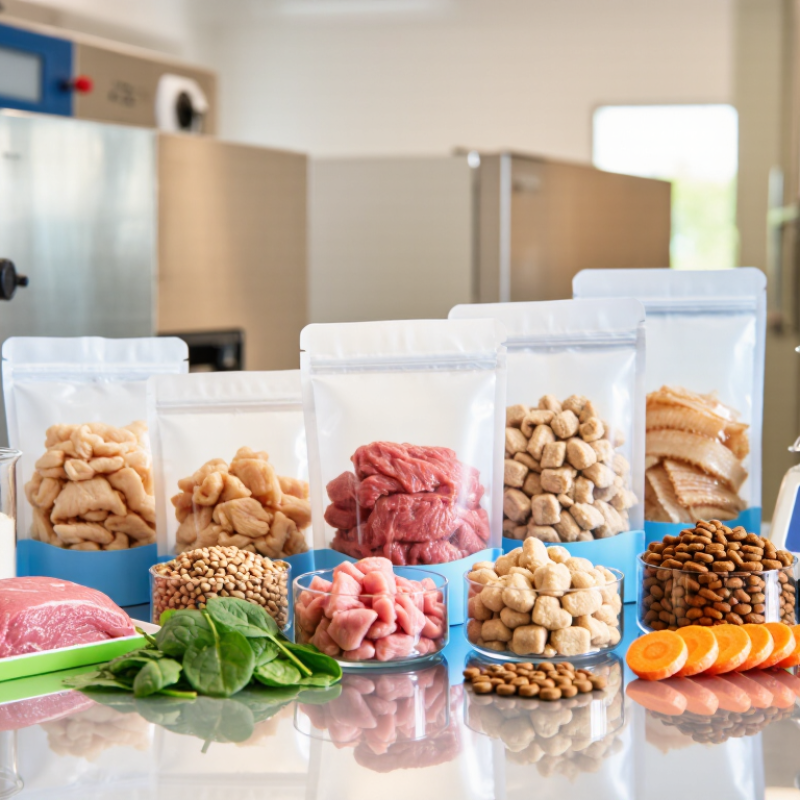
China’s freeze-dried pet food sector has expanded from small specialty workshops into a competitive manufacturing market. Many Chinese suppliers now produce Freeze Dried Dog Food for domestic brands, private labels, and international distributors.

This guide examines ten notable manufacturers linked to this category. The selection considers ingredient sourcing, formulation support, freeze-drying capacity, batch testing, facility controls, packaging, and export experience. It does not treat factory size as proof of quality. A polished website is not enough.

Veterinary nutritionist Dr. Lisa M. Freeman offers a useful reminder: “There is no one best diet for all pets.” Her point matters here. Dogs differ in age, activity, allergies, and medical needs. Therefore, a reliable manufacturer should provide clear nutritional information, feeding guidance, traceability, and evidence behind its product claims.

Good Freeze Dried Dog Food should show more than attractive meat pieces in a pouch. Look for named animal proteins, transparent ingredient lists, appropriate nutrient statements, and sensible storage instructions. Ask whether suppliers test for pathogens, moisture levels, and nutritional consistency. Better companies can usually explain these details without vague promises.

Some information may remain difficult to verify publicly. That limitation deserves attention. Factory visits, independent laboratory reports, and current certifications can reveal more than online rankings. This overview is a practical starting point, not a final judgment. Buyers should confirm each manufacturer’s capabilities before signing a contract or recommending products to pet owners.
China Top 10 Freeze Dried Dog Food Manufacturers?

How China’s Top 10 Freeze-Dried Dog Food Manufacturers Are Ranked

Ranking China’s top 10 freeze-dried dog food manufacturers requires more than comparing online popularity. A reliable review examines production experience, ingredient traceability, processing controls, and documented quality systems. Factory audits can reveal whether raw materials are stored correctly and whether equipment is cleaned between batches. Experience matters, but it is not enough.

The ranking should also consider freeze-drying performance. Inspectors may review moisture levels, water activity, texture, and batch consistency. Clear batch codes and complete laboratory reports improve trust. Manufacturers with stable sourcing can better explain where meat, organs, and supplements come from. Export experience is useful, especially when facilities follow recognized food safety procedures and maintain accurate records.

Evidence remains imperfect. Some factory information is self-reported, while independent testing may cover only selected batches. That weakness deserves attention. A fair ranking should compare recent audit results, complaint handling, production capacity, and response speed. It should also check whether feeding instructions are specific and whether packaging protects the food from moisture. Small details matter. A damaged seal can undermine excellent processing. Expert reviewers should revisit the list regularly, because facilities, suppliers, and standards can change.

China Top 10 Freeze-Dried Dog Food Manufacturers: Key Quality Benchmarks

This chart presents recognized adult-dog nutritional benchmarks commonly used when evaluating freeze-dried dog food products. Protein, fat, calcium, and phosphorus values are based on AAFCO Dog Food Nutrient Profiles on a dry-matter basis; moisture is shown as a maximum reference for dry pet food.

Freeze-Drying Standards: Moisture Below 5% and Water Activity Under 0.60

China Top 10 Freeze Dried Dog Food Manufacturers?

Freeze-dried dog food is often judged by appearance, but moisture control matters more. A reliable manufacturer should target moisture below 5% and water activity under 0.60. These are different measurements. Moisture shows the amount of water present, while water activity reflects how available that water is for microbial growth.

A professional production line should monitor drying temperature, chamber pressure, and product thickness. Small meat cubes may dry evenly, but dense organs can retain moisture inside.

Testing only the surface is not enough. Samples should come from several cartons and production points. Independent laboratory reports can support internal quality records.

Batch-specific certificates are more useful than general marketing claims. Packaging must protect the finished food from humidity. After opening, I would expect a dry texture and no soft centers. That check is simple. It is not perfect.

Home observations cannot replace laboratory testing. A trustworthy manufacturer should also explain its sampling method, instrument calibration, and retest procedure. Buyers comparing leading Chinese suppliers should ask for recent results showing moisture below 5% and water activity under 0.60, rather than accepting one old report.

Even experienced buyers can overlook storage conditions. A strong process includes sealed packaging, traceable batches, and clear handling instructions for customers.

Nutritional Benchmarks: AAFCO Minimums of 18% Protein and 5.5% Fat

China’s freeze-dried dog food sector is expanding, but protein and fat claims require careful reading.

The AAFCO Dog Food Nutrient Profiles, 2024 edition, set adult-maintenance minimums at 18% crude protein and 5.5% crude fat on a dry-matter basis. These figures are nutritional floors, not ideal targets for every dog.

Freeze-dried food often contains only 3% to 8% moisture.

A label showing 18% protein as-fed may provide about 19% protein on a dry-matter basis when moisture reaches 5%.

The same calculation can lift 5.5% fat to roughly 5.8%.

Small differences matter. Always check the guaranteed analysis and conversion method.

The National Research Council’s Nutrient Requirements of Dogs and Cats also stresses life stage, calorie intake, and nutrient balance.

Puppies and breeding dogs need higher minimums; AAFCO lists 22.5% protein and 8.5% fat for growth and reproduction.

Manufacturing audits should examine laboratory results, ingredient traceability, oxidation control, and batch consistency.

A 2023 Pet Food Institute industry report highlighted quality assurance as a central concern across pet food production.

Still, protein percentage alone can mislead. Digestibility and amino-acid balance matter.

Some labels remain difficult to compare. That is worth questioning.

Manufacturer Profiles: Capacity, Certifications, Private Label, and Export Reach

China Top 10 Freeze Dried Dog Food Manufacturers?

A credible shortlist should compare more than factory photos and claimed output. Grand View Research estimates strong growth in the global freeze-dried pet food market through 2030. This trend raises one practical question: can each manufacturer scale safely? Profiles should disclose annual capacity, freeze-drying chamber size, monthly utilization, and backup power. A large number means little if production slots remain unavailable.

Certifications separate experienced suppliers from attractive listings. Check current HACCP, ISO 22000, BRCGS, and third-party laboratory records. Exporting to the United States also requires compliant facility registration and documented ingredient controls. European shipments need careful traceability and approved raw-material processes. The FEDIAF European Pet Food Industry report highlights the region’s substantial pet population and strict safety expectations. Paperwork matters.

Private-label capability deserves equal attention. Ask about minimum order quantities, recipe ownership, sample approval, packaging options, barcode support, and artwork lead times. Export reach should be verified through destination records, not vague claims about “global service.” Review temperature logs, moisture results, Salmonella testing, and recall procedures. The American Pet Products Association reported U.S. pet industry spending above 140 billion dollars in 2023, showing the commercial scale behind demand. Still, capacity figures can be optimistic. I would request two recent production references and an unedited factory audit. Small gaps often reveal larger risks.

China Top 10 Freeze Dried Dog Food Manufacturers? - Manufacturer Profiles: Capacity, Certifications, Private Label, and Export Reach
Anonymous Profile Manufacturing Region Estimated Freeze-Dried Capacity
(Metric Tons/Year)
Core Product Capability Quality and Food-Safety Certifications Commonly Supported Private Label Capability Typical MOQ Indicative Lead Time Export Reach Packaging and Compliance Support
Profile 01 Shandong 1,500–3,000 Complete freeze-dried meals, meat treats, training bites, and toppers HACCPISO 22000BRCGS support Formula adjustment, flavor development, custom shapes, and private packaging 500–1,000 kg per SKU 35–55 days after artwork and formula approval North America, Europe, Australia, Southeast Asia, and the Middle East Multilingual labels, nutrition panels, barcode placement, carton design, and export documentation
Profile 02 Jiangsu 800–1,800 Single-protein freeze-dried treats, organ-meat products, and functional toppers HACCPISO 9001FDA facility registration support Low-to-medium volume private label, custom ingredient combinations, and retail-ready packs 300–800 kg per SKU 30–50 days United States, Canada, Japan, South Korea, and selected European markets Stand-up pouches, jars, sachets, oxygen absorbers, and lot-code printing
Profile 03 Zhejiang 2,000–4,000 High-volume freeze-dried raw diets, complete-and-balanced formulas, and treats HACCPFSSC 22000 or equivalentGMP-based controls Large-scale contract manufacturing, custom recipes, and multi-SKU programs 1,000–2,000 kg per SKU 45–70 days Europe, North America, Oceania, and Asian e-commerce markets Batch traceability, allergen control, shelf-life testing, and export certificate coordination
Profile 04 Guangdong 600–1,500 Premium freeze-dried treats, bite-sized snacks, and small-bag retail products HACCPISO 22000Third-party laboratory testing Flexible private label for specialty retailers, online sellers, and subscription boxes 200–500 kg per SKU 25–45 days Southeast Asia, North America, Australia, and the Gulf region Small-format packaging, custom inserts, retail cartons, and promotional bundles
Profile 05 Hebei 1,000–2,500 Chicken, beef, duck, and mixed-protein freeze-dried treats and meal mixers HACCPISO 9001Veterinary inspection controls Private-label recipes, basic functional claims support, and custom pack sizes 500–1,000 kg per SKU 35–60 days Eastern Europe, Southeast Asia, the Middle East, and Africa Ingredient specifications, certificates of analysis, carton marks, and palletization plans
Profile 06 Fujian 700–1,600 Marine-protein treats, fish-based toppers, and mixed meat-and-seafood formulas HACCPISO 22000Heavy-metal testing support Custom seafood formulas, private label packaging, and seasonal product launches 300–700 kg per SKU 30–55 days Japan, South Korea, Southeast Asia, North America, and Australia Moisture and oxidation control, desiccant options, bilingual labels, and shelf-life reports
Profile 07 Henan 1,200–2,800 Cost-efficient freeze-dried treats, organ-meat snacks, and bulk foodservice formats HACCPISO 9001Supplier audit support Bulk private label, distributor programs, and simplified packaging configurations 800–1,500 kg per SKU 35–60 days South America, Southeast Asia, Africa, the Middle East, and Eastern Europe Bulk cartons, private-label bags, pallet loading plans, and commercial invoice support
Profile 08 Liaoning 500–1,200 Premium single-ingredient treats, small-batch recipes, and limited-edition products HACCPISO 22000Microbiological testing Small-batch customization, short product runs, and premium packaging development 150–400 kg per SKU 30–50 days Japan, South Korea, North America, Australia, and selected EU buyers Gift-style boxes, resealable pouches, product photography support, and traceability coding
Profile 09 Hunan 900–2,000 Functional toppers with supplements, digestive-support treats, and daily feeding products HACCPISO 22000GMP ingredient controls Formula co-development, ingredient sourcing, private label, and functional positioning support 300–800 kg per SKU 40–65 days North America, Europe, Southeast Asia, and the Middle East Ingredient documentation, recommended-use statements, stability testing, and regulatory review support
Profile 10 Inner Mongolia and North China supply chain 1,000–2,200 Beef-based freeze-dried meals, red-meat treats, and high-protein training products HACCPISO 9001Export inspection support Custom protein ratios, retail and wholesale packaging, and distributor-exclusive SKUs 500–1,000 kg per SKU 35–60 days Europe, North America, Australia, Southeast Asia, and the Middle East Protein-source documentation, batch records, export cartons, and container-loading coordination
Data note: The profiles are anonymized industry benchmarks based on commonly published capabilities of Chinese pet-food manufacturers. Actual production capacity, certifications, export eligibility, minimum order quantities, and lead times should be verified directly through factory audits, current certificates, product test reports, and destination-market requirements.

Buyer Evaluation: Testing, Minimum Order Quantities, Traceability, and Lead Times

China’s freeze-dried dog food sector deserves a careful buyer audit, not a glossy top-ten list. APPA reported that U.S. pet industry spending reached $152 billion in 2024. Demand is strong, but purchasing errors remain expensive.

Request recent certificates of analysis for moisture, protein, fat, pathogens, and oxidation. Ask whether each batch receives independent laboratory testing. AAFCO standards can guide nutrient checks, but compliance claims still require document verification. I would inspect retained samples, packaging seals, and the test laboratory’s accreditation. One missing result can matter more than a polished factory tour.

Traceability should reach the farm, production line, lot code, and shipment date. GS1 research shows that better product identification improves supply-chain visibility, yet many records remain manual. Ask for a mock recall exercise. Can the supplier locate one pallet within four hours? Test the answer. Minimum order quantities should be measured against shelf life, storage space, and cash flow. A low price is not always low risk. Lead times also need written stages: ingredient booking, production, testing, packaging, and export preparation. Industry supply-chain surveys often show planning disruptions lasting weeks, not days. I would allow safety stock, although my first estimate might still be too optimistic. Share your forecast gradually, and review performance after three shipments.

Product Added

Go to Quote Request Form

Continue Product Search