Top 10 Aluminum Sunroom Suppliers for Global Buyers
Global demand for bright, usable living space has made the Aluminum Sunroom an increasingly practical choice for homeowners and commercial projects. Yet a sunroom is more than a glass enclosure. Frame strength, thermal breaks, drainage, glazing, and installation details all affect comfort and service life. Small details matter.
The International Energy Agency’s Tracking Buildings report notes that buildings account for about 30% of global final energy consumption. That figure covers the wider building sector, not sunrooms alone, but it highlights why buyers should ask suppliers for documented thermal-performance data. A slim aluminum profile may look elegant; without suitable glazing and insulation, it can still leave a room cold in winter or overheated in summer. No single specification fits every climate.
This guide introduces ten suppliers for global buyers, with attention to product range, customization, export experience, technical documentation, and after-sales support. Compare more than catalog photos. Ask for project references, test reports, coating options, packing methods, and realistic lead times. Check whether stated certifications apply to the exact product and destination market. Details matter. Supplier claims can be polished, and public information is sometimes incomplete. That is worth acknowledging. The shortlist is intended as a starting point for careful due diligence, not a guarantee of performance. Before ordering, confirm measurements, shipping terms, installation responsibilities, and warranty coverage in writing.
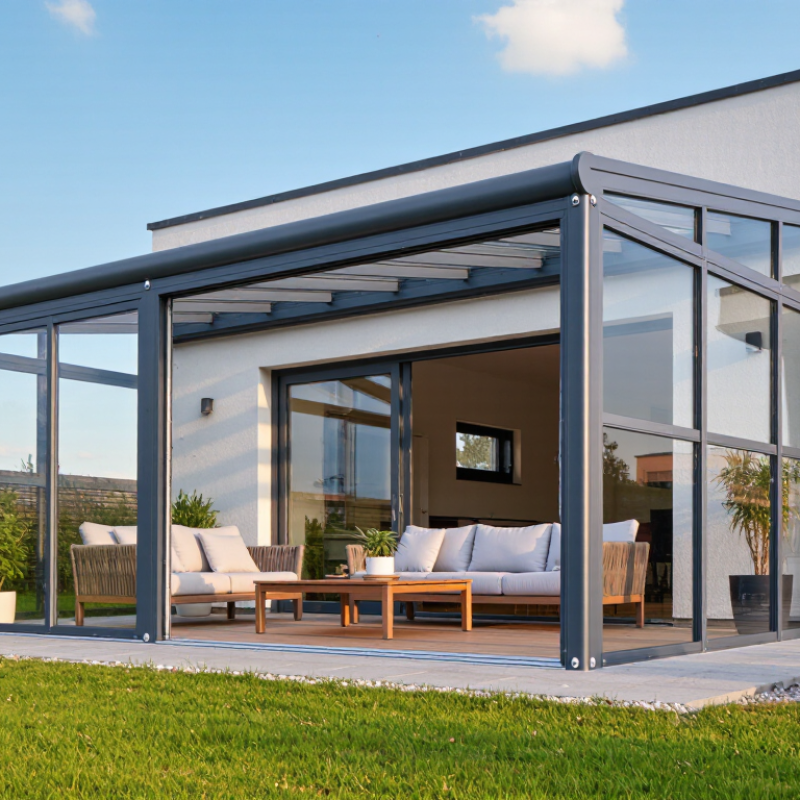
What Aluminum Sunroom Suppliers Offer Global Buyers
What Aluminum Sunroom Suppliers Offer Global Buyers
Global buyers need more than aluminum frames. Experienced suppliers can provide project drawings, alloy and finish options, glazing specifications, and packing plans for overseas shipping. UNEP’s 2024/25 Global Status Report for Buildings and Construction estimates that buildings account for 32% of global energy demand and 34% of energy-related carbon emissions. That makes thermal performance worth checking, not assuming. Ask for documented U-values, thermal-break details, and glass specifications suited to the project’s climate.
A capable supplier should explain fabrication tolerances, drainage paths, hardware choices, and how replacement parts can be ordered. For example, a buyer can request a corner-joint sample and inspect its finish, fit, and water-management details before approving production. Clear drawings and inspection records help reduce surprises across borders. Still, a strong catalogue is not proof of consistent factory quality. Details matter.
Tips: Request a project-specific quotation, installation drawings, and packaging photos. Confirm who handles freight and after-sales support. Compare the complete specification, not just the frame price; cheaper glass can undermine comfort. Ask for references from similar climates, then verify them independently.
How to Evaluate Suppliers for Quality, Cost, and Compliance
For global buyers, supplier evaluation should begin with evidence, not brochure claims. Ask for alloy and coating specifications, profile-wall thicknesses, and hardware details. Review sample corners, drainage channels, and sealant joints; these reveal more than a glossy product photo. Small defects matter. Request test reports for air and water performance, and check whether the tested configuration matches the system being quoted. A polished catalog can still hide inconsistent production. That is easy to overlook.
Compare the full delivered cost, including packaging, freight, installation guidance, replacement parts, and warranty terms. A low unit price may become expensive if glass dimensions or frame tolerances vary between batches. Confirm production capacity and lead times with recent schedules, not only estimates. For compliance, ask which standards and documentation apply in the destination market, then verify certificates with the issuing body where possible. Requirements differ by region and project type. Keep written records of specifications, approved samples, and revisions. No checklist is perfect. I would leave room for an independent inspection before shipment, especially when the first order is large.
Evaluating Aluminum Sunroom Suppliers: A Buyer Scorecard
Suggested evaluation weights for comparing suppliers on quality, cost, compliance, and delivery. These are buyer-set priorities, not market statistics or ratings of specific companies.
Request project-relevant test reports and material specifications, compare itemized quotations on the same scope, and verify applicable building-code and certification requirements for the destination market.
Top 10 Aluminum Sunroom Suppliers Across Global Markets
Across global markets, aluminum sunroom suppliers are not interchangeable. Climate, freight distance, installation skills, and local project requirements all shape a good match.
When comparing ten leading options, request alloy and coating specifications, thermal-break drawings, glass performance values, drainage details, and tested wind-load data.
Small details matter. At a coastal site, one poorly sealed corner can matter more than a polished catalog image. Confirm that proposed dimensions and technical documents suit the project before paying a deposit.
Energy performance deserves equal attention. The 2023 Global Status Report for Buildings and Construction, published by UNEP and GlobalABC, reports that buildings and construction accounted for 34% of global energy demand and 37% of energy- and process-related carbon dioxide emissions in 2022.
That context makes shading, airtight joints, and thermal breaks practical checks, not marketing extras. The International Aluminium Institute reports that recycling aluminum can require up to 95% less energy than producing primary aluminum. Still, rankings are imperfect. Recycled content alone proves little; ask for traceability and supporting documentation.
Compare warranty exclusions, replacement-part lead times, and sample-corner workmanship as carefully as frame prices.
Comparing Supplier Strengths, Product Ranges, and Service
Comparing aluminum sunroom suppliers means checking how their systems perform, not just comparing frame prices. Ask for section drawings, alloy and coating specifications, glazing options, and tested thermal data. The UNEP and Global Alliance for Buildings and Construction 2023 report estimated that buildings used 34% of global energy and produced 37% of energy- and process-related carbon emissions in 2022. That is sector-wide context, not a score for any sunroom. Still, it makes insulation and carefully specified glazing worth examining. A thermal break, for example, should be shown clearly in the profile cross-section. So should the drainage path.
Product range matters when a project has unusual spans, roof pitches, or exposure to wind-driven rain. Compare each supplier’s available configurations and ask how performance figures were tested. A tidy brochure is not enough. Request installation guidance, maintenance instructions, and details about replacement seals or panels. Service can show its quality in small moments: a prompt answer about a leaking corner, or a clear lead time for a custom door. Check whether drawings and specifications arrive before production, and whether the supplier helps resolve measurement questions. Some comparisons remain imperfect; published test results may cover a standard unit, not the exact design being quoted. That deserves a second question.
How to Choose a Supplier for Your Project and Destination Market
Choosing among leading aluminum sunroom suppliers starts with the destination, not the catalog. A coastal project needs durable coatings, corrosion-resistant fasteners, and drainage details that handle driving rain. In colder regions, ask how roof framing and glazing perform under local snow and wind loads. Small details matter. Request drawings and load calculations, then have a local professional confirm they suit the site and applicable building requirements.
Thermal performance also varies by market. Ask for frame U-values, glazing specifications, and thermal-break details instead of relying on claims such as “all-weather.” Compare test reports using the same measurement standards. If reports are unavailable, treat that gap as a risk, not proof of poor quality. A polished sample corner can still conceal weak seals; inspect full-size mockups when feasible, especially around sliding doors and roof joints.
Check whether the supplier has shipped comparable systems to your destination and can provide clear packing lists, installation drawings, replacement-part options, and realistic lead times. Confirm who handles technical questions across time zones. A low quotation may exclude freight protection or local installation support. Request crate photos and verify glass dimensions before production. No checklist removes every risk. If answers remain incomplete, pause before placing a deposit.