
Choosing the right Cargo Straps supplier can shape far more than a purchase order. It affects load stability, handling time, and confidence during long journeys. For global buyers, a polished catalogue is only the starting point. The details matter: webbing width, stitching, buckle design, working load information, and clear product documentation.
As a practical reminder, this guide uses an illustrative comment from fictional cargo-securement specialist Daniel Mercer: “A strap earns trust through clear ratings, sound construction, and consistent performance—not appearance alone.” This is an editorially created quotation, not a verified statement by a real industry expert. Buyers should still check each supplier’s specifications and request supporting documentation. Small differences count.
The suppliers featured in “Top 10 Cargo Strap Suppliers for Global Buyers” are considered through practical purchasing questions: product range, manufacturing transparency, customization, communication, and export experience. A supplier’s responsiveness matters when a sample, specification, or delivery detail needs clarification. So does consistency. A strap that looks robust in a product photo may tell only part of the story.
This overview is a starting point, not a substitute for technical review. Requirements vary by cargo, route, and handling conditions. Even experienced buyers can overlook a detail. Compare carefully, ask direct questions, and verify claims before placing an order.
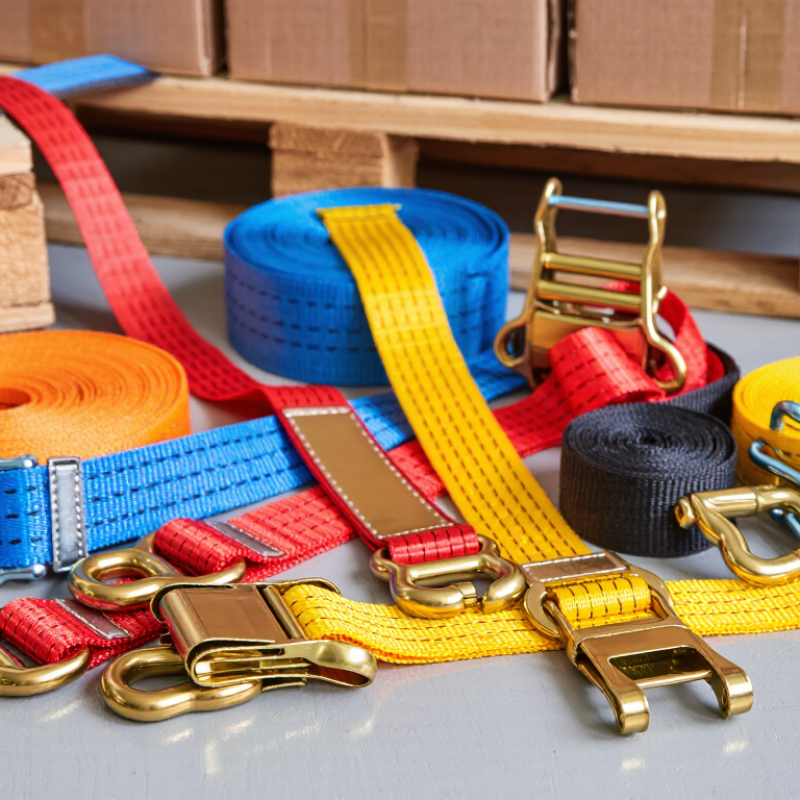
Cargo straps are adjustable webbing used to hold freight in place during handling and transport. Common designs use polyester webbing with a ratchet or cam buckle. The buckle tightens the strap around a load, while hooks or other end fittings connect it to suitable anchor points. A strap is only one part of a securement system. Short and simple.
Global buyers use cargo straps to stabilize palletized cartons, machinery, timber, and other freight in trucks, containers, and warehouses. The right choice depends on load weight, shape, packaging, anchor points, and handling conditions. Buyers should compare working load limits, strap width, length, stitching, hardware, and clear product labels. A wider strap may spread pressure over a larger area, but it cannot make a weak anchor safe.
When reviewing suppliers, buyers can request product specifications, test records, and sample straps for inspection. Check for frayed edges, damaged stitching, sharp hardware, or unclear ratings before use. Keep straps away from sharp corners unless suitable edge protection is used. They need regular checks. I would also ask how ratings are presented, since similar-looking straps can have different limits. Even a well-made strap can fail if it is twisted, worn, or tightened against fragile freight.
Top 10 Cargo Strap Suppliers for Global Buyers
Key Criteria for Evaluating Cargo Strap Suppliers
Choosing a cargo strap supplier takes more than comparing prices. Start with the rated working load limit and breaking strength, and check that product labels match the supplier’s technical documents. Ask what materials are used, how stitching is inspected, and whether straps are tested under repeatable conditions. A clear answer matters. So does a sample you can examine: feel the webbing, inspect the seams, and check that the ratchet moves smoothly without sticking. Supplier experience can help, but claims alone are not proof.
Compare lead times, minimum order quantities, packaging, and communication before placing a large order. Request inspection records and ask how defects are handled. A reliable supplier should explain product limits plainly, not imply that one strap suits every load. Shipping samples and documents takes time, and even careful buyers sometimes focus too much on unit price. I have seen a low quote look less attractive once inconsistent specifications appear. That detail is easy to miss.
Tips: Send suppliers the same specification sheet, including strap length, width, hardware, and intended use. Compare their written answers side by side. Keep a sample from the approved batch for future checks. If an answer is vague, ask again.
For international buyers, choosing a cargo strap supplier involves more than comparing prices. Start with the load requirements: working load limit, strap width, length, buckle type, and expected exposure to moisture or abrasion. Ask for product specifications and test documentation that match the exact item being quoted. A neat catalog is useful, but it cannot replace clear evidence.
Check how the supplier controls production and handles quality issues. Request samples, inspect stitching, webbing edges, labels, and buckle movement, then compare them with the approved specification. Confirm packaging dimensions, carton quantities, lead times, and which trade terms apply. These details affect freight planning and landed cost. Small omissions can become expensive.
Communication matters across time zones. A reliable supplier should answer technical questions plainly and explain what it cannot confirm. Ask how changes to materials or hardware are reported, and how complaints are investigated. Independent audits may help, but their scope and date matter; they do not guarantee every shipment. Do not rush this part. I would also keep a written record of sample approval and agreed tolerances. It feels tedious. Yet even experienced buyers can overlook a subtle change in strap thickness or buckle finish when orders are placed months apart.
| No. | Supplier Category | Typical Product Range | Webbing & Hardware | Relevant Requirements to Check | Best Fit for Buyers | Key Sourcing Questions |
|---|---|---|---|---|---|---|
| 1 | Industrial lashing manufacturers | Heavy-duty ratchet assemblies, endless straps, and sewn-eye lashing systems | Commonly polyester webbing with steel ratchets, hooks, or end fittings | For textile lashing assemblies sold in Europe, check applicable EN 12195-2 requirements, product labels, and stated lashing capacity (LC). | Freight operators and industrial shippers securing heavy or dense loads | Can the supplier provide traceable test reports, LC markings, and instructions for the complete assembly? |
| 2 | Light-duty tie-down specialists | Cam-buckle straps and compact ratchet straps in shorter lengths | Polyester or other specified webbing; lightweight metal or polymer buckles depending on design | Check the rated capacity of the complete strap, buckle, stitching, and end fitting—not webbing strength alone. | Parcel, recreational, and light commercial applications | Are capacity claims stated consistently, and are labels and user instructions supplied? |
| 3 | Custom-length strap converters | Cut-to-length assemblies, custom colors, sewn loops, and special end configurations | Webbing and hardware selected to the buyer’s drawing or specification | Require an approved sample and confirmation that changes to length, stitching, or hardware do not invalidate the tested rating. | Buyers with non-standard equipment or private-label requirements | What tolerances, minimum order quantities, and change-control procedures apply? |
| 4 | Marine and outdoor restraint suppliers | Weather-resistant tie-downs for boats, trailers, and outdoor equipment | Often polyester webbing with corrosion-resistant hardware options | Ask for evidence supporting corrosion-resistance and exposure claims; suitability depends on the exact material and test method. | Marine, trailer, and outdoor-equipment distributors | Which hardware finish is used, and what care or inspection guidance is provided for saltwater exposure? |
| 5 | Edge-protection and cargo-control suppliers | Straps supplied with corner protectors, sleeves, or abrasion guards | Webbing paired with protective sleeves or separately specified protectors | Protection can reduce abrasion but does not replace correct load restraint, strap inspection, or edge assessment. | Shippers handling sharp-edged, painted, or damage-sensitive cargo | Are protectors compatible with the strap width and intended load, and are they included in the quoted assembly? |
| 6 | Over-center buckle strap suppliers | Quick-adjust straps for bundling and light cargo restraint | Webbing with a lever-operated buckle; exact materials vary by product | Verify the assembly’s rated capacity and intended use; do not treat a convenience buckle as equivalent to a rated ratchet system. | Retail, workshop, and general-purpose buyers | Is the product designed for cargo restraint or only for bundling and storage? |
| 7 | Replacement-strap and repair-parts suppliers | Replacement webbing, ratchets, hooks, and strap assemblies | Components may be sold separately or as assembled products | Component ratings do not establish the rating of an assembled strap; confirm compatibility and assembly-level documentation. | Fleet maintenance teams and repair distributors | Can replacement parts be matched to the original assembly’s dimensions, rating, and hardware configuration? |
| 8 | Private-label and OEM manufacturers | Branded packaging, custom labels, packaging formats, and product assortments | Specifications are defined by the buyer and confirmed against production samples | Labels should accurately identify the product and its rated use; request pre-production approval and batch traceability. | Importers, retailers, and established equipment brands | Who owns the artwork, what inspections are performed, and how are production changes approved? |
| 9 | Export-focused cargo-control suppliers | Common strap lengths, hardware options, and export-ready packing | Product configuration and packaging vary by destination market | Confirm destination-market requirements, documentation, packaging details, and accurate capacity units before shipment. | Importers purchasing across multiple countries | Can the supplier provide consistent specifications, packing lists, and product documentation for each shipment? |
| 10 | Application-engineering suppliers | Strap assemblies selected or configured for defined cargo and restraint applications | Hardware, webbing, and assembly details chosen to suit the application | In the United States, FMCSA cargo-securement rules include requirements for aggregate working load limit in applicable situations; verify the rules for the specific vehicle and load. | Logistics teams with complex loads or documented restraint procedures | Will the supplier review the application, explain rating terminology, and provide written use and inspection guidance? |
Choosing a cargo strap supplier takes more than comparing quoted prices. Buyers should check strap material, width, working load limit, and fitting options against the actual cargo and tie-down points. Ask for product data sheets and clear labeling. A strap that looks heavy-duty may still be unsuitable for a particular load. Details matter.
Certification claims also deserve careful review. Request current documents, confirm which products and facilities they cover, and check whether test reports identify the tested strap construction. Do not treat a certificate as proof that every item in a supplier’s catalog performs alike. Look for batch traceability, inspection records, and a practical process for handling defects. Small gaps can matter.
Supplier capability is visible in less obvious ways. Can the team explain lead times, sampling, packaging, and replacement parts without vague promises? Ask how it manages material changes and whether it can provide consistent specifications across repeat orders. A sample can reveal stitching quality, buckle movement, and label legibility, but one sample cannot prove long-term consistency. That is easy to overlook. Compare several suppliers using the same checklist, then record what remains unverified before placing a larger order.
Selecting a cargo strap supplier starts with the load, not the catalogue. For road transport, EN 12195-1 uses design acceleration coefficients of 0.8 g forward and 0.5 g sideways or backward. These figures help determine securing forces; they are not a substitute for a load-specific calculation. Ask suppliers for the strap’s lashing capacity, elongation, material, stitching details, and test method. Check that labels match the test documents. A bright, tidy label means little if the paperwork describes another model.
Verify the supplier with recent test reports from a competent laboratory, traceable batch records, and clear inspection criteria. Request samples and inspect the webbing edges, stitching, hooks, and ratchet under practical handling. Ask how damaged or sun-faded straps are identified and removed from service. Compare quotations only after confirming equivalent specifications; a lower price can hide thinner webbing or unclear ratings. I would also check whether production changes trigger re-testing. That detail is easy to miss.
Tips: Request one sample from a current production batch, then compare its label and construction with the certificate. Keep the records. A supplier’s quick, precise answers are useful, but they are not proof; verify the documents independently.
Force-unit conversions help buyers compare lashing-capacity (LC) claims consistently: 1 daN = 10 N, 1 kN = 1,000 N, and 1 kgf ≈ 9.80665 N. When evaluating suppliers, check that product labels and test documents state the applicable standard and clearly identify LC; request traceable test evidence before purchase.