
China Top Cast Steel Gate Valve Suppliers?

Choosing among China’s top cast steel gate valve suppliers requires more than comparing prices or polished websites. A reliable supplier should demonstrate practical manufacturing experience, stable quality control, and clear project communication. The Cast Steel Gate Valve must match the pipeline medium, pressure class, temperature range, and applicable industry standards.

This guide examines how experienced buyers can evaluate Chinese manufacturers with greater confidence. We consider foundry capability, machining accuracy, pressure testing, material traceability, and inspection documentation. Factory audits can reveal important details, such as clean casting areas, calibrated testing equipment, and organized storage for finished valves. Small details matter.

Supplier credibility also depends on consistent delivery and honest technical support. Ask for material certificates, hydrostatic test records, dimensional reports, and references from comparable projects. A capable manufacturer should explain body materials, trim options, sealing performance, and maintenance requirements without avoiding difficult questions. Export experience is useful, but it does not automatically prove product quality.

A polished catalog is not proof.

Even experienced purchasers can overlook foundry limitations or weak after-sales service. Supplier rankings may also change by application, certification, production volume, and regional support. Therefore, this overview does not treat any company as universally superior. Instead, it provides a practical framework for identifying dependable China Cast Steel Gate Valve suppliers and reducing avoidable purchasing risks. Claims should be verified independently before approval. With careful comparison, buyers can select valves that support safe operation, predictable maintenance, and long-term pipeline performance.
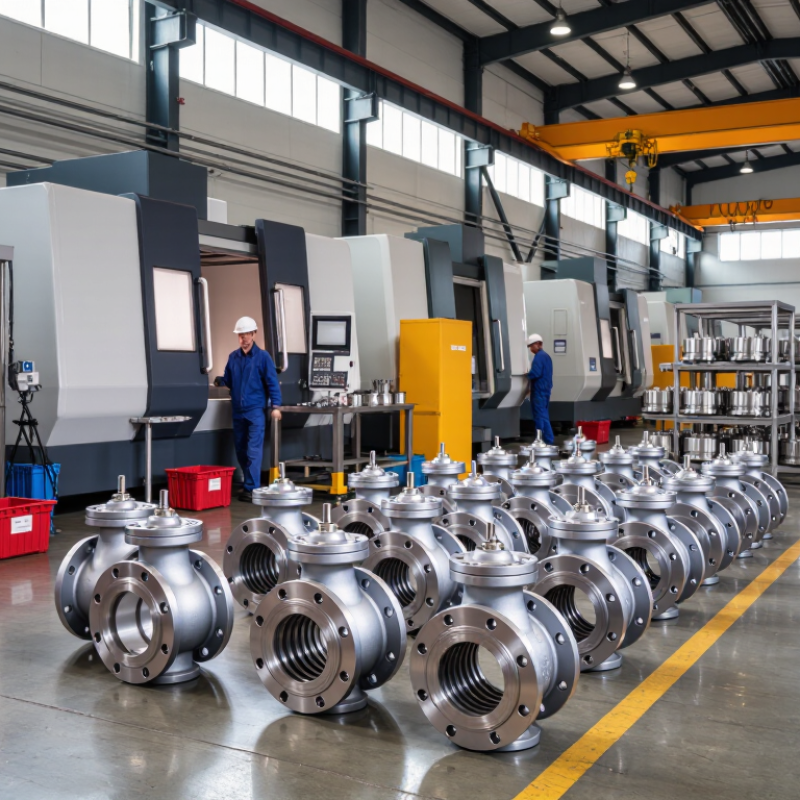
China Top Cast Steel Gate Valve Suppliers?

Cast Steel Gate Valve Standards: API 600, ASME B16.34, and Pressure Classes

For buyers comparing China’s cast steel gate valve suppliers, standards provide a practical way to check whether a quotation fits the service. API 600 specifies requirements for steel gate valves, including design, materials, inspection, and testing. ASME B16.34 supplies pressure–temperature ratings and construction requirements for valves. Both references matter. A valve may meet API 600 yet still need a B16.34 rating suitable for the actual fluid temperature and pressure.

Pressure class is not a single, universal pressure value. Ratings vary with body material and temperature. For example, ASME B16.34 rating tables list about 285 psi at 100°F for Class 150 in ASTM A216 WCB cast carbon steel; higher classes have higher ratings, but the usable value changes as temperature rises. Check the material group, end connection, and rating table—not just the class stamped on the body. Small details count. Request test documentation and confirm that the quoted valve’s design and inspection records match the specified standards. A catalog line can look reassuring, but it does not replace checking the actual temperature, pressure, and material combination.

China Top Cast Steel Gate Valve Suppliers? — Cast Steel Gate Valve Standards: API 600, ASME B16.34, and Pressure Classes

Technical comparison for evaluating cast steel gate valve specifications. Pressure ratings depend on the applicable material group and temperature; confirm the rating tables and project requirements for each valve.

Evaluation Dimension Standard or Specification Relevant Requirements / Typical Details Procurement Check
Gate valve design API 600 Specifies requirements for bolted-bonnet steel gate valves with flanged or butt-welding ends. Its scope includes NPS 2 through NPS 60 and pressure classes 150 through 2500, subject to the standard’s provisions. Confirm size, pressure class, end connection, and the specified edition of API 600.
Pressure-temperature rating and construction ASME B16.34 Covers pressure-temperature ratings, materials, dimensions, tolerances, testing, and marking for valves within its scope, including applicable flanged, threaded, and welding-end valves. Check the rating for the actual body material group and operating temperature; do not treat a class number as a single universal pressure limit.
Common pressure classes ASME class designations Common class designations include 150, 300, 600, 900, 1500, and 2500. The allowable pressure varies with material and temperature. Match the class to the design pressure, design temperature, material, and piping-system requirements.
Cast carbon steel body ASTM A216/A216M Common grades include WCB and WCC for carbon-steel castings used in pressure-containing service where suitable for the specified conditions. Verify the grade, heat treatment, material certification, and compatibility with the service temperature and fluid.
Low-temperature carbon steel body ASTM A352/A352M LCB is a commonly specified cast-steel grade for low-temperature service when the required properties and impact-test conditions are met. Specify minimum design metal temperature and required impact testing; confirm compliance with the purchase specification.
Alloy-steel body option ASTM A217/A217M WC6 is a commonly used cast chromium-molybdenum alloy-steel grade for elevated-temperature applications where appropriate. Confirm the exact grade, heat treatment, temperature range, and process-fluid compatibility with the engineering specification.
Stainless-steel body option ASTM A351/A351M CF8M is a commonly specified cast austenitic stainless-steel grade. Suitability depends on the fluid, temperature, and corrosion conditions. Check corrosion requirements and verify that the body, trim, and other wetted materials are specified consistently.
Inspection and pressure testing API 598, when specified Provides inspection and testing requirements for valves, including shell and closure tests, as applicable to the valve type and purchase requirements. State the required test standard, acceptance criteria, test medium, and documentation in the order.
End-to-end and connection details Applicable design and piping standards Dimensions and end details depend on the selected valve design, size, pressure class, and connection type. Flanged and butt-welding ends have different dimensional requirements. Request certified dimensional drawings and verify flange facing, drilling, bore, and weld-end details against the project specification.
Supplier documentation Purchase specification / inspection plan Typical deliverables may include material certificates, pressure-test reports, inspection records, drawings, and traceability information, as required by the order. Define required records, inspection hold points, marking, traceability, and document format before production.

Supplier Qualification: ISO 9001, API 6D, and API 598 Testing

China Top Cast Steel Gate Valve Suppliers?

Supplier Qualification: ISO 9001, API 6D, and API 598 Testing

Choosing a cast steel gate valve supplier takes more than comparing prices. Ask for a current ISO 9001 certificate and check that its scope covers the relevant manufacturing activities. This standard concerns quality management; it does not certify every valve design. A useful audit also examines how the supplier controls material records, machining, and nonconforming parts. Paperwork matters. So does the workshop.

For pipeline service, ask whether the offered valve is designed and manufactured to the applicable API 6D requirements. Confirm the exact model, pressure class, materials, and size range against the documents. Do not assume a supplier’s general API credentials apply to every product. Request traceable material certificates and review a sample manufacturing record. Small gaps can reveal bigger process problems.

API 598 testing provides a practical point of comparison for inspection and pressure testing. Ask for the test procedure, acceptance criteria, and signed reports linked to the valve’s serial or batch number. Check that shell and closure tests match the specified valve and purchase requirements. Witness testing may help on critical orders, though it adds time and cost. A neat report is reassuring, but it is not proof by itself. Review how test equipment is calibrated and how failed tests are handled. Supplier qualification is rarely perfect; records can be incomplete, and buyers should note what still needs verification.

China Cast Steel Gate Valve Supplier Qualification Framework

ISO 9001 addresses quality management systems, API 6D covers pipeline valves, and API 598 defines valve inspection and pressure-testing practices. A value of 1 indicates that the standard directly covers the qualification area; 0 indicates that it does not.

Buyers should verify current certificates, product scope, test records, calibration evidence, and third-party or customer-specific requirements during supplier evaluation.

China’s Top Suppliers: Capacity, Materials, Certifications, and Lead Times

China’s top cast steel gate valve suppliers should be compared by usable capacity, material control, certifications, and realistic lead times—not catalog size alone. The World Steel Association reported China produced about 1.005 billion tonnes of crude steel in 2024. That scale supports a broad industrial supply base, but it does not prove a valve factory’s casting quality or available production slots. Ask for monthly output by valve size, recent inspection records, and traceable heat numbers. Check whether the supplier controls casting, machining, and pressure testing in-house.

Material selection matters. Carbon steel suits many general services; alloy or stainless grades may be needed for higher temperatures or corrosive media. Request material test certificates and confirm grade, heat treatment, and dimensional inspection against the purchase specification. ISO’s 2023 survey recorded more than 1.4 million valid ISO 9001 certificates worldwide. Certification is useful, but it is not a substitute for product-specific testing. Lead times depend on casting patterns, order quantity, machining queues, and inspection scope; obtain a dated production schedule rather than relying on a single quoted number.

Tips: Ask for a sample inspection plan and a recent pressure-test report. Compare promised dispatch dates with documented delivery history. Small details get missed. I would also verify how rejected castings are handled; supplier brochures rarely explain that clearly.

Material Selection: WCB, LCB, and CF8M from −46°C to 593°C

China Top Cast Steel Gate Valve Suppliers?

Material selection determines whether a cast steel gate valve survives real service. WCB suits many carbon steel applications at moderate temperatures. It offers strength, availability, and practical cost control. However, WCB is not a safe choice for severe low-temperature duty. Its impact toughness can become inadequate near −46°C.

LCB is designed for colder service. Its low-temperature toughness makes it more suitable for outdoor pipelines, chilled process lines, and winter installations. Still, the purchase specification should require certified impact testing at the actual design temperature. A material certificate alone is not enough.

CF8M, a cast stainless steel with molybdenum, performs well in corrosive fluids and demanding process environments. It can remain useful at elevated temperatures, including service approaching 593°C, but pressure ratings and mechanical strength must be checked carefully. Temperature changes gasket behavior, seat leakage, and bolting stress. One material cannot solve every problem.

Reliable suppliers should provide heat numbers, chemical analysis, mechanical results, casting inspection records, and pressure-test reports. Ask how they control shrinkage, porosity, and repair welding. These details often reveal more than a polished catalogue.

In practice, trim material may matter as much as the body. A WCB body with unsuitable trim can fail early in abrasive or corrosive media.

Selection should match temperature, pressure, fluid chemistry, cycling frequency, and installation conditions. A shortcut is tempting. It can also be expensive. Some specifications remain incomplete until actual operating data is reviewed.

Procurement Comparison: Sizes, Ratings, Dimensions, and Warranty Terms

China Top Cast Steel Gate Valve Suppliers?

A reliable procurement comparison starts with service conditions, not catalogue prices. Confirm nominal sizes, pressure ratings, temperature limits, and valve body materials. A 2-inch valve may fit the line, yet its face-to-face dimension can differ between standards. Check flange drilling, bore size, handwheel clearance, and stem extension carefully. Ask suppliers for dimensional drawings before issuing a purchase order. In field inspections, mismatched dimensions often cause more delay than defective castings.

Tips: Compare identical specifications.

Request pressure-test records, material certificates, coating details, and inspection procedures. Clarify whether the quoted rating applies to the body, seat, or complete assembly. Warranty terms deserve equal attention. Check coverage length, excluded damage, replacement procedures, response times, and freight responsibilities. A vague “quality guarantee” is not enough. Put every promise in the quotation and purchase contract.

Do not ignore operating frequency. A rarely used isolation valve may need different testing evidence than a frequently cycled unit. Suppliers should explain packing materials, seat design, and maintenance access. I usually request sample nameplates and photographs of finished markings. They reveal useful details, but they are not proof of performance. No comparison is perfect. Allow time for technical review, because the cheapest offer can become expensive after installation.

Product Added

Go to Quote Request Form

Continue Product Search