Top Milled Parts Manufacturers Worldwide?
Finding the Top Milled Parts Manufacturers Worldwide? This question requires more than a glossy supplier list. Milled Parts support aerospace brackets, medical housings, robotics frames, and industrial tooling. Their quality depends on machines, operators, inspection systems, and process discipline.
Market evidence shows why this sector matters. Grand View Research valued the global CNC machine market at approximately USD 83 billion in 2023. Its forecast indicates continued expansion through 2030, supported by automation, aerospace demand, and localized production. The International Federation of Robotics also reported more than 500,000 industrial robots installed worldwide in 2023. More automation increases demand for accurate, repeatable Milled Parts.
Tony Schmitz, a recognized machining researcher and professor, stated, “The goal of machining is not to make chips; it is to make parts.” That principle remains practical. A serious manufacturer should prove it through CMM inspection reports, material certificates, calibrated tools, and documented corrective actions. A clean sample part is not enough.
This guide evaluates manufacturers through tolerance control, five-axis capability, surface finish, engineering support, production capacity, lead time, and traceability. It also considers ISO 9001 or AS9100 certification, where relevant. Yet no ranking is flawless. Published capacity can differ from available capacity. Certification does not guarantee every shipment.
Readers should compare evidence, not promises. Look closely at inspection data. Ask how suppliers manage thin walls, deep pockets, heat-treated alloys, and design changes. The strongest manufacturers combine technical experience with honest communication. That combination often matters more than impressive equipment photographs.
Definition and Role of Milled Parts in Modern Manufacturing
Definition and Role of Milled Parts in Modern Manufacturing
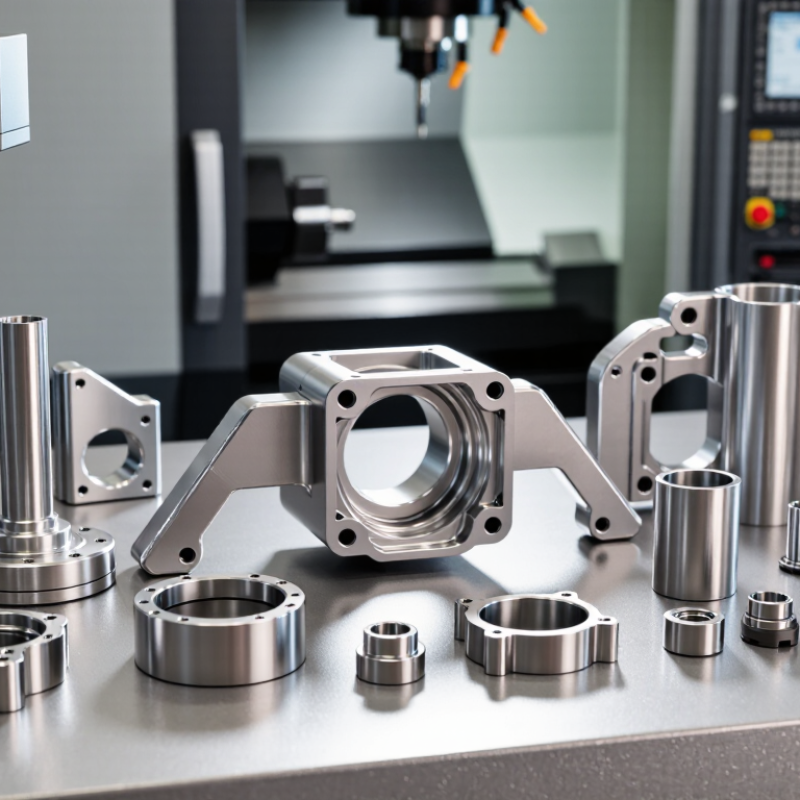
Milled parts are components shaped by removing material with rotating cutting tools. CNC milling machines produce slots, pockets, holes, contours, and complex three-dimensional surfaces. Common materials include aluminum, stainless steel, titanium, engineering plastics, and hardened steels. The process converts a digital model into a physical part with controlled dimensions. That sounds simple, but it is not.
UNIDO’s 2024 International Yearbook of Industrial Statistics places manufacturing at roughly one-sixth of global economic value added. Milled parts support this output in machinery, medical equipment, transport systems, and energy hardware. The International Federation of Robotics reported 541,302 industrial robots installed worldwide in 2023. Each robot cell depends on accurately milled brackets, housings, tooling plates, and replacement components. Small errors can create vibration, leakage, or premature wear.
A capable manufacturer should demonstrate process knowledge, not only attractive tolerances. Look for documented inspection methods, material traceability, tool-life control, and repeatable surface-finish results. Coordinate measuring machines can verify critical features, while in-process probing helps detect drift before batch production. ISO 2768 may simplify general tolerances, but it cannot replace functional engineering judgment. A perfect drawing can still produce a poor part. That uncomfortable gap deserves review. അനുഭവ
Key Materials and Machining Processes Used for Milled Parts
Top Milled Parts Manufacturers Worldwide?
Milled parts manufacturers worldwide compete through material control, process stability, and inspection discipline. Aluminum alloys remain common for housings, brackets, and lightweight structural components. They cut quickly and dissipate heat well. However, thin walls can warp during finishing. That detail matters.
Stainless steel offers corrosion resistance and dependable strength in demanding assemblies. It needs rigid fixturing, sharp tools, and steady coolant flow. Titanium reduces weight but increases cutting difficulty. Lower speeds and careful tool engagement help prevent heat damage.
Engineering plastics suit bushings, guides, and electrically isolated parts. Their low stiffness can produce vibration or dimensional drift.
Process selection shapes the final part. Three-axis milling handles straightforward pockets, faces, and slots. Four- and five-axis machining reaches angled surfaces with fewer setups. Fewer setups can improve alignment. High-speed machining supports smooth contours and reduced cycle times.
Thread milling often gives better control than tapping in difficult materials. Finishing may include deburring, surface grinding, or protective treatment.
In practice, I would not judge a supplier by equipment lists alone. Ask for material certificates, inspection records, and sample dimensional reports. A polished sample can hide unstable production. I have seen small fixture errors create visible mismatch across a batch. That is easy to underestimate.
Clear tolerances, datum references, and realistic delivery targets make technical discussions more reliable. Some specifications still need revision after the first test cut.
Leading Regions and Industry Sectors for Milled Parts Production
Top Milled Parts Manufacturers Worldwide?
Leading Regions and Industry Sectors for Milled Parts Production
Milled parts production is concentrated in East Asia, Central Europe, and North America. East Asian suppliers often provide strong capacity, efficient automation, and competitive pricing. Central European workshops are known for disciplined process control and complex, low-volume work. North American manufacturers commonly support aerospace, medical, defense, energy, and industrial equipment programs. No region wins every job.
Material demand shapes each manufacturing center. Aerospace buyers often require titanium parts, tight inspections, and complete traceability. Automotive producers usually prioritize aluminum, steel, repeatability, and stable delivery. Medical companies need clean production areas, documented processes, and careful surface finishing. Robotics and semiconductor equipment demand intricate geometries, fine tolerances, and reliable five-axis machining. Regional rankings can mislead. A supplier with advanced equipment may still struggle with communication or production planning. That risk deserves attention.
Tips: Compare sample parts, not only hourly rates. Ask about spindle accuracy, coordinate measuring equipment, and inspection records. Confirm tolerance capability with your actual material and geometry. Review packaging methods for delicate edges. Request a realistic pilot schedule. Cheap quotes sometimes hide weak process control. A detailed drawing can expose problems early, although even good drawings may need revision.
How to Select the Right Milled Parts Manufacturer
How to Select the Right Milled Parts Manufacturer Choosing among top milled parts manufacturers worldwide requires more than comparing hourly rates. Start with the part’s actual risk: tolerance, alloy, surface finish, and annual volume. Ask for a capability study on a similar feature. The supplier should show machine size, probing methods, inspection equipment, and Cp/Cpk results. Those details matter more than a polished factory tour. The ISO Survey 2023 reported more than one million ISO 9001 certificates worldwide, but certification alone does not prove milling competence.
Request a first-article inspection package before approving regular production. It should include material certificates, dimensional reports, process records, and calibrated equipment details. Confirm whether the inspection plan matches your drawing and geometric tolerances. Deloitte’s 2024 Smart Manufacturing Survey found that 86% of manufacturers view smart manufacturing as important to competitiveness. Therefore, evaluate digital traceability, revision control, and real-time production updates. These systems reduce confusion, though they cannot replace skilled machinists.
Use a pilot order to test consistency, packaging, and response speed. Ask how quickly the manufacturer handles a nonconformance. Also compare landed cost, not just unit price. A cheaper quote can hide tooling fees, inspection charges, or unstable lead times. No selection method is perfect. A supplier may pass every audit yet struggle with one thin-wall feature. Leave room for technical discussion, sample revisions, and honest warnings before committing to volume production.