
7 Best Custom Stainless Steel Coil Manufacturers?

Choosing the right Custom Stainless Steel Coil manufacturer can shape product quality, production speed, and long-term operating costs. A reliable supplier should provide more than polished samples and attractive quotations. Buyers need consistent thickness, accurate width tolerances, dependable surface finishes, and traceable material documentation.

This guide examines seven leading manufacturers through practical purchasing criteria. We consider stainless steel grades, coil dimensions, slitting capabilities, minimum order quantities, lead times, and quality-control procedures. Certifications can support credibility, but they should not replace direct verification. Ask for mill test certificates, inspection records, sample coils, and clear packaging details before placing a substantial order.

Small details matter. A scratched coil edge may disrupt stamping. Uneven tension can create problems during automated feeding. Delayed communication may also signal weak project support. Manufacturers with engineering experience can help match grades such as 304 or 316L to forming, corrosion, and temperature requirements. However, no supplier is perfect for every application. Rankings can change with location, order volume, customization needs, and delivery expectations.

This comparison aims to make the selection process more practical and transparent. It highlights strengths, limitations, and questions worth asking during supplier evaluation. Some conclusions may require additional confirmation, especially when specifications differ between factories or regions. Use the shortlist as a starting point, not a final decision. A careful review can prevent costly rework and improve confidence in your next stainless steel coil purchase.
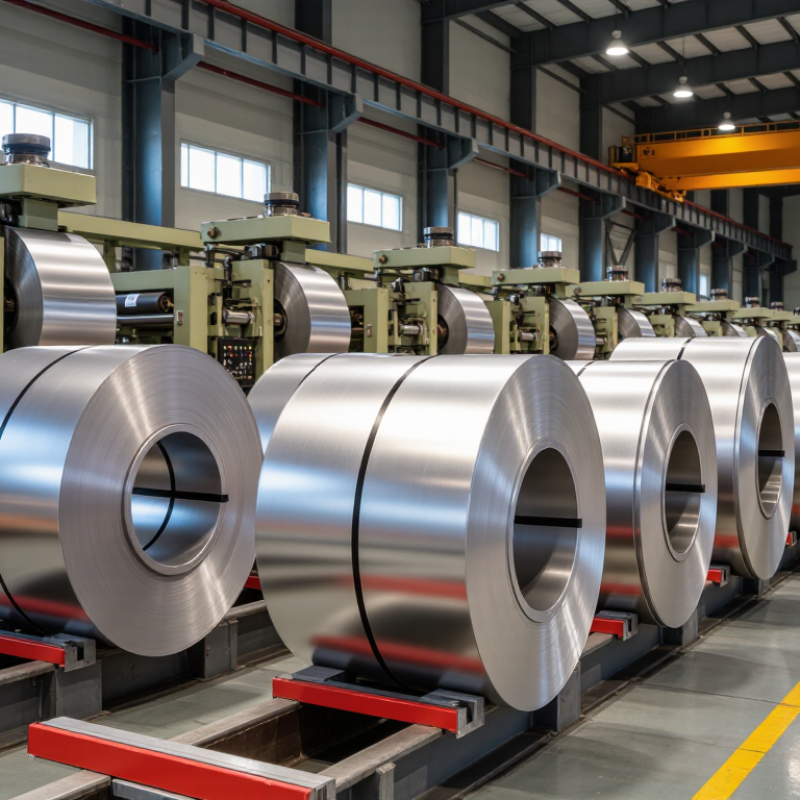
7 Best Custom Stainless Steel Coil Manufacturers?

Custom Stainless Steel Coil Basics: 304, 316L, Thickness, and Width

Custom stainless steel coil selection starts with grade, not appearance. Type 304 typically contains about 18–20% chromium and 8–10.5% nickel, according to ASTM A240 chemical requirements. It suits food equipment, architectural panels, and indoor processing lines. Type 316L adds molybdenum, usually around 2–3%, improving resistance to chlorides and coastal exposure. The “L” designation also limits carbon, supporting cleaner weld zones.

Small details matter.

Thickness and width determine forming behavior, weight, and installation cost. A thin coil bends easily but may buckle during slitting or deep forming. A thicker coil offers stiffness, yet it can increase tooling loads and shipping expense.

The International Stainless Steel Forum reported approximately 58 million metric tonnes of stainless crude steel production in 2023, showing the scale of this competitive supply chain.

However, volume does not guarantee suitable customization. Ask manufacturers for actual thickness tolerance, width tolerance, edge condition, surface finish, coil weight, and test certificates. Not every coil fits.

In practice, 316L is sometimes selected unnecessarily for dry indoor service, while 304 may be underestimated in mildly corrosive environments. That judgment needs exposure data, cleaning chemicals, temperature, and weld design.

I would also verify whether “custom width” means slit width or mill width; these are not interchangeable.

A useful specification states grade, thickness, width, tolerance, finish, inside diameter, outside diameter, and packaging method. Published production figures provide context, but traceable inspection records provide confidence.

Industry Standards: ASTM A240, EN 10088, and ISO 9001 Certification

When comparing the 7 best custom stainless steel coil manufacturers, standards should guide the decision. ASTM A240 verifies suitable stainless steel plate, sheet, and strip for demanding applications. It also supports checks on chemical composition, mechanical strength, and corrosion performance. EN 10088 defines stainless steel grades, technical delivery conditions, and dimensional requirements across European markets. A reliable manufacturer should provide heat numbers, test reports, and clear traceability for each coil. Documentation matters.

ISO 9001 certification evaluates the manufacturer’s quality management system, not the stainless steel grade itself. It indicates controlled processes, corrective actions, customer feedback procedures, and consistent recordkeeping. During supplier reviews, ask for the certificate’s scope and validity. Check whether it covers coil processing, slitting, custom sizing, or only general administration. I would not treat every certificate as proof of excellent material quality. The actual inspection records still matter.

Tips: Request samples before placing a large order. Measure thickness at several points, especially near coil edges. Inspect the surface under bright, angled light for scratches, pits, and uneven polishing. Confirm whether the finish is 2B, BA, No. 4, or another specified condition. Ask for independent testing when the application involves heat, chemicals, or forming. A small tolerance issue can become expensive during fabrication. Keep written specifications, approved samples, and delivery records together. Suppliers may appear compliant, yet small details can still be missed.

Customizing Coil Dimensions: 0.05–6 mm Thickness and Slitting Tolerances

When comparing the seven best custom stainless steel coil manufacturers, start with dimensional control. A reliable supplier should manage thicknesses from 0.05 to 6 mm with documented process limits. Thin strip needs stable rolling pressure and careful tension control. Thick coil requires different leveling and edge management. Ask how measurements are taken, not only what the brochure promises. Laser gauges, calibrated micrometers, and traceable inspection records matter.

Slitting tolerance must match the final forming process. Width limits may be quoted in fractions of a millimeter, but requirements depend on thickness, grade, coil width, and slit count. Edge burr height, camber, and telescoping can also affect performance. Request a sample coil or trial slit. Measure several points across the length. One reading proves little.

Experienced manufacturers explain capability honestly. Order documents should state nominal size, tolerance, test method, and acceptable burr limits. Certificates should identify the heat number, grade, thickness, width, and surface condition. Statistical process checks help, but they do not replace physical inspection. A perfect tolerance promise can be a warning sign. Real production has variation. I would rather see clear limits than vague confidence. Even dependable suppliers can miss requirements when drawings are incomplete. Confirm packaging, coil weight, joint policy, and corrective-action procedures before approval.

Comparing Seven Manufacturers: MOQ, Lead Time, Capacity, and Traceability

7 Best Custom Stainless Steel Coil Manufacturers?

Comparing custom coil manufacturers requires more than price. World Stainless reported about 58.4 million tonnes of global crude stainless steel production in 2023. That scale shows why capacity claims need context. Ask whether the figure covers melting, cold rolling, annealing, slitting, or only stocked material. A credible supplier should state annual capacity by grade, thickness, width, and finish.

MOQ often separates flexible service from mass production. Smaller trial orders may suit prototypes, but custom gauges can require a higher minimum. Lead time should be divided into production, testing, and shipment. For standard coils, a practical benchmark may be three to six weeks, while unusual alloys or narrow widths can take longer. Confirm this in writing. Delays happen.

Traceability deserves equal weight. ISO 9001-based procedures and EN 10204 inspection documents can support heat-number tracking from coil to mill certificate. Request records for chemical composition, mechanical properties, surface finish, and slit dimensions. The International Stainless Steel Forum’s production statistics help verify market scale, but they do not validate one supplier’s factory. I would also check sample certificates and audit the actual process. Capacity brochures can be optimistic. A missing heat number is a serious warning.

7 Best Custom Stainless Steel Coil Manufacturers? - Comparing Seven Manufacturers: MOQ, Lead Time, Capacity, and Traceability

Manufacturer Profile Typical MOQ Standard Lead Time Monthly Capacity Common Stainless Grades Typical Thickness / Width Range Traceability and Quality Documentation Custom Processing Capability Certifications and Testing
Manufacturer Profile 1 500 kg per specification 3–5 weeks for repeat grades; 6–8 weeks for special finishes 800–1,200 metric tons 304/304L, 316/316L, 430 0.05–3.00 mm
Width: 5–1,250 mm
Heat number Mill test certificate Coil ID tracking Slitting, precision leveling, edge trimming, protective film, custom packing EN 10204 3.1 certificates; chemical analysis; tensile and hardness testing
Manufacturer Profile 2 1,000 kg per size and grade 4–6 weeks for standard products; 8–10 weeks for new tooling 1,500–2,500 metric tons 201, 304, 304L, 316L, 409, 430 0.10–4.00 mm
Width: 10–1,500 mm
Heat number Batch records Final inspection report Slitting, cut-to-length, deburring, narrow-strip processing, surface polishing ISO 9001 quality system; PMI testing available; dimensional inspection reports
Manufacturer Profile 3 300 kg for stocked material; 800 kg for custom production 2–4 weeks for stocked coils; 5–7 weeks for production orders 600–900 metric tons 304/304L, 316/316L, 321, 430 0.03–2.00 mm
Width: 3–800 mm
Heat and lot traceability Coil maps Certificate archive Micro-slitting, precision rewinding, tension control, surface protection, sample coils EN 10204 3.1 documentation; surface inspection; thickness and width verification
Manufacturer Profile 4 2,000 kg per production run 5–8 weeks for standard specifications; 8–12 weeks for special alloys 3,000–5,000 metric tons 304, 304L, 316L, 321, 410, 430 0.20–6.00 mm
Width: 20–1,600 mm
Heat number ERP lot tracking Inspection plan Heavy-gauge slitting, leveling, edge conditioning, annealing, pickling, custom packaging ISO 9001; ISO 14001 commonly available; mechanical, chemical, and corrosion testing by request
Manufacturer Profile 5 750 kg per specification 4–6 weeks for standard grades; 6–9 weeks for mirror or specialty finishes 1,000–1,800 metric tons 201, 304/304L, 316L, 430, 441 0.08–3.00 mm
Width: 8–1,300 mm
Heat certificate Process records Barcode labeling 2B, BA, brushed, polished and embossed finishes; slitting; film lamination; edge protection ISO 9001; surface roughness measurement; salt-spray or corrosion testing on request
Manufacturer Profile 6 250 kg for trial orders; 500 kg for repeat orders 3–5 weeks for trial quantities; 5–8 weeks for recurring production 400–700 metric tons 304/304L, 316/316L, 17-7 PH, 301 0.02–1.50 mm
Width: 2–600 mm
Heat and lot tracking Sample approval records Full dimensional report Ultra-narrow slitting, precision temper rolling, tension leveling, deburring, prototype production ISO 9001; ASTM or EN test reports; hardness, tensile, flatness, and burr inspection
Manufacturer Profile 7 1,500 kg per grade and finish 6–9 weeks for standard orders; 10–14 weeks for export projects or special finishes 2,000–3,500 metric tons 304/304L, 316L, 321, 347, 410, 430 0.15–5.00 mm
Width: 15–1,550 mm
Heat number Digital batch history Third-party inspection support Slitting, leveling, annealing, pickling, custom edge condition, export-grade packaging ISO 9001; EN 10204 3.1; third-party chemical, mechanical, and dimensional inspection available

Note: The figures shown are realistic industry benchmark ranges for anonymized Stainless Steel Coil Suppliers. Actual MOQ, lead time, capacity, available grades, and documentation may vary according to alloy, thickness, width, surface finish, order quantity, tooling requirements, and destination.

Selecting the Best Supplier: Quality Data, Certifications, Pricing, and Service

Selecting the Best Supplier: Quality Data, Certifications, Pricing, and Service

The best custom stainless steel coil manufacturer should prove performance before discussing price. World Stainless reported about 58.4 million tonnes of crude stainless steel production in 2023. That scale increases choice, but it also makes supplier screening harder. Request heat numbers, chemical analysis, tensile results, hardness, thickness tolerance, and surface-finish records. Each document should match the coil identification and delivery batch. Small gaps matter.

Certifications need practical relevance. ISO 9001 supports controlled quality processes, while ISO 14001 and ISO 45001 indicate environmental and occupational systems. For traceability, ask for EN 10204 3.1 inspection certificates. If the coil enters pressure equipment, food production, or regulated construction, verify the applicable material and product standards. A certificate alone is not proof of consistent production. Audit scope and expiry dates deserve attention.

Pricing should include slitting, edge condition, packaging, testing, freight, and possible rejection costs. Nickel and alloy surcharges can change quotations quickly, so request a clear adjustment formula. The World Bank Commodity Markets Outlook shows why metal-linked costs require careful review, even when stainless steel is not priced directly there. Service is measurable: sample lead time, response hours, corrective-action records, and replacement policy. Ask for production photographs or an audit. I would still inspect a trial coil. On paper, suppliers can look nearly identical. Reality often disagrees.

Product Added

Go to Quote Request Form

Continue Product Search