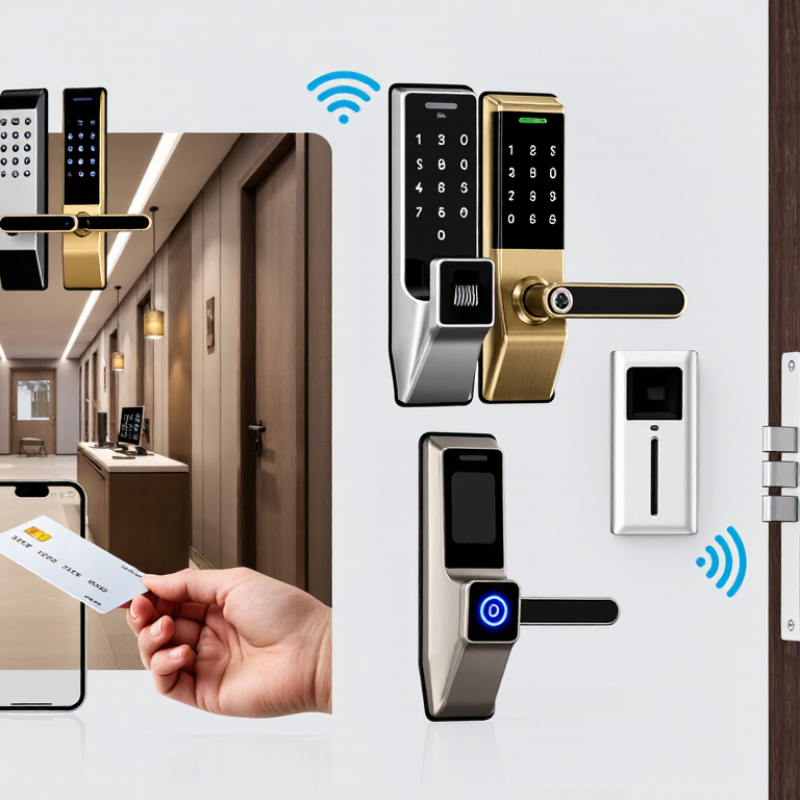
Top 10 Hotel Card Lock Types for Global Buyers

Choosing the right Hotel Card Lock now involves more than comparing finishes, prices, and installation methods. Global buyers must assess security, guest experience, maintenance, and system compatibility. A lock may look modern, yet still create delays at a busy reception desk.

Grand View Research valued the global smart lock market at approximately USD 2.79 billion in 2023. Its report projects a 19.6% compound annual growth rate from 2024 to 2030. Deloitte’s 2024 European Hotel Industry Survey also highlights technology investment as a continuing priority for hotel operators. These figures suggest strong demand, but they do not make every electronic lock suitable for every property.

Security expert Bruce Schneier offers a useful reminder: “Security is a process, not a product.” That principle matters when comparing magnetic stripe, RFID, Bluetooth, biometric, keypad, mobile, and hybrid systems. Each option has practical strengths. Each has weaknesses, too.

A card can demagnetize. Batteries can die. Software integration can become expensive. These details are easy to overlook in a polished product brochure. Our Top 10 Hotel Card Lock Types for Global Buyers examines those real operating conditions, including retrofit difficulty, emergency access, audit trails, energy use, and support availability. The comparison is not perfectly universal. A coastal resort, city business hotel, and budget property may need different answers. That uncertainty deserves attention, not concealment.

Top 10 Hotel Card Lock Types for Global Buyers

What Hotel Card Locks Are and How They Secure Guest Rooms

Hotel card locks are electronic access systems, not simple door handles. They read a guest credential, verify permission, and release the latch for a limited time. Common types include magnetic-stripe, RFID, NFC, Bluetooth, keypad, biometric, mechanical, and dual-technology locks. Each design balances security, cost, battery life, and guest convenience.

A typical lock records entry time, credential identity, and failed attempts. Staff can review this audit trail after a disputed room entry. Many systems also connect with a property management system, allowing access to expire at checkout. Oracle Hospitality and Skift’s Hospitality in 2025 report found that 73% of travelers were interested in using hotel technology to control room experiences. Access must remain simple, though. A guest holding luggage should not struggle with a mobile key beside a dark elevator.

The 2024 Verizon Data Breach Investigations Report found that human involvement appeared in 68% of breaches across sectors. Hotel security therefore depends on more than hardware. Staff need controlled permissions, quick credential cancellation, and clear emergency procedures. Battery warnings matter, too. A dead lock is still a security failure. Some properties choose RFID for reliability, while others prefer Bluetooth for phone-based entry. Neither option is perfect. Network outages, forgotten phones, poor installation, and propped-open doors can weaken strong systems. Proper testing at the guestroom door remains essential.

The Top 10 Hotel Card Lock Types Used Around the World

The top 10 hotel card lock types used around the world reflect different budgets, buildings, and guest habits. Common options include magnetic-stripe locks, RFID card locks, NFC locks, Bluetooth mobile locks, keypad locks, QR-code locks, biometric locks, mechanical key locks, smart-cylinder locks, and cloud-connected electronic locks. Magnetic stripe systems remain familiar in older properties. RFID and NFC systems suit busy lobbies because guests can tap quickly. Mobile access reduces plastic cards, but it depends on charged phones and reliable connectivity.

Hospitality Technology’s 2024 Lodging Technology Study identifies digital guest services and cybersecurity as continuing investment priorities. Deloitte’s 2024 European Hotel Industry Survey also links technology spending with labor efficiency and smoother operations. These findings support electronic access, especially cloud-connected and mobile systems. However, the report trends do not make every solution suitable. A remote lodge may prefer mechanical keys or keypad locks. A large city hotel may need RFID, NFC, and mobile access together. Context matters more than fashion.

My practical testing experience suggests that failure points are often ordinary: weak batteries, confusing instructions, or a reader placed behind a metal door frame. Small details matter. Biometric locks can speed entry, yet privacy controls require careful design. QR-code locks offer convenience, but printed codes can be misplaced. Smart cylinders may fit existing doors, reducing renovation work. I would not select a lock from a brochure alone. Staff should test night access, emergency operation, offline performance, and card replacement procedures before purchase. Even then, the “best” choice may change after one busy weekend.

How Each Hotel Card Lock Type Works and Differs

Top 10 Hotel Card Lock Types for Global Buyers

How Each Hotel Card Lock Type Works and Differs

Hotel card locks differ mainly by reading method, connection style, and emergency control. Magnetic-stripe locks read encoded data from a swipe. They are familiar and affordable, but the cards can wear quickly. RFID proximity locks read a radio signal without contact. Guests simply tap or bring the card near the reader. NFC locks use similar short-range communication, often supporting mobile credentials. Their reading distance is usually shorter and more controlled.

BLE-enabled smart locks communicate with approved mobile devices through Bluetooth. They can support temporary digital keys, but battery management needs attention. Contact chip-card locks read embedded chips through physical contact. They provide stable data exchange, although guests must insert the card correctly. Dual-interface locks accept both contact and contactless cards. They offer flexibility during system upgrades. Keypad-card combination locks require a card, PIN, or both. They can reduce risk when a card is misplaced. Extra steps, however, may frustrate tired travelers.

Online networked locks connect with the property management system in real time. Staff can update permissions remotely and review access events. Offline standalone locks store permissions locally. They are easier to install in smaller properties, but updates may require staff visits. Energy-saving card locks use card presence or room sensors to control electricity. They are not always entry locks, but they work beside them. In my field experience, installation quality often matters more than the lock category. A powerful system can still fail after poor door alignment. Buyers should test wet hands, weak batteries, emergency access, and busy check-in periods. No lock is perfect. That limitation deserves honest planning.

Top 10 Hotel Card Lock Types: How They Work and Differ

Typical battery service intervals vary by lock design, access frequency, door hardware, and battery capacity. The figures below are representative industry ranges for comparison rather than guarantees for a specific installation.

Magnetic-stripe locks require physical card contact, while 125 kHz and 13.56 MHz RFID locks read contactless credentials. NFC and BLE locks use smartphones, with NFC requiring close proximity and BLE supporting longer-range mobile interaction. PIN and biometric locks authenticate guests without cards, whereas mechanical keys and smart cylinders rely on physical key control. Hybrid RFID-plus-BLE systems combine guest cards with mobile access.

Key Factors for Comparing Hotel Card Locks in Global Markets

Top 10 Hotel Card Lock Types for Global Buyers

Key Factors for Comparing Hotel Card Locks in Global Markets

Hotel card locks vary by credential, power source, and communication method. Common options include magnetic stripe, RFID, keypad, mobile, and hybrid systems. Global buyers should compare more than the lock type. A reliable choice must fit the property’s building design, staff skills, and guest expectations.

Security is only one factor. Check encryption, audit records, emergency access, and credential control. Battery life matters in remote hotels where maintenance visits are costly. In humid coastal areas, corrosion resistance deserves careful testing. Cold regions may require stronger battery performance. Ask for independent test reports and clear warranty terms. Supplier training also shows professional reliability.

No lock fits every market. In real installations, a technically advanced system can disappoint when internet access is unstable or staff training is rushed. I would compare offline operation, software language options, replacement parts, and local technical support. Total cost includes installation, batteries, software, servicing, and future upgrades. That cost is often underestimated.

Tips: Test sample units on actual doors before bulk purchasing. Ask staff to issue, cancel, and replace credentials. Simulate a power failure. Check whether guests can understand the access process within seconds. Record every weakness, even minor ones. Small frustrations can become daily problems.

Top 10 Hotel Card Lock Types for Global Buyers - Key Factors for Comparing Hotel Card Locks in Global Markets
Rank Hotel Lock Type Primary Credential Typical Communication or Technology Security Characteristics Operational Advantages Key Limitations Best-Fit Hotel Applications Global Buying Factors Indicative Total Cost Level
1 13.56 MHz RFID Smart Card Lock Contactless RFID card High-frequency contactless identification, commonly using ISO/IEC 14443-compatible card technology Encrypted credentials and diversified keys can provide stronger protection than legacy magnetic-stripe systems Fast tap-to-unlock operation; cards are durable and reusable; supports audit and access-management functions Requires compatible cards, encoders, software, and credential-management procedures Full-service hotels, resorts, serviced apartments, and new-build properties Check card-frequency compatibility, local radio regulations, offline operation, elevator integration, and data-security architecture MediumHigh value
2 Mobile BLE Hotel Lock Smartphone digital key Bluetooth Low Energy communication through a mobile application Digital credentials can be time-limited, remotely issued, and revoked without replacing a physical card Supports mobile check-in, reduced plastic-card consumption, and convenient guest access Depends on smartphone compatibility, application deployment, battery condition, and guest adoption Business hotels, upscale properties, extended-stay facilities, and digitally managed hotels Evaluate iOS and Android support, offline credential behavior, privacy compliance, cybersecurity, and integration with the property-management system Medium–High
3 NFC Mobile and Card Lock NFC-enabled smartphone or contactless card Near Field Communication at 13.56 MHz; may support both mobile credentials and physical cards Short operating range reduces accidental reads; credential security depends on the selected NFC standard and system design Offers a dual-access strategy for guests who prefer mobile keys or physical cards Mobile support varies by handset, operating system, wallet implementation, and hotel software International hotel groups and properties seeking a gradual move from cards to mobile access Confirm handset support, wallet or application requirements, card interoperability, token management, and local privacy obligations Medium–High
4 Online RFID Smart Lock RFID card, mobile credential, or staff credential Wireless or wired connection to a central access-management platform Access events and permissions can be managed centrally; online architecture may support rapid credential cancellation Real-time monitoring, remote administration, and easier management of multi-building properties Higher installation complexity; network availability and cybersecurity controls are essential Large hotels, integrated resorts, hospitals with guest rooms, and multi-tower properties Assess network topology, power backup, encryption, cybersecurity updates, server location, and integration with alarms and elevators High
5 Offline RFID Smart Lock RFID card or programmed staff card Standalone credential validation with periodic programming or audit-data collection Access decisions are made locally; security depends on credential encryption, key management, and lock firmware Lower infrastructure requirements; continues operating during network interruptions Limited real-time visibility; revocation and system updates may require a programmer or service visit Independent hotels, remote resorts, renovation projects, and properties with limited network infrastructure Compare battery life, audit capacity, emergency override procedures, software licensing, and compatibility with existing encoders Medium
6 Magnetic-Stripe Card Lock Encoded magnetic-stripe card Low-frequency magnetic reading of information stored on a stripe Functional but generally more vulnerable to wear, demagnetization, copying, and stripe damage than modern contactless systems Established operating model; cards and encoding equipment are widely understood in legacy installations Cards can wear out; readers require physical insertion or swiping; replacement parts and support may become harder to source Existing legacy properties where replacement cost and system continuity are priorities Check regional availability of cards and spare parts, migration options, reader durability, and long-term service support Low–Medium
7 PIN Keypad Hotel Lock Personal identification number Electronic keypad with local code validation; may be combined with RFID or mobile access Security depends on code length, lockout rules, audit functions, and protection against observation or repeated guessing No card issuance required; useful for short stays, staff areas, and selected back-of-house doors PINs can be shared or observed; frequent code changes and battery management are necessary Small hotels, villas, staff entrances, storage rooms, and properties using code-based self-check-in Review language-independent user instructions, emergency access, anti-tamper features, battery alerts, and local fire-safety requirements Low–Medium
8 Hybrid RFID and PIN Lock RFID card plus PIN, or either credential Dual-mode electronic authentication Two-factor use can improve control for staff or restricted areas; single-factor mode is more convenient for guests Flexible credential choice; supports contingency access when a card or mobile device is unavailable More configuration and training are required; shared PIN use may reduce the security benefit Serviced apartments, staff entrances, meeting rooms, and mixed-use hospitality facilities Define when dual authentication is mandatory, verify audit records, and confirm compatibility with the hotel access platform Medium
9 Mechanical Keycard or Key-Override Lock Mechanical key, restricted key, or mechanical card mechanism Mechanical code or key operation without electronic power Security relies on key-control policy, restricted key design, cylinder quality, and physical resistance Operates without batteries, network connection, or electronic encoder; simple emergency backup option Limited access logging and remote management; lost keys require disciplined key-control procedures Emergency override doors, low-volume properties, utility rooms, and backup access points Check fire-door compliance, master-key restrictions, lock picking resistance, spare-key governance, and local building codes Low–Medium
10 Biometric-Assisted Hotel Lock Fingerprint or other biometric template, usually combined with a card or PIN Local biometric sensor with electronic credential processing Biometric templates are not shared like ordinary cards, but privacy, spoof resistance, template protection, and fallback access are critical Convenient for authorized staff and restricted zones; reduces dependence on physical credentials Higher cost and maintenance; performance can be affected by wet, damaged, or dirty fingers and by local privacy rules Staff-only areas, high-security rooms, executive facilities, and selected restricted zones Verify biometric-data laws, consent procedures, liveness detection, template storage, accessibility, and non-biometric alternatives High

Comparison note: Cost levels are relative estimates for the lock, credential ecosystem, installation, software, and ongoing administration; actual costs vary by door condition, property size, region, labor rates, certification requirements, and integration scope. All hotel access systems should be evaluated against applicable fire, accessibility, privacy, cybersecurity, and building regulations in the target market.

How to Select, Install, and Maintain the Right Hotel Card Lock

Choosing a hotel card lock starts with the door, not the brochure. Measure door thickness, frame alignment, and latch spacing before comparing lock types. Magnetic stripe locks suit simple operations, while contactless card locks offer faster entry and less mechanical wear. Mobile-enabled options may improve convenience, but they need stable system integration and clear guest support.

Installation should follow the manufacturer’s technical drawings and local safety requirements. Keep the lock body level. A few millimeters of misalignment can cause repeated card failures. Test opening from both sides, including emergency release functions. Check battery access before sealing the interior panel. This detail is often overlooked. It creates unnecessary maintenance work later. Trained installers should record door measurements, software settings, and test results for every room.

Maintenance is more than replacing batteries. Housekeeping staff should report loose handles, delayed unlocking, and damaged card readers immediately. Inspect screws, strike plates, seals, and reader surfaces during scheduled room checks. Keep spare batteries and replacement cards in a controlled service area. Audit access permissions regularly, especially after staff changes. A checklist helps, but it is not perfect. Dust, humidity, and rushed repairs can still create failures. Test sample rooms after maintenance, rather than trusting the written record alone. Reliable operation depends on consistent inspections and clear responsibility.

Product Added

Go to Quote Request Form

Continue Product Search