What Are the Top Processing Heater Types in 2026?

In 2026, choosing a Processing Heater is less about finding a single “best” technology and more about matching heat delivery to the process. A refinery furnace, food-production line, and chemical reactor face different temperatures, materials, and control requirements. Direct-fired heaters transfer heat from combustion gases, while indirect-fired units keep the flame separate from the process stream. Electric heaters can offer precise control where suitable power is available. Thermal-fluid systems circulate heated fluid through jackets or coils, and infrared systems can heat exposed surfaces quickly. It matters. These categories can overlap, and terminology may vary between suppliers.

This guide compares the main processing heater types considered for industrial applications in 2026. It examines operating temperature, heat-up time, product sensitivity, footprint, maintenance demands, and energy availability. A heater that performs well in a test cell may behave differently on a production line, where airflow, fouling, and shift patterns affect results. Not always. Before selecting equipment, buyers should verify process data, material compatibility, control requirements, and service support with qualified engineers and technical documentation. Efficiency figures also need context: operating load, insulation, energy prices, and measurement methods can change comparisons. The aim is practical orientation, not a universal ranking. Some trade-offs remain stubborn. The right choice depends on measured duty, safe operating limits, and downtime costs—not simply the heater’s nameplate rating.
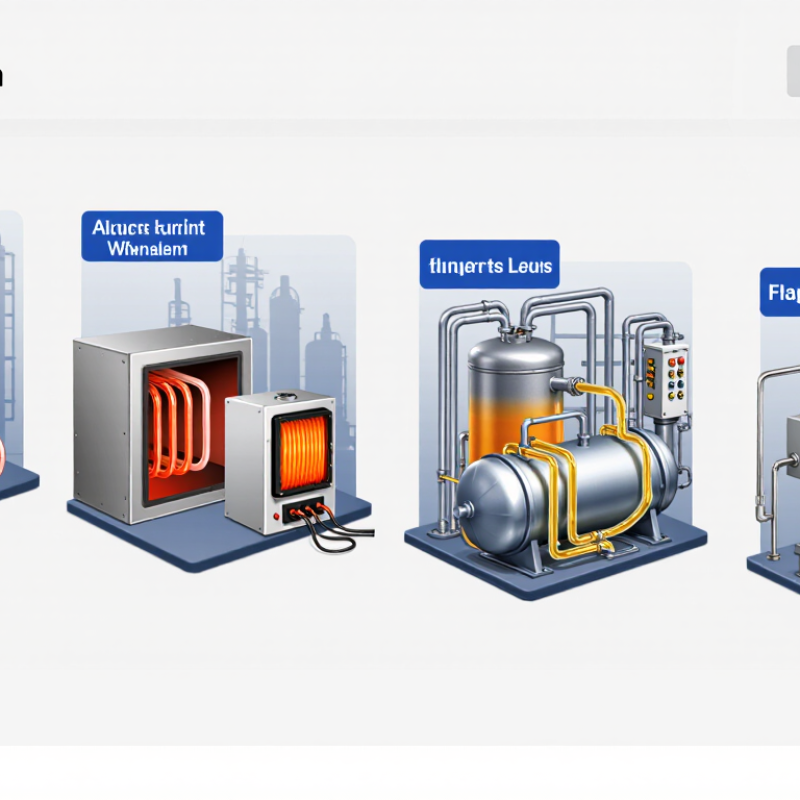
What Are the Top Processing Heater Types in 2026?

What Processing Heaters Do in Industrial Systems

Processing heaters turn fuel or electricity into controlled heat for liquids, gases, and solids moving through industrial systems. They warm feedstocks before reactions, maintain vessel temperatures, and help remove moisture from products. In a refinery, for example, a heater raises flowing oil to a set temperature before it enters a processing unit. In food production, heated water or air can support cooking and drying. The duty is practical: deliver the required temperature without damaging the material or disrupting flow.

The scale is significant. The International Energy Agency’s Industry report estimates that industry uses about 37% of global energy. The U.S. Department of Energy’s Industrial Decarbonization Roadmap identifies process heating as a major manufacturing energy use, accounting for roughly half of manufacturing energy consumption. That makes heater selection more than a temperature question. Operators also consider heat transfer, response time, fuel, insulation, exhaust losses, and changing production loads. Small details matter. A poorly placed sensor can make a system overheat one section while another stays cool. Electric, fired, and heat-transfer-fluid systems each suit different duties, but no type is automatically best. Real operating data should guide the choice; design assumptions can miss the messy parts of daily production.

How Processing Heaters Are Classified by Heat Source

Processing heaters are often classified by the source that supplies heat. Fuel-fired units burn gas or liquid fuel, then transfer heat to process tubes or vessels. They suit high-temperature duties and continuous operation. Operators must monitor flame stability, exhaust temperature, and tube-surface conditions. The hot radiant zone is easy to picture.

Electric heaters convert electrical energy into heat through resistance elements, induction, or infrared radiation. Resistance elements work well for controlled heating in tanks and ducts. Induction heats conductive materials using an electromagnetic field, while infrared transfers energy across a gap. Steam or hot-oil systems use a heated medium instead of generating heat directly at the process equipment. These categories can overlap in real installations, so the heat path matters as much as the energy source.

Tips: Match the heater to the material, target temperature, and required response time. Check available utilities, temperature uniformity, maintenance access, and heat losses. A small cold spot near an outlet can affect product quality. Efficiency figures alone do not tell the whole story; operating conditions change them. When comparing designs, document actual process temperatures and load patterns. That detail is sometimes missing.

The Leading Processing Heater Types in 2026

The leading processing heater types in 2026 include electric resistance, gas-fired, thermal-fluid, steam, and induction systems. Each suits different process conditions. Electric resistance heaters offer precise control for tanks, ovens, and smaller production lines. Operators can adjust zones to reduce temperature swings near sensitive materials. The trade-off is exposure to local electricity costs and available supply.

Gas-fired heaters can deliver high output for large furnaces and continuous process lines. Their performance depends on burner setup, airflow, and regular checks for uneven heating. Thermal-fluid systems circulate heated oil through jackets or coils, supporting steady temperatures in reactors and dryers. They need careful fluid monitoring. Steam remains practical where a reliable boiler system already exists, though pressure limits can restrict operating temperatures. Induction heats conductive materials directly and responds quickly, but it cannot serve every load.

Details matter. A heater’s rated capacity alone rarely predicts production results. Vessel geometry, insulation, startup time, and sensor placement all affect temperature uniformity. A tidy comparison chart can hide those complications. In practice, the best fit may be less obvious than expected, especially when a process changes between batches. Reviewing operating data alongside maintenance needs gives engineers a sounder basis for selection.

What Are the Top Processing Heater Types in 2026? — The Leading Processing Heater Types in 2026

Heater Type How It Delivers Heat Common Processing Uses Key Advantages Important Considerations
Electric Resistance Heater Electric current heats elements that transfer heat to a liquid, gas, or solid surface. Tank and vessel heating, air and gas heating, plastics processing, and temperature maintenance. Precise temperature control, clean operation at the point of use, and straightforward integration with automated controls. Electrical supply capacity and energy costs matter; element selection must suit the fluid, temperature, and operating conditions.
Direct-Fired Process Heater Fuel combustion transfers heat to process fluid flowing through tubes inside a fired enclosure. Refining, petrochemical processing, and other duties requiring high process-fluid temperatures or substantial heat input. Can provide high heat output and is well established for large-scale continuous process duties. Requires combustion controls, emissions management, burner maintenance, and safeguards against tube overheating.
Thermal Fluid Heater A heater warms circulating heat-transfer oil or another thermal fluid, which then supplies heat to process equipment. Indirect heating of reactors, dryers, presses, tanks, and production lines that need circulating heat. Provides a closed-loop heat source and can distribute heat to multiple users without using process steam. Fluid condition, circulation, expansion capacity, leak prevention, and maximum fluid temperature require attention.
Steam Heater Steam condenses in a coil, jacket, or exchanger and releases latent heat to the process material. Batch vessels, heat exchangers, food processing, chemical production, and building or plant process services. Offers effective heat transfer and can use an existing steam-generation and distribution system. Condensate drainage, pressure control, water treatment, and steam availability affect reliable operation.
Infrared Heater Infrared radiation transfers energy directly to exposed surfaces without first heating the surrounding air. Coating and paint curing, drying, web processing, and heating of accessible surfaces. Can heat targeted areas quickly and reduce the need to warm a large volume of air. Performance depends on material absorption, emitter-to-product spacing, line of sight, and uniform exposure.
Induction Heater An alternating magnetic field induces electrical currents in electrically conductive workpieces, generating heat within them. Metal heating, forging, heat treatment, brazing, and selected process applications involving conductive materials. Enables rapid, localized heating and can provide repeatable control without direct contact with the workpiece. Requires a suitable conductive load; coil design, workpiece geometry, and power-system requirements influence results.

Selection note: The best heater depends on the process material, required heat duty, operating temperature, available utilities, control requirements, and applicable safety and emissions rules. Actual performance varies with system design and operating conditions.

Where Each Heater Type Performs Best

Direct-fired heaters suit drying tunnels, paint curing, and furnaces where fast heat transfer matters. Combustion gases contact the load, so they are a poor fit for contamination-sensitive products. The U.S. Department of Energy’s Improving Process Heating System Performance sourcebook estimates process heating uses about 32% of manufacturing energy. That scale makes burner tuning and exhaust losses worth checking. Small leaks matter.

Indirect-fired units and thermal-fluid systems work well when products need even, separated heat. They suit jacketed vessels, heated rolls, and processes where combustion products must stay away from materials. Their trade-off is slower response, plus fluid upkeep that operators can underestimate. Electric resistance heaters offer tight temperature control for ovens, tanks, and small batch lines, provided site power capacity and tariffs make sense. Infrared heaters can rapidly warm exposed surfaces, such as coated sheets, but shadows and thick sections reduce their advantage. DOE’s Bandwidth Study on Energy Use and Potential Energy Savings Opportunities in U.S. Manufacturing highlights process heating as an important efficiency opportunity. Still, the “best” type depends on load shape, temperature uniformity, ventilation, and operating hours—not just rated efficiency. A heater can look efficient on paper and disappoint on the line.

Key Criteria for Comparing and Selecting a Processing Heater

Choosing a processing heater starts with the material and the duty, not a product category. Gas-fired units can suit high, continuous heat loads, while electric heaters offer precise control where clean operation matters. Thermal-fluid systems distribute heat through jackets and coils; steam may work well at moderate temperatures. The labels alone tell little.

Check the required temperature range, ramp-up time, and heat uniformity. A batch vessel that needs a steady 180°C may behave differently from a fast-moving production line. Ask how the heater responds when flow changes or a cold load enters. Small details matter. Compare usable output, not just the nameplate rating, and include insulation losses in the estimate.

Operating conditions narrow the choices further. Review the process fluid, atmosphere, pressure, available utilities, and space for installation. Controls should detect abnormal temperatures and support stable operation without constant manual adjustment. Look at maintenance access, expected component life, and the cost of downtime, too. A low purchase price can be misleading. There is no perfect ranking: a heater that performs well in one plant may be inefficient in another. I would also revisit the assumptions after a trial run, because calculated loads can miss real-world heat loss.

What Are the Top Processing Heater Types in 2026?

Indicative process-temperature ranges by heater type

The ranges are approximate and vary with equipment design, operating pressure, process fluid, and application. Compare temperature requirements alongside efficiency, control precision, installation constraints, and maintenance needs when selecting a heater.

Product Added

Go to Quote Request Form

Continue Product Search