
Top 10 RFID Tags for Asset Tracking in 2026

Asset visibility is becoming a practical requirement, not a futuristic ambition. Warehouses, hospitals, manufacturers, and retailers increasingly need to locate equipment without scanning every barcode by hand. The global RFID market reflects this shift. MarketsandMarkets estimates that it will grow from approximately USD 14.5 billion in 2023 to USD 24.6 billion by 2028. Its report identifies supply-chain visibility and inventory accuracy as major growth drivers.

The details matter.

A tag attached to a metal tool behaves differently from one fixed to a cardboard carton. Moisture, mounting position, reader power, frequency, and read distance can change performance within the same facility. This guide evaluates the Top 10 Rfid Tags For Asset Tracking in 2026 through those practical conditions. It also considers memory capacity, durability, battery requirements, operating temperature, standards support, and total deployment cost. The RAIN RFID Alliance reports that passive RAIN RFID can identify many tagged assets quickly, without requiring a battery inside each tag.

Bill Hardgrave, founder of Auburn University’s RFID Lab, has stated, “RFID is not a silver bullet.” That warning deserves attention. A premium tag cannot repair poor antenna placement, inconsistent processes, or incomplete asset data. Sometimes, a cheaper tag performs better after testing.

This selection is therefore not a simple popularity list. It combines manufacturer specifications, industry research, field-use considerations, and realistic deployment limitations. Readers should still test tags on their actual materials, shelves, tools, and containers before purchasing at scale. Numbers on a datasheet rarely tell the whole story.
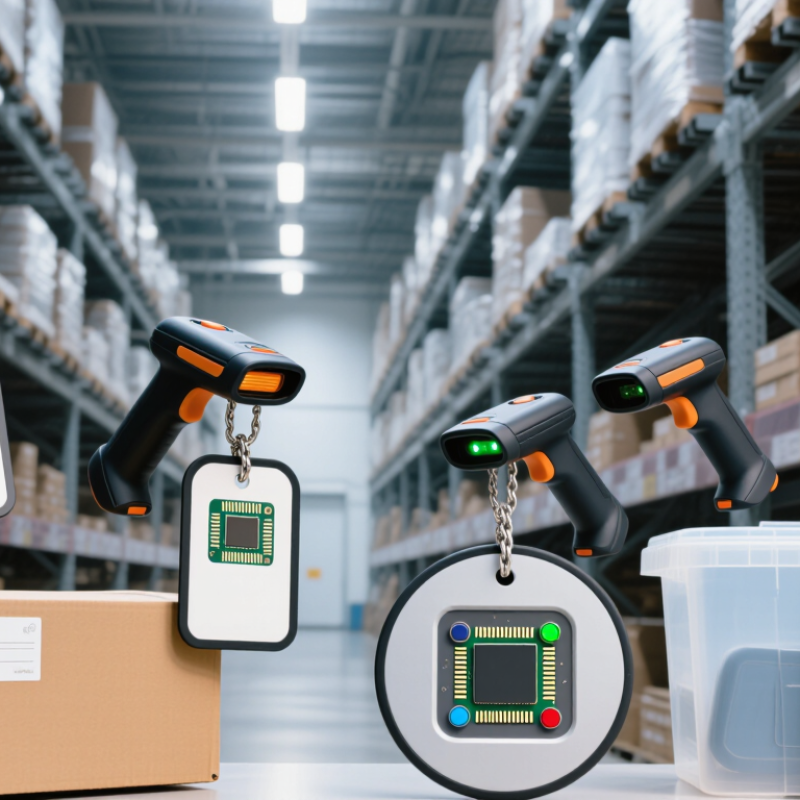
Top 10 RFID Tags for Asset Tracking in 2026

RFID Tag Fundamentals for Asset Tracking

RFID tags turn physical assets into readable data points. Their fundamentals are simple, but deployment rarely is. A tag contains a chip and antenna, storing an identifier that readers can capture wirelessly. The reader sends radio energy, and the tag responds with its data. Most systems use passive tags because they need no internal battery. Active tags include a battery and can support longer read distances. Use the right type.

Tag selection begins with the asset itself. Metal surfaces can detune an antenna, while liquids may absorb radio energy. In practice, a spacer or specialized mounting surface can improve performance. Tag orientation, reader height, and nearby materials also affect reliability. A pilot test should copy real conditions, including stacked equipment and crowded storage areas. Record missed reads, not only successful ones. That detail exposes weak mounting positions before full deployment.

Memory and identifier design need equal care. A unique identifier should remain stable throughout the asset’s service life. Extra data may be stored on the tag, but excessive memory can increase cost and complicate maintenance. Keep records clean. Tags also need physical protection from abrasion, heat, moisture, and repeated handling. I have seen teams trust laboratory read ranges too quickly. That assumption fails around machinery and dense shelving. A measured read zone is more useful than a promising specification.

Key Criteria for Evaluating RFID Tags in 2026

Choosing among the Top 10 RFID Tags for Asset Tracking in 2026 requires more than comparing prices. Start with read performance, memory, durability, and application fit. The RAIN Alliance’s 2024 industry report recorded 52.8 billion RAIN RFID integrated circuits shipped in 2023, showing the technology’s scale. Yet volume does not guarantee reliable reads. Tag selection still depends on asset material, reader position, and warehouse conditions.

For metal tools, use tags with stable performance near conductive surfaces. Plastic containers may need smaller, flexible designs. Check operating temperature, impact resistance, adhesive strength, and IP protection ratings. Auburn University’s RFID Lab testing repeatedly shows that orientation and surrounding materials can affect read reliability. Test tags on real assets, not only cardboard samples. A few centimeters of spacing can change results. That detail is easy to miss.

Tips: Build a test batch first. Measure read rate, missed scans, range, and attachment failures. Record results across shelves, vehicles, and loading areas. Also verify encoding capacity and interoperability with existing readers. I would not trust a single laboratory result; field conditions are less polite. The best tag may not be the smallest or cheapest. It is the one that stays readable after dust, vibration, temperature changes, and repeated handling. Review the 2026 shortlist against documented test evidence, supplier traceability, and total installation cost.

RFID Tag Types and Their Suitable Asset Applications

RFID tag selection starts with the asset, not the reader.

The top ten practical types serve different environments: passive UHF labels for cartons and files; on-metal tags for steel tools; rugged hard tags for returnable containers; embedded tags for pallets; tamper-evident tags for cabinets; cable tags for harnesses; laundry tags for uniforms; high-temperature ceramic tags for painted fixtures; active battery tags for moving equipment; and sensor tags for temperature-sensitive assets.

Passive UHF usually suits high-volume identification. It needs a clear reading path.

The 2024 RAIN RFID Industry Statistics report describes annual inlay shipments in the tens of billions, showing strong demand for scalable item tracking. A 2023 global warehousing study reported that 58% of respondents planned RFID deployment by 2028.

Those figures do not make every tag suitable. Metal detunes ordinary labels, liquids absorb energy, and dense bins create missed reads. On-metal designs use spacers or shielding. Sensor tags add evidence, but they also introduce batteries, calibration, and data-quality risks.

Field tests often expose overlooked problems. A laundry tag must survive heat, water, and repeated folding. A ceramic tag may tolerate harsh treatment but remain too large for a small tool.

I have seen teams choose the longest reading range, then struggle with unwanted reads nearby. That is an imperfect decision.

Test the tag on the real asset, at the real distance, with the real workflow. Record missed reads before purchasing thousands of units.

Top 10 RFID Tags for Asset Tracking in 2026

Top 10 RFID Tags for Asset Tracking in 2026

Choosing the right RFID tag depends on the asset, surface, environment, and reading distance. The leading options include rugged hard tags, on-metal tags, flexible on-metal tags, ceramic tags, and cable-tie tags. Rugged hard tags suit tools, containers, and machinery. On-metal designs perform better on steel shelves and equipment. Flexible versions fit curved surfaces. Ceramic tags tolerate heat and moisture. Cable-tie tags secure pipes, carts, and movable equipment.

Other strong choices include tamper-evident tags, laundry tags, high-temperature tags, windshield tags, and small embedded tags. Tamper-evident types reveal removal attempts. Laundry tags handle repeated washing cycles. High-temperature tags support ovens, engines, and industrial rooms. Windshield tags help identify vehicles without blocking visibility. Embedded tags disappear inside plastic parts, but installation must be planned carefully.

A reliable comparison should measure read range, attachment strength, memory, and scan accuracy. Test tags beside metal, liquids, wiring, and dense storage areas. A tag that reads from eight meters in open space may fail beside a crowded rack. That detail is easy to miss. Battery-free passive tags usually reduce maintenance, while active tags offer longer ranges and sensor data. Costs also include mounting labor, reader setup, and replacement work. No tag wins everywhere. Even a strong shortlist may need revision after seasonal temperature changes or rough handling.

Deployment, Performance Testing, and Maintenance Considerations

Top 10 RFID Tags for Asset Tracking in 2026

Deployment, Performance Testing, and Maintenance Considerations

Choosing among the top RFID tags requires more than comparing read ranges. Match each tag to its asset and environment. Metal surfaces, liquid containers, outdoor exposure, and tight spaces can change performance sharply. Mount tags on a clean, repeatable location. Record orientation, height, and distance from nearby materials. A small placement change can create missed reads.

Test every tag type under real operating conditions. Measure read accuracy, response time, missed reads, and battery behavior where applicable. Repeat tests during loading, movement, and storage. Use several readers and different angles. No test predicts every warehouse. That limitation should remain in the deployment report. Field teams should also verify data flow into inventory systems, not just reader performance. A tag may read correctly but still produce poor records.

Tips: Mark test assets clearly. Keep a baseline sample. Retest after relocation, repainting, or equipment changes. Inspect damaged labels during routine counts and replace them before failure. Review read gaps by location, shift, and asset type. Maintenance plans should include spare tags, cleaning guidance, and documented replacement rules. A common mistake is testing only on empty shelves. Real stock changes the signal path. Furthermore, early results may look excellent, yet seasonal humidity, dust, or rushed handling can expose weaknesses later.

Top 10 RFID Tags for Asset Tracking in 2026

Deployment, performance testing, and maintenance benchmark for common passive UHF RFID tag formats.

The chart compares typical controlled-test read distance with read success at 3 meters for ten widely used asset-tag form factors. Actual results depend on reader power, antenna placement, asset material, tag orientation, environmental interference, and regional UHF regulations. Validate performance on representative assets before deployment and retest tags during scheduled maintenance.

Product Added

Go to Quote Request Form

Continue Product Search