Top Types of Sheet Metal Die Cutting Machines

Choosing the right equipment for sheet metal cutting starts with understanding the job. A Sheet Metal Die Cutting Machine uses a punch and die to cut or shape stock with repeatable force. The result can be a clean opening, a formed edge, or a blank ready for the next operation. Material thickness, part geometry, production volume, and required tolerances all affect which machine makes sense. A setup that works well for thin aluminum may struggle with thicker steel.

Different machine types suit different conditions. Mechanical presses deliver fast, consistent strokes for high-volume work. Hydraulic presses offer adjustable force and control, which can help with thicker materials or varied forming tasks. Servo-driven models provide programmable motion and may reduce wasted movement. Pneumatic systems can suit lighter-duty applications, while turret punch presses handle many hole shapes with interchangeable tooling. Each option has trade-offs. Speed alone does not tell the full story.

This guide compares common machine types, their operating principles, and practical uses. It also considers factors such as tooling changes, floor space, maintenance, and operator skill. A small shop may value flexibility more than maximum output. A busy production line may need stable cycle times and reliable part handling. Details matter. Even a suitable machine can produce poor results when its die is worn or misaligned. Buyers should verify specifications and test representative material before committing. That step takes time, but skipping it can be costly. There is no perfect choice for every shop. The right one depends on the parts, process, and constraints at hand.
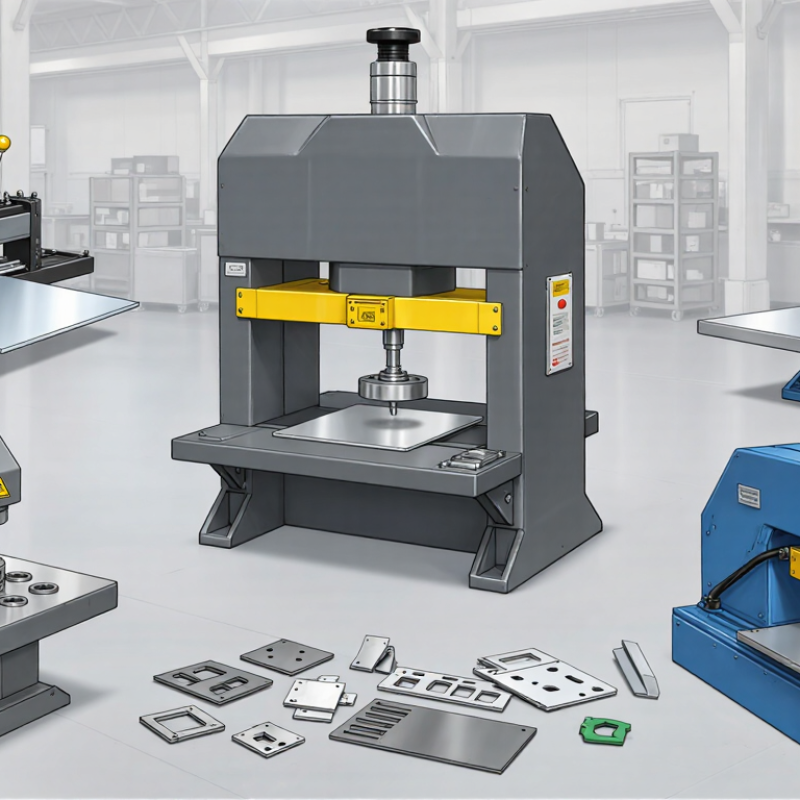
Top Types of Sheet Metal Die Cutting Machines

Mechanical Sheet Metal Die Cutting Machines

Mechanical Sheet Metal Die Cutting Machines

Mechanical sheet metal die cutting machines convert motor power into repeated ram movement through a flywheel and crank mechanism. The ram follows a fixed stroke, making these presses useful for repeatable punching, blanking, and forming operations. On a production floor, their steady rhythm can help maintain consistent output across large batches.

Their speed is useful, but it is not the whole story. Die design, material thickness, and required force all affect cut quality. A poorly matched setup may leave burrs, distort thin stock, or wear tooling faster than expected. Mechanical presses also have a fixed stroke, so they may offer less flexibility than some other press types. The trade-off is easy to overlook. Check the machine’s rated capacity at the point where the die performs its work, not only its maximum tonnage.

Tips: Match the press to the material and die, then verify alignment with test pieces before a full run. Inspect tooling and listen for unusual noise during operation. Small changes in sound or cut edges can be early warning signs. Maintenance schedules help, though real production conditions are rarely perfect.

Hydraulic Sheet Metal Die Cutting Machines

Hydraulic sheet metal die cutting machines generate force through pressurized fluid, making them useful for blanking, piercing, and forming thicker or tougher stock. Operators can adjust pressure and stroke settings to suit different dies and materials. The press moves more gradually than many mechanical systems, which can help when a job needs controlled force. That can mean cleaner edges. It does not guarantee them.

Grand View Research estimated the global metal stamping market at USD 214.8 billion in 2023 and forecast a 3.8% compound annual growth rate from 2024 to 2030. This figure covers metal stamping broadly, not hydraulic machine sales, so it should not be treated as proof that hydraulics fit every shop. In practice, compare required tonnage, bed size, stroke length, cycle speed, and energy use against the actual part. A slow cycle may limit output on high-volume work. Hydraulic systems also need regular checks for fluid condition, seals, and leakage. Small leaks matter. Die alignment matters too, and a capable press cannot compensate for poor setup. One useful review is to record scrap rate and cycle time during a representative production run before committing to a machine.

Servo-Electric Sheet Metal Die Cutting Machines

Servo-electric sheet metal die cutting machines use controlled motor motion to drive the press slide, rather than relying on a continuously running flywheel. Operators can adjust stroke position and speed for different materials and tooling setups. This helps when a part needs a clean cut without excessive distortion. The control system can also store settings, though stored values still need checking after a tool change.

In practical production, the setup matters as much as the drive type. A technician checks material thickness, die clearance, feeder alignment, and required tonnage before running a batch. Watch the first few parts closely. A burr along the edge or a slight shift in hole position may point to a setup issue, not a machine fault. Thin sheet can behave differently from the same grade in a thicker gauge. Not always obvious.

Servo-electric machines can offer quieter operation and avoid some idle energy use, depending on the press design and production cycle. They may also provide useful control during short runs or frequent changeovers. Yet purchase cost, maintenance skills, and cycle requirements deserve a realistic review. I would not choose one on speed claims alone. A small trial with the actual material and die can reveal whether its motion control improves part quality or merely adds complexity.

Top Types of Sheet Metal Die Cutting Machines: Servo-Electric Machines

This chart shows theoretical ideal shearing force for a 100 mm cut in mild steel, assuming a shear strength of 300 MPa. It uses the estimate: force = thickness × cut length × shear strength. Actual press capacity requirements vary with material properties, die clearance, tool geometry, and operating conditions.

Turret Punch Presses for Sheet Metal Cutting

Turret punch presses cut sheet metal by driving punches through a supported sheet into matching dies. A rotating turret holds multiple tools, allowing a CNC-controlled machine to switch between round holes, slots, and other profiles without manual tool changes. On a typical shop floor, the sheet moves beneath the punch while clamps keep it steady. Setup matters. Tool choice, sheet thickness, and punch-die clearance affect edge quality and machine load.

These presses suit parts with repeated holes or varied cutouts, such as electrical enclosures and equipment panels. They can reduce handling for mixed-feature jobs, but they are not ideal for every outline. Large curved edges may need another cutting process, and dense punching can leave burrs or distort thin sheet. A practical check is to inspect the first part under good light, especially around small holes and narrow webs. The result can be good, but setup errors show quickly.

Tips: Match the tool to the material and thickness, and check clamp clearance before running the sheet. Keep slugs from sticking in the die. Record settings that work; small adjustments may still be needed on the next material batch.

Progressive Die Presses for High-Volume Production

Progressive-die presses suit high-volume work because several operations happen in one stroke sequence. A coil feeds through stations that pierce, bend, and form the strip before parts are cut free. The result can be a steady stream of repeatable components, with less manual repositioning between operations. Cycle time matters. So do feed accuracy, die alignment, and reliable scrap removal; a small setup error can spoil many parts quickly.

The scale of demand is clear: Grand View Research estimated the global metal stamping market at about US$229 billion in 2022 and forecast 4.3% annual growth from 2023 to 2030. That figure covers stamping broadly, not progressive presses alone, but it helps explain the appeal of high-throughput tooling. Before choosing a press, production teams should check material thickness, required tonnage, strip layout, and expected changeover frequency. A fast press is not automatically an efficient line. Long runs favor progressive tooling, while frequent design changes can make its setup and maintenance costs harder to justify. The trade-off is easy to underestimate. A practical review should include sample runs, part inspection, and time spent clearing jams—not just the rated strokes per minute.

Top Types of Sheet Metal Die Cutting Machines - Progressive Die Presses for High-Volume Production

Machine Type Typical Die Operation Indicative Press Capacity Indicative Speed Common Applications Key Consideration
Straight-Side Mechanical Press Progressive die stamping; multiple operations performed as the strip advances through stations. Approximately 100–1,000+ tons, depending on frame and application. Often about 20–150 strokes per minute; tooling and part geometry affect the practical rate. High-volume brackets, electrical contacts, housings, and automotive components. Rigid frame supports demanding dies and helps maintain alignment under load.
High-Speed Mechanical Press Progressive die blanking and stamping, commonly using coil-fed stock. Commonly tens to several hundred tons; capacity varies with the press design. Some applications operate at roughly 200–1,000 strokes per minute or higher. Small, repeatable parts such as terminals, laminations, and precision blanks. High speed requires suitable material feed, die design, lubrication, and part ejection.
Gap-Frame Mechanical Press Blanking, piercing, shallow forming, and single-stage or simpler progressive work. Often about 20–250 tons, with larger machines available. Typically around 20–150 strokes per minute, depending on stroke and setup. General-purpose production, shorter runs, and parts with accessible tooling. The open-sided frame provides convenient access but is generally less rigid than a straight-side frame.
Servo-Mechanical Press Progressive, transfer, and forming dies with programmable slide motion. Available across a broad range, from small presses to several hundred tons or more. Variable by motion profile; production speeds depend on the stroke, material, and part. Parts needing controlled forming, reduced impact, or flexible motion settings. Programmable motion can improve process flexibility, but equipment and controls may cost more.
Hydraulic Press Blanking, drawing, forming, and operations needing controlled force over the stroke. Commonly ranges from tens to thousands of tons, depending on the machine. Usually slower than high-speed mechanical presses; cycle rate is application-specific. Deep drawing, thicker materials, and jobs requiring adjustable pressure or dwell. Flexible force and stroke control; typically not the first choice for maximum-rate progressive stamping.
Turret Punch Press CNC punching with indexed tools; not a conventional progressive-die press. Punch force is often roughly 20–40 tons, though machine specifications vary. Rate varies with hits per minute, tool changes, sheet movement, and part layout. Perforated panels, enclosures, and varied low-to-medium-volume sheet parts. Offers tooling flexibility without a dedicated progressive die, but may be less efficient for very high-volume identical parts.

Note: Capacity and speed figures are indicative industry ranges, not guaranteed operating specifications. Actual production rate depends on material, thickness, part geometry, die design, feed system, stroke length, and press setup. In progressive stamping, one finished part is commonly produced per stroke after the die is fully engaged; some dies produce multiple parts per stroke.

Product Added

Go to Quote Request Form

Continue Product Search