Why Choose a Wireless Grass Cutter for Your Lawn?
A Wireless Grass Cutter can make routine lawn care simpler, especially when trimming around trees, garden beds, fences, and narrow paths. Without a power cord trailing across the grass, you can move more freely and spend less time repositioning equipment. That convenience is most noticeable on small and medium lawns, where quick touch-ups are part of the weekly routine. Less setup. Fewer obstacles.
Before choosing one, consider the size and condition of your yard. Thick grass, uneven ground, and long sessions can place greater demands on the battery and cutting head. Runtime varies by model, battery capacity, grass density, and cutting technique, so advertised figures should be treated as estimates rather than guarantees. A spare compatible battery may help, but it adds cost and storage needs.
Pay attention to weight, handle adjustment, cutting width, and how easily the line or blade can be replaced. These details matter when your hands are tired or you need to trim along a long fence. Check the manufacturer’s instructions for suitable uses, maintenance, and protective equipment. A grass cutter is not automatically a substitute for a mower on a large or overgrown lawn.
Cordless convenience has limits. Batteries need charging, and performance can change as they age. Still, for regular edging and light trimming, a Wireless Grass Cutter can be a practical choice. The best option is the one that fits your lawn, feels comfortable in your hands, and has enough power for the work you actually do. No tool suits every yard.
What Is a Wireless Grass Cutter?
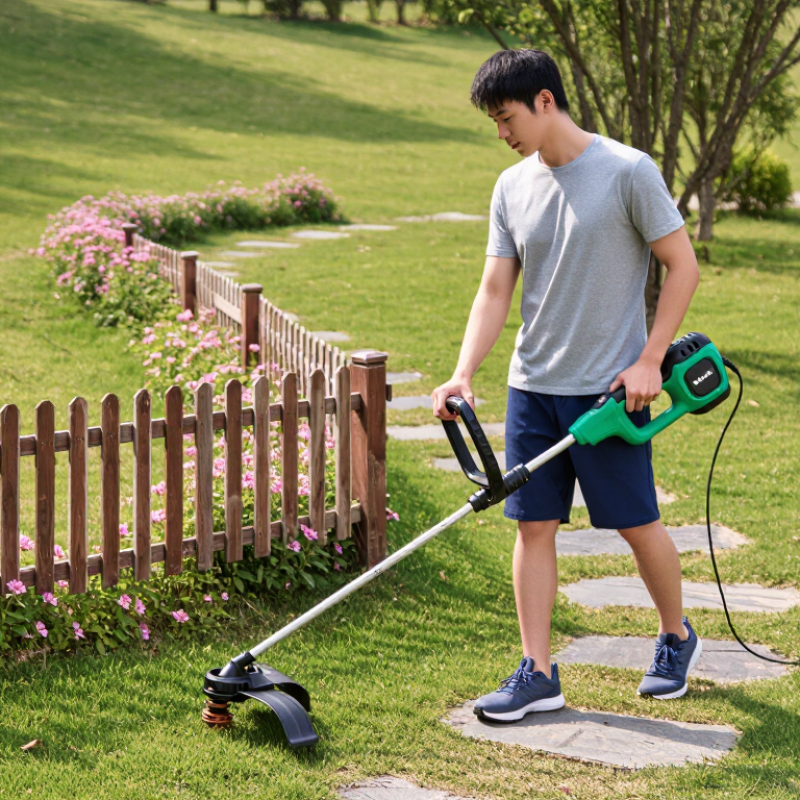
A wireless grass cutter is a lawn-trimming tool powered by a rechargeable battery, rather than a power cord. It usually has a motor, a long handle, and a rotating cutting head. The head may use nylon line or a suitable blade, depending on the model and the work. No trailing cable. That makes it easier to move around trees, garden beds, fences, and lawn edges without repositioning an extension cord.
“Wireless” does not mean unlimited use. Battery capacity, grass thickness, and cutting technique all affect how long the tool runs. A small battery may be enough for tidy edges, but struggle with dense, wet growth. These cutters are often lighter to maneuver than larger lawn machines, though the weight of the battery can make the handle feel unbalanced. It’s worth checking the grip and balance before buying; product descriptions cannot tell you how comfortable it feels in your hands.
Tips: Charge the battery before starting, and clear stones or twigs from the cutting area. Keep the head level for an even finish. Short, steady passes usually work better than forcing the cutter through thick grass. Wear eye protection, and check the manual for the correct cutting head and safety steps.
How Does a Wireless Grass Cutter Work?
A wireless grass cutter runs on a rechargeable battery instead of a power cord. The battery sends electricity to a small motor inside the tool. When you press the trigger, the motor spins the cutting head at high speed. On many models, a length of nylon line does the cutting. Its rapid rotation lets the line slice through soft grass and tidy edges along paths or flower beds. A guard helps deflect flying clippings and small debris. No cord trails behind. That matters around trees and garden corners.
The battery usually clips into the handle or tool body, while a switch controls the motor. Some cutters feed out more line when the head is tapped against the ground; others use a fixed blade or require manual adjustment. Check your model’s instructions before changing the cutting part. In use, move the head steadily from side to side, keeping it clear of stones and stems that are too thick.
Dense weeds can slow the motor and drain the battery faster. A brief pause helps if the head becomes clogged. Battery life varies with grass height, cutting speed, and battery capacity, so a large lawn may need a recharge midway.
What Benefits Does Cordless Operation Offer?
Why Choose a Wireless Grass Cutter for Your Lawn?
What Benefits Does Cordless Operation Offer?
A cordless grass cutter lets you move from the garden edge to the back fence without dragging an extension cord. That means fewer snags around trees, patio chairs, and flower beds. It also starts with a button, not a pull cord. Small convenience, big difference on a hot afternoon. Battery runtime still matters, though; thick, wet grass can drain a charge faster than a quick trim around dry borders.
Cordless operation also avoids exhaust at the point of use. The U.S. EPA’s 2020 National Emissions Inventory tracks pollutants from nonroad equipment, including nitrogen oxides and volatile organic compounds. A battery cutter does not remove the impacts of electricity generation or battery production, but it keeps engine exhaust out of the yard while you work. Noise varies by model and cutting conditions. NIOSH’s occupational noise guidance identifies 85 dBA over eight hours as a level requiring precautions, so quieter does not mean silent—or automatically safe.
Tips: Keep a spare charged battery for larger lawns, and clear tangled grass from the cutting head before restarting. If the battery feels warm, pause and follow its manual; rushing the next pass is rarely worth it.
Which Lawn Tasks Suit a Wireless Grass Cutter?
A wireless grass cutter suits detail work more than whole-yard mowing. Use it to tidy edges beside paths, trim grass around tree trunks, and reach narrow strips along fences. It is also handy for small patches where a larger mower feels awkward. Small jobs shine. A cordless tool avoids dragging a cable through flower beds, though battery runtime depends on grass density, cutting width, and battery capacity.
The scale of lawn care is substantial: a peer-reviewed U.S. turfgrass mapping study estimated about 40.5 million acres of turfgrass nationwide (Milesi et al., Environmental Management, 2005). That figure describes the wider landscape, not a recommended cutting area. For your own yard, check the tool’s stated runtime and match it to the patch size. Thin, dry grass is generally easier to cut than tall, damp growth. A practical check is to inspect the cutting head often; tangled stems can slow the job. For large lawns or woody weeds, a grass cutter may be the wrong tool. I would still plan for a spare battery, because the last strip always seems to take longer.
