Why Choose a PVC 2-Piece Ball Valve for Global Projects?
Why does a compact valve matter on a global project? Water lines, chemical dosing skids, and irrigation networks require dependable isolation. A PVC 2-Piece Ball Valve offers corrosion resistance, low weight, and simple operation. Its two-piece body can support inspection and replacement in confined spaces. That matters when technicians work beside concrete tanks or buried service corridors. Small detail. Large consequence.
According to Grand View Research’s PVC pipes market analysis, demand is supported by water infrastructure, construction, and chemical applications. The report identifies corrosion resistance and cost efficiency as important market drivers. The UN World Water Development Report 2024 also highlights growing pressure on water systems and infrastructure resilience. These findings do not prove that every project needs PVC valves. They do show why material selection requires disciplined review. Global procurement is rarely simple.
On real projects, engineers should verify pressure, temperature, media compatibility, joint method, and local approvals. ISO 16135 provides requirements for thermoplastic ball valves. ASTM and regional standards may also govern dimensions, testing, and installation. Manufacturer traceability, batch records, and documented pressure tests strengthen purchasing decisions. Yet PVC has limits. High temperatures, impact exposure, or incompatible chemicals can cause failure. No valve is universally correct. A thoughtful specification compares these risks before selecting a PVC 2-Piece Ball Valve. Field experience suggests that one overlooked gasket or poorly supported pipe can undermine an otherwise sound design. That is the uncomfortable part. Good engineering remains cautious.
What Is a PVC 2-Piece Ball Valve?
Why Choose a PVC 2-Piece Ball Valve for Global Projects?
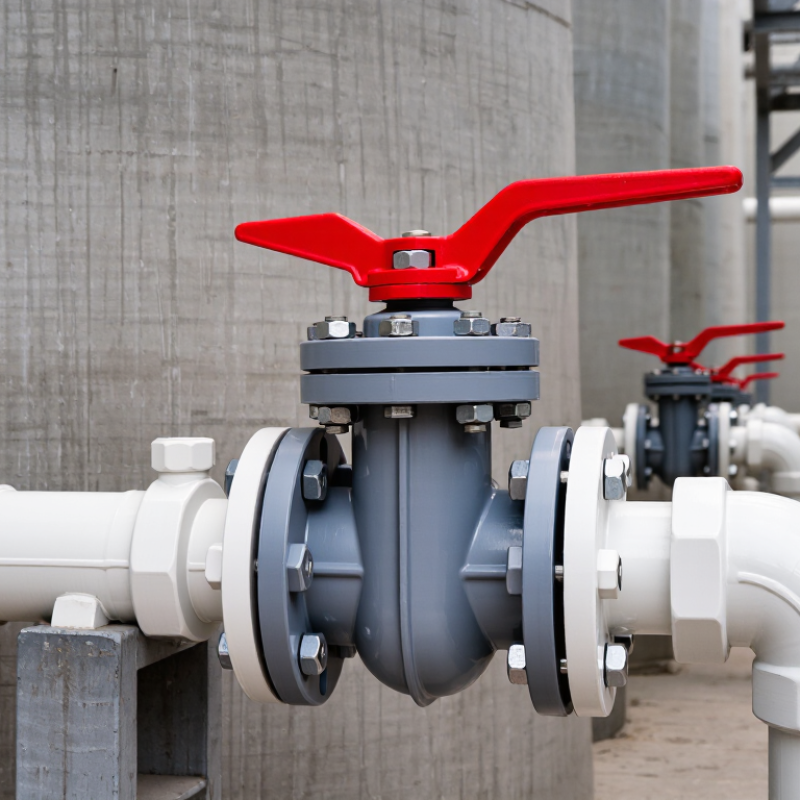
A PVC 2-piece ball valve is a shut-off device made from polyvinyl chloride. It uses two valve-body sections, a central ball, and sealing seats. Turning the handle rotates the ball 90 degrees. The bore then opens or blocks the pipeline.
Simple operation matters on busy construction sites. PVC resists corrosion from many acids, salts, and water-treatment chemicals. It is also lightweight, which reduces handling effort during installation. According to PlasticsEurope’s Plastics—The Fast Facts 2024, global plastics production reached about 414 million tonnes in 2023. This scale supports broad material availability, but material choice still requires technical checking.
The 2-piece design allows inspection and replacement of internal components. That can reduce maintenance time in irrigation, aquaculture, chemical dosing, and potable-water systems. However, PVC is not suitable for every temperature or fluid. Pressure ratings change with temperature, pipe size, and connection method. The United Nations World Water Development Report 2024 states that 2.2 billion people lacked safely managed drinking water in 2022. Reliable flow control remains important, especially where maintenance access is limited. A practical concern is often overlooked: installers may select the valve by diameter alone. That is not enough. Confirm chemical compatibility, operating temperature, pressure, sealing material, and local installation requirements before use.
Key Advantages for Global Piping Projects
Why Choose a PVC 2-Piece Ball Valve for Global Projects?
Global piping projects face different climates, chemicals, and installation conditions. A PVC 2-piece ball valve offers a practical balance of weight, corrosion resistance, and serviceability. Its lightweight body can reduce handling effort during installation. Crews often move it easily through crowded mechanical rooms. PVC also performs well in many water treatment, irrigation, and process applications. However, chemical compatibility must be checked before selection. It is not universal.
The two-piece construction supports practical maintenance planning. When removed, the valve can provide clearer access to internal components than some complex designs. Depending on the specification, socket, threaded, or flanged connections can simplify regional installation methods. A clear flow path may also reduce turbulence and pressure loss. That benefit depends on correct sizing. An oversized valve can create poor control and unnecessary cost. This detail is easy to miss.
Global projects need consistent documentation, not only suitable hardware. Engineers should verify pressure ratings, temperature limits, seal materials, and media compatibility. They should also review local pipe standards and installation practices. A valve may appear suitable on a drawing but fail after thermal movement or incorrect support. Experienced teams include inspection points before testing. Small details matter. I would also allow time for installer feedback, because field conditions often expose weaknesses that specifications overlook. Cost savings are useful, but predictable maintenance and traceable quality usually matter more.
Material, Pressure, and Size Selection Criteria
For global projects, PVC material selection starts with chemistry, temperature, and installation conditions. ASTM D1784 classifies pressure-grade PVC compounds, including the widely used 12454 cell classification. The Plastics Pipe Institute’s TR-3 report lists a 4,000 psi hydrostatic design basis for several PVC compounds at 73°F. That figure is not the valve’s working pressure. It only supports the material design calculation.
Pressure needs careful reading. ISO 1452-2 defines PVC-U pressure classes, including PN10 and PN16, for water systems. A two-piece ball valve should match the system’s maximum operating pressure, surge pressure, and temperature derating. Hot fluids reduce allowable pressure. Chemical exposure can reduce it further. I would also check whether the valve rating applies to threaded, socket, or flanged ends. These connections may not share the same limits.
Size selection affects flow, maintenance, and total energy use. A full-port valve usually reduces turbulence and pressure loss, especially on larger lines. However, oversizing may weaken control accuracy and increase cost. Select the nominal size from required flow and velocity, not pipe appearance. ISO 16135 provides requirements for thermoplastic industrial ball valves, but project specifications still need verification. A rushed choice can look correct. It may fail during thermal cycling or water hammer. That deserves a second review.
Installation, Maintenance, and International Compliance Considerations
Why Choose a PVC 2-Piece Ball Valve for Global Projects?
Installation and compliance often determine whether a valve succeeds internationally. A two-piece PVC ball valve offers a compact flow path and simpler field replacement. Its union-style design can reduce downtime during inspection. However, installers must confirm pipe dimensions, pressure ratings, temperature limits, and connection methods before shipment. Solvent-cement joints need clean, dry surfaces and full curing time. Threaded adapters require careful tightening. Excess force can crack plastic components.
Maintenance planning should include isolation, pressure testing, and visual inspection around seals and joints. Small leaks deserve attention. The U.S. Environmental Protection Agency’s WaterSense program estimates that household leaks waste nearly 1 trillion gallons of water annually. That figure is residential, not industrial, but it shows how minor failures become expensive. Replacement seals should match the original material and fluid compatibility requirements. A two-piece body may simplify access, but not every model permits safe internal servicing.
International compliance requires more than a familiar pipe size. For drinking-water applications, project teams should review NSF/ANSI/CAN 61 or the applicable national approval. ISO 16135 addresses thermoplastic industrial valves, while EN 1452 covers PVC-U pressure piping systems. The World Health Organization’s Guidelines for Drinking-water Quality, 2022, emphasizes risk management across the entire supply chain. Documentation should include material declarations, test records, pressure data, and traceability. Some paperwork may appear excessive. It is still cheaper than correcting an undocumented installation after commissioning.