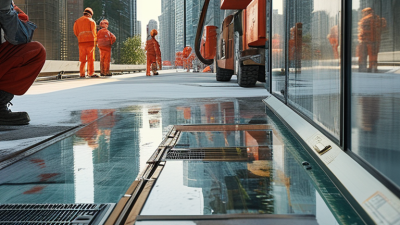
Choosing the right work zone safety products is not a simple purchasing exercise. It is a practical decision about people, traffic, weather, visibility, and changing site conditions.
Dr. Gerald Ullman, a respected work zone safety researcher at the Texas A&M Transportation Institute, emphasizes this principle: “Work zones must be treated as dynamic systems, not static places.” His view matters because a barrier, cone, sign, or warning light performs differently as traffic speeds, daylight, rain, and worker movement change.
This guide, “10 Best Work Zone Safety Products for Global Buyers,” examines products through that real-world lens. It considers visibility at dusk, stability during strong wind, ease of transport, installation time, maintenance needs, and compatibility with different road environments. A bright safety vest may improve recognition, but it cannot replace a properly designed traffic-control plan. A durable barrier may protect workers, yet poor placement can still create confusion.
Small details matter. Reflective sheeting should remain visible after repeated cleaning. Warning lights should be easy to inspect before each shift. Cones should resist tipping beside passing trucks.
No product is perfect.
That is worth remembering. Buyers can compare certifications, testing information, supplier experience, and after-sales support, but field conditions may expose weaknesses that catalog photos hide. The best choice balances protection, usability, compliance, and total cost. For global buyers, this also means checking local requirements instead of assuming one product suits every country.
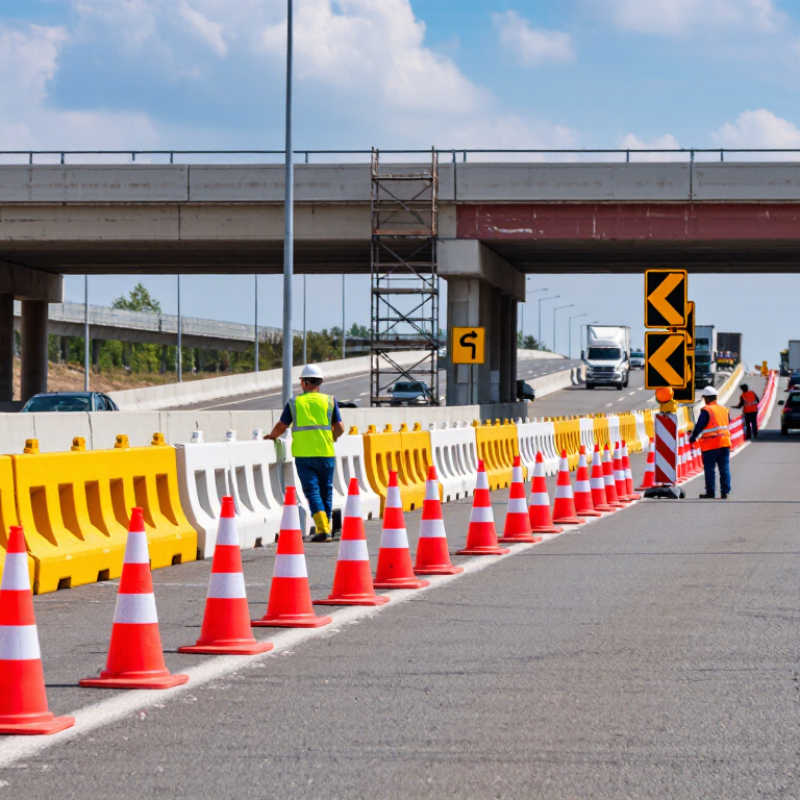
Work zone safety products are physical tools that control movement, improve visibility, and protect people near active construction. Common examples include traffic cones, water-filled barriers, channelizers, warning signs, flashing lights, high-visibility clothing, and portable speed displays. Each product addresses a specific hazard. Cones guide drivers. Barriers separate vehicles from workers. Warning lights attract attention during darkness, rain, or dust. High-visibility garments help operators recognize workers beside moving equipment.
These products matter because work zones change constantly. A safe layout at 8 a.m. may become confusing after lane shifts, poor weather, or delivery activity. Practical site observations often reveal small failures, such as a tilted sign or a missing reflector. Small details matter.
Buyers should review impact resistance, visibility distance, material durability, installation needs, and storage conditions. Requirements also vary between countries and road authorities, so product specifications should be checked against local standards before purchase.
A cheaper item may become costly when it fades quickly or needs frequent replacement. However, expensive equipment is not automatically better. Selection must match traffic speed, work duration, climate, and risk level.
No product removes every risk. Poor placement can weaken excellent equipment. Teams need clear inspection routines, worker training, and honest feedback from the site.
Some safety plans look complete on paper but fail during night shifts. That gap deserves attention.
Identifying risks in a work zone starts with observing movement, not purchasing equipment. A highway crew faces fast traffic, poor visibility, sudden lane changes, and reversing machinery. A warehouse team faces forklifts, blind corners, falling loads, and slippery floors. The hazard changes with location, weather, shift timing, and worker experience.
The International Labour Organization estimated 2.93 million work-related deaths and 395 million non-fatal injuries worldwide each year. In the United States, the Federal Highway Administration recorded 891 work-zone fatalities and 37,701 injuries in 2022. These figures show why risk assessment should guide product selection. Use high-visibility clothing and warning lights where visibility fails. Choose barriers, cones, and impact-resistant signs near moving vehicles. Add audible alarms or proximity sensors around reversing equipment. For elevated tasks, inspect anchor points, guardrails, and fall-arrest equipment before work begins.
Tips: Walk the zone at worker eye level. Mark blind spots on a simple map. Ask operators what they almost missed yesterday. Recheck controls after rain, darkness, or layout changes. A product can look suitable in a catalog but fail beside dust, glare, or heavy traffic. That uncomfortable detail matters. Buyers should compare visibility ratings, impact performance, temperature limits, replacement parts, and training needs. Independent test reports and recognized safety standards provide stronger evidence than sales claims. No checklist is perfect. Reflect, adjust, and document the decision.
| No. | Safety Product | Typical Work Zone | Primary Risk Identified | Main Protection Function | Key Buying Criteria | Relevant Standards or Guidance | Inspection and Use Reminder |
|---|---|---|---|---|---|---|---|
| 1 | High-Visibility Safety Apparel | Road construction, logistics yards, rail maintenance, airport service areas | High Workers may not be seen by drivers, mobile equipment operators, or aircraft service vehicles. |
Improves daytime and nighttime worker visibility through fluorescent background material and retroreflective bands. | Select the correct garment class for traffic speed and exposure. Check reflective material width, background color, fit, breathability, and visibility after washing. | ISO 20471 ANSI/ISEA 107 Local road-work requirements |
Keep reflective areas clean and unobstructed. Replace garments when fading, tearing, or loss of reflectivity is visible. |
| 2 | Traffic Cones and Delineators | Temporary traffic control, utility repairs, parking areas, warehouse aisles | High Vehicles or pedestrians may enter an active work area without warning. |
Creates a visible boundary and guides road users around hazards, excavations, equipment, or lane changes. | Check height, base stability, wind resistance, retroreflective bands, color, spacing, and compatibility with the local traffic-control plan. | EN 13422 Manual on Uniform Traffic Control Devices where applicable Local highway authority rules |
Use on a firm surface and inspect after vehicle impact. Do not use damaged, faded, or unstable cones as the only barrier. |
| 3 | Portable Barriers and Water-Filled Barricades | Road construction, bridge work, excavation edges, crowd and pedestrian control | High Vehicles or people could enter a dangerous zone, fall into an excavation, or be exposed to moving machinery. |
Provides a stronger physical separation than warning tape or cones and helps redirect traffic or pedestrians. | Evaluate impact performance, connection design, ballast requirements, visibility, deployment time, drainage, and transport weight. | EN 1317 MASH or NCHRP 350 where specified Project-specific traffic-control standards |
Install according to the tested configuration. Check connectors, ballast, alignment, and end treatments after relocation or impact. |
| 4 | Protective Safety Helmet | Construction sites, demolition, plant maintenance, utility work, overhead lifting areas | High Falling objects, overhead materials, struck-by hazards, and limited electrical exposure may cause head injuries. |
Absorbs and distributes impact energy while helping protect the head from penetration and selected electrical hazards. | Confirm impact and penetration ratings, shell material, suspension adjustment, chin-strap compatibility, accessory mounts, and service life. | EN 397 ANSI/ISEA Z89.1 CSA Z94.1 where applicable |
Inspect shell, suspension, and adjustment system before each use. Replace after a significant impact or when damaged or degraded. |
| 5 | Safety Eyewear and Face Shields | Grinding, cutting, drilling, chemical handling, laboratory and maintenance work | High Flying particles, splashes, dust, ultraviolet radiation, or intense visible light may injure the eyes or face. |
Protects the eyes and face from impact particles, liquid splashes, dust, and selected optical hazards. | Match the lens or shield to the hazard. Check impact rating, side protection, anti-fog performance, chemical compatibility, optical quality, and prescription compatibility. | ANSI/ISEA Z87.1 EN 166 EN 170 or EN 172 for applicable optical protection |
Clean with approved methods and inspect for scratches, cracks, clouding, or damaged frames. Face shields normally require safety eyewear underneath. |
| 6 | Cut- and Chemical-Resistant Work Gloves | Sheet-metal work, glass handling, fabrication, chemical transfer, waste handling | High Hands may be exposed to cuts, punctures, abrasions, chemical contact, heat, or contaminated materials. |
Reduces hand injuries by providing a barrier against specific mechanical, chemical, or thermal hazards. | Choose protection by hazard, not by general glove type. Verify cut level, puncture resistance, chemical permeation data, dexterity, cuff length, and sizing. | EN 388 EN ISO 374-1 ANSI/ISEA 105 |
Check for tears, swelling, contamination, and loss of grip. Chemical-resistant gloves must be selected for the exact chemical and exposure time. |
| 7 | Protective Safety Footwear | Construction, warehouses, manufacturing, utilities, wet and uneven ground | High Falling objects, punctures, slips, electrical contact, water, and sharp debris may injure the feet. |
Combines toe protection with slip resistance and, where specified, puncture, water, heat, or electrical protection. | Check toe-cap impact rating, penetration resistance, slip performance, outsole material, water resistance, electrical properties, fit, and climate suitability. | ISO 20345 ASTM F2412/F2413 Local occupational footwear requirements |
Inspect soles, toe caps, seams, and insoles. Replace footwear when the outsole is worn or the protective structure is damaged. |
| 8 | Hearing Protection | Heavy equipment operation, demolition, metal fabrication, airports, manufacturing plants | Medium to High Repeated exposure to high noise levels can cause permanent hearing loss and reduce communication awareness. |
Reduces the level of sound reaching the ear through earplugs, earmuffs, or a combined solution. | Use measured noise levels to select suitable attenuation. Consider fit testing, compatibility with helmets and eyewear, communication needs, hygiene, and user comfort. | EN 352 ANSI S3.19 OSHA or local occupational noise regulations |
Insert earplugs correctly or adjust earmuffs for a complete seal. Replace dirty, compressed, cracked, or poorly fitting components. |
| 9 | Portable Gas Detection Instrument | Confined spaces, sewer work, tank cleaning, chemical plants, utility tunnels, fuel storage areas | High Oxygen deficiency, toxic gases, or flammable atmospheres may cause poisoning, fire, or explosion. |
Measures atmospheric conditions and provides alarms before workers enter or remain in a dangerous environment. | Identify target gases, sensor range, alarm settings, response time, battery life, ingress protection, calibration method, data logging, and hazardous-area approval. | IEC 60079-29-1 IEC 60079-11 or applicable hazardous-area requirements Local confined-space regulations |
Perform a bump test and calibration according to the manufacturer’s instructions and site procedure. Test the atmosphere before entry and continuously when conditions can change. |
| 10 | Fall-Arrest Harness and Lifeline System | Roof work, scaffolding, steel erection, towers, elevated platforms, bridge construction | High A worker may fall from an unprotected edge or elevated work surface. |
Arrests a fall and limits injury when used with a suitable anchor, connecting device, and rescue plan. | Verify full-body harness design, attachment points, energy absorber, lifeline length, clearance, anchor capacity, compatibility, user size range, and rescue arrangements. | ANSI/ASSP Z359 EN 363 OSHA 1910.140 or applicable national regulations |
Inspect webbing, stitching, buckles, connectors, and labels before every use. Remove the system from service after a fall or when defects are found. |
The 10 Essential Work Zone Safety Products for Global Buyers begin with visibility and impact control. High-visibility garments help drivers recognize workers at dawn, dusk, and during rain. Safety helmets, protective eyewear, cut-resistant gloves, and hearing protection reduce common head, eye, hand, and noise risks. Cones, reflective drums, and portable barriers create a visible separation between traffic and people. Variable message signs and arrow boards provide earlier direction changes. Portable work lights improve night visibility without blinding approaching drivers.
The Federal Highway Administration recorded 891 work zone fatalities and 37,701 injuries in the United States during 2022. That figure shows why product selection must follow site conditions, not only purchase price. Buyers should check retroreflective performance, impact ratings, weather resistance, battery life, and replacement availability. Local standards may differ, so technical documents require careful review. Small details matter.
Radios or certified communication devices complete the essential set, especially where noise or distance limits hand signals. In practical inspections, poorly placed cones often create more confusion than protection. A barrier can be strong, yet useless without correct spacing and anchoring. This is easy to overlook. The International Labour Organization estimates nearly three million work-related deaths globally each year, reinforcing the need for documented training, equipment checks, and worker feedback. Safety products perform best when supervisors verify their condition before every shift.
Selecting the ten best work zone safety products starts with local standards, not product photos. Global buyers commonly compare barriers, cones, delineators, warning lights, arrow boards, portable signals, safety signs, high-visibility clothing, truck-mounted attenuators, and speed displays. Each product must match the road environment and legal requirements.
Standards can change the buying decision. United States projects may follow MUTCD guidance, while European projects may require EN-rated signs, barriers, or visibility garments. High-visibility clothing often needs ISO 20471 or an accepted national equivalent. Barriers may require tested impact performance under regional standards. Certification marks help, but they do not prove suitability for every climate, traffic speed, or installation method.
Details matter. A cone used beside a windy coastal road needs stable weighting and strong color retention. An arrow board may require specific brightness, viewing distance, and electrical protection.
Ask for test reports, certification scope, production dates, and installation instructions. Check whether documents cover the exact model, not only a similar product.
A certificate can look reassuring.
It may still be incomplete.
Some buyers focus on purchase price and overlook replacement parts, language requirements, or worker training. That mistake can weaken an otherwise compliant setup. Suppliers should explain inspection intervals, storage limits, and field maintenance clearly. Buyers should also verify local authority acceptance before shipment, because global certification does not automatically equal local approval.
Global buyers should compare ten product groups: cones, drums, barriers, signs, arrow boards, warning beacons, portable signals, delineators, high-visibility clothing, and truck-mounted attenuators. Start with the hazard, traffic speed, weather, and installation time. Then check visibility distance, impact performance, battery life, and replacement access. NHTSA’s Fatality Analysis Reporting System recorded 891 U.S. work-zone deaths in 2022. That number matters. A small visibility failure can carry serious consequences. Avoid comparing prices alone. A low-cost barrier may require frequent replacement, transport, or inspection. Product labels can also be confusing, especially across regions.
Ask suppliers for current test reports, material specifications, installation instructions, and maintenance records. For garments, verify ISO 20471 or the applicable local standard. For reflective sheeting, check ASTM D4956 classifications where relevant. For road restraint systems, review EN 1317 performance data or equivalent national requirements. Certificates are useful, but they do not replace field evidence. Request photographs from similar climates and traffic conditions. I would also ask for failure examples. Suppliers rarely volunteer them. That omission deserves attention. During sourcing, confirm spare-part availability, lead times, packaging strength, and training support. Maintenance teams should inspect sheeting, fasteners, lamps, batteries, and anchor points before each deployment. Clean reflective surfaces carefully. Replace cracked plastic and faded fabric promptly. Keep a simple inspection log with dates, locations, defects, and repairs. A practical trial at one site often reveals problems that a polished quotation hides.