2026 How to Improve Road Safety Solutions for Safer Driving
Road safety remains a critical issue worldwide. Every year, millions suffer from road accidents. The need for effective road safety solutions has never been greater. These solutions can save lives and reduce injuries on our roads.
Improving road safety is not just about better vehicles or new technologies. It also involves creating safer driving habits and fostering a culture of responsibility. Many drivers still neglect basic safety precautions. We must reflect on why this happens. Lack of awareness and education contributes to poor driving behavior.
Incorporating innovative strategies can lead to significant improvements. Solutions like advanced driver-assistance systems, better signage, and increased law enforcement play vital roles. However, these measures must adapt to local contexts. We must strive for tailored approaches, focusing on specific challenges faced by different communities. The journey toward safer driving is ongoing, requiring our collective commitment and action.

Current Road Safety Statistics and Trends for 2026
Road safety remains a pressing concern as we approach 2026. According to the World Health Organization, over 1.3 million people die in road collisions each year. This statistic highlights an urgent need for effective solutions. Recent trends show that urban areas experience higher accident rates, often linked to distracted driving and inadequate infrastructure.
From 2021 to 2022, road traffic fatalities in the U.S. increased by 10.5%, reaching a staggering 42,915. This rise reveals critical gaps in existing safety measures. Enhanced data collection and better analysis can identify accident hotspots. Furthermore, improvements in road design, such as better signage and pedestrian zones, are vital. A National Highway Traffic Safety Administration report emphasizes that proper roadway illumination can reduce accidents by 30%.
Despite these alarming trends, not all initiatives have been successful. Many countries struggle to implement consistent seatbelt use laws and basic driver education. A lack of reliable public transportation also pushes many to rely on personal vehicles. Reflecting on these factors, it’s clear that more comprehensive strategies are essential to forge a safer driving environment by 2026.
Innovative Technologies in Road Safety: Smart Solutions for Drivers
Innovative technologies play a crucial role in enhancing road safety. Today, smart solutions are emerging to assist drivers in making safer decisions. Features like collision detection systems and lane departure warnings help prevent accidents. These advancements utilize sensors and artificial intelligence to provide real-time feedback. This makes driving not only safer but also more informed.
Tips for drivers include regularly updating their navigation systems. Many updates include safety features and area alerts. Also, consider using apps designed for safer driving. They can help track driving habits and suggest improvements. Taking breaks during long drives reduces fatigue, which is often overlooked. Short breaks can refresh focus and boost alertness.
It's essential to reflect on personal driving habits. Are you prone to distractions? Small changes can lead to significant improvements. Driving is a shared responsibility, and awareness is key. Adopting smart solutions today can lead to safer roads for everyone tomorrow.
Education and Awareness Programs for Safer Driving Practices
Education and awareness programs play a crucial role in improving road safety. Many drivers lack essential knowledge about safe driving practices. This gap leads to risky behaviors that increase accident rates. Simple sessions on traffic rules and safe driving habits can make a difference. For instance, workshops can address the dangers of distracted driving.
Interactive programs engage participants effectively. Using simulations can illustrate the consequences of poor decisions on the road. These experiences encourage a deeper understanding of safety. Moreover, involving community members fosters a collective responsibility towards safer driving. Discussions can reveal prevalent issues, prompting local initiatives.
However, not every program achieves its goal. Some participants may remain indifferent or skeptical about the importance of road safety. Continued outreach and a variety of teaching methods are vital. Regular feedback from participants helps improve the programs. Addressing concerns and adapting content can enhance effectiveness over time.
Infrastructure Improvements: Designing Safer Roads and Highways
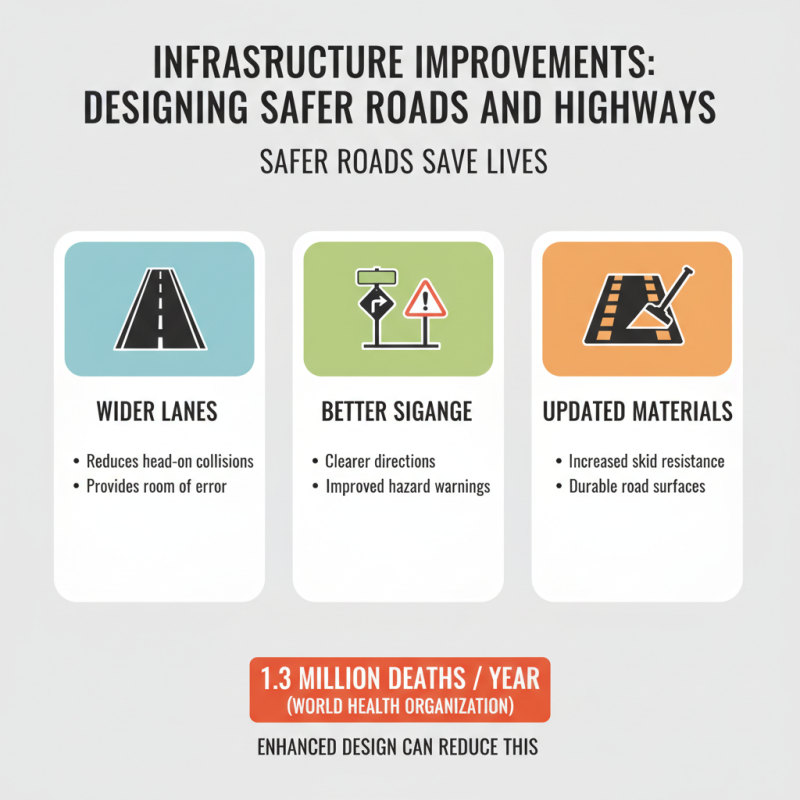
Road safety is a pressing concern worldwide. Infrastructure improvements play a pivotal role in reducing accidents. According to the World Health Organization, an estimated 1.3 million people die in road crashes each year. Enhancing road design can mitigate this staggering statistic. Wider lanes, better signage, and updated materials can significantly improve safety.
Implementing roundabouts instead of traditional intersections can reduce collision rates by about 40%. Traffic-calming measures, like speed bumps and raised crosswalks, encourage safer driving behavior. Urban areas, with high pedestrian traffic, need special attention. The National Highway Traffic Safety Administration emphasizes that proper lighting and visibility at intersections can cut nighttime accidents by nearly 50%.
Yet, challenges remain. Many roads are still poorly designed, lacking adequate pedestrian paths. In some cases, new projects overlook the importance of community input. This oversight can lead to layouts that don't cater to real-world traffic patterns. Continuous evaluation and community feedback are essential for sustainable improvements. Hence, ongoing research and collaboration among engineers, city planners, and the public are vital for creating truly safe roadways.
Policy and Regulation Changes to Enhance Road Safety Initiatives
Road safety is a growing concern worldwide. With increasing traffic, it's crucial to enhance policies and regulations that focus on road safety initiatives. Governments need to evaluate existing laws and make necessary changes. For instance, establishing stricter penalties for reckless driving may deter unsafe behaviors.
Improving regulations can also involve better enforcement of speed limits and the use of technology. Speed cameras and mobile apps that track driving behaviors can provide data to support these efforts. However, public acceptance of these measures can be challenging. Many drivers feel surveillance is intrusive, leading to resistance against implementation. Innovative approaches are needed to communicate the benefits clearly.
Community engagement plays a vital role in enhancing road safety policies. Local authorities should work together with residents to identify problem areas. Hosting workshops and forums can help gather feedback and raise awareness about safe driving practices. Yet, not all communities have the same resources. Addressing this inequity can lead to gaps in safety measures, raising important questions about fairness and effectiveness.
2026 Road Safety Initiatives: Policy and Regulation Changes Impact