Choosing among the world’s leading sign fabrication services requires more than comparing attractive project photos. Quality appears in the details: clean welds, even illumination, accurate color matching, and weather-resistant finishes. A well-built sign should remain legible under harsh sunlight, heavy rain, or nighttime glare. This guide explores ten internationally recognized providers and examines their capabilities, materials, production methods, installation support, and customer communication.
The comparison considers fabricated metal letters, illuminated channel signs, acrylic displays, wayfinding systems, and large exterior cabinets. It also reviews practical evidence, including project portfolios, manufacturing equipment, documented quality procedures, warranty terms, and regional service coverage. Suppliers with CNC routing, powder-coating facilities, and controlled LED testing may offer stronger consistency. However, no ranking is perfectly universal. A premium retail sign may need different expertise from a hospital directory or roadside monument sign.
Context matters.
A company’s reputation should be checked against independent reviews, verifiable case studies, and clear technical specifications. Compliance with local building, electrical, accessibility, and installation requirements also deserves attention. Some providers communicate beautifully but offer limited after-sales support. Others deliver strong engineering but lack design flexibility. These differences can affect budgets, schedules, and long-term maintenance.
The following overview aims to provide a practical, balanced starting point for buyers, architects, and brand managers. It highlights proven strengths while acknowledging possible limitations. Readers should still request samples, material details, production timelines, and installation references before making a final decision. Good sign fabrication services do more than produce visible branding. They create durable public-facing assets.
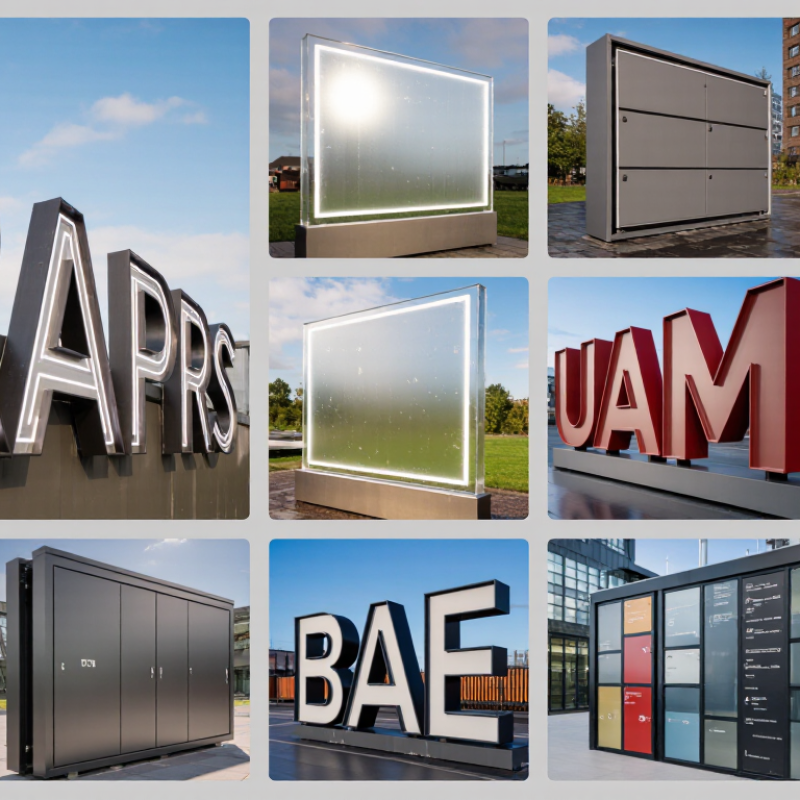
Sign fabrication services transform approved designs into physical signs for businesses, public spaces, events, and buildings. The work may include material selection, structural planning, cutting, bending, welding, printing, painting, lighting, assembly, and quality inspection. Skilled fabricators often use aluminum, acrylic, stainless steel, vinyl, wood, and energy-efficient lighting components. Each material creates a different visual and practical result.
The global scope is wider than production alone. A reliable service may manage site surveys, digital drawings, packaging, shipping, installation, repairs, and scheduled maintenance. Outdoor signs need protection from rain, salt air, heat, wind, and ultraviolet exposure. Indoor signs require cleaner finishes and safer mounting methods. Language, visibility, accessibility, electrical standards, and local building requirements also affect the fabrication process. A sign that works in a dry city may fail quickly in a coastal climate.
Precision matters, but perfection begins with realistic planning. A drawing can look excellent and still ignore wall weight, delivery access, or maintenance space. Production teams should confirm measurements before cutting materials. They should also test lighting at night, not only on a computer screen. Some projects need ten services; others need only three. Over-specifying can waste resources, while under-planning creates expensive corrections. Reliable providers document materials, tolerances, installation conditions, and care instructions, even when clients rarely request every detail.
Evaluating the top ten sign fabrication services requires more than comparing photographs. Start with material performance, structural engineering, color accuracy, and installation evidence. A credible fabricator should explain aluminum grades, acrylic thickness, coating systems, lighting temperatures, and weather resistance. Request production samples, not only digital renderings. Small details matter, especially clean seams and even illumination.
Market demand also supports stricter technical screening. Grand View Research reported that the global digital signage market was valued at approximately $27.1 billion in 2024, with strong growth projected through 2030. This expansion increases the need for fabricators who can integrate displays, electrical systems, remote monitoring, and physical signage safely. Score each service on documented quality control, installation training, warranty terms, maintenance response, and compliance with applicable electrical and accessibility standards. ISO 9001 certification can indicate controlled processes, but it does not guarantee excellent craftsmanship.
Cost should remain transparent. Compare quoted materials, freight, permits, installation equipment, replacement parts, and aftercare. A low bid may exclude critical work. Check delivery records across regions, because packaging failures can damage large acrylic faces before installation. Sustainability deserves measurable proof, such as recycled metal content, LED energy data, repairability, and responsible waste handling. I would also interview recent customers about missed deadlines and communication. Portfolios can be selective. The scoring model is useful, but not perfect; local climate, site access, and changing regulations can distort a simple ranking. Be willing to revise the list when field evidence disagrees.
What Are the Top 10 Sign Fabrication Services Worldwide?
Regional expertise often shapes the quality of sign fabrication. In North America, architectural channel letters and monument signs remain practical for retail entrances. European fabricators often specialize in energy-efficient illuminated systems and refined metal finishes. East Asian providers are strong in precise wayfinding networks for airports, hospitals, and transport hubs. South Asian workshops frequently deliver detailed retail displays, acrylic lettering, and cost-conscious custom builds. Middle Eastern specialists focus on large hospitality signs designed for heat, dust, and intense sunlight.
Other leading services include vehicle graphics in Australia, LED display integration in Latin America, and hand-painted or carved signs in Africa. Industrial safety signage is essential across manufacturing regions, where durable coatings and clear symbols support daily operations. Exhibition and event signage forms the tenth category, requiring fast production, modular frames, and careful packing. These services serve different purposes.
Reliable fabrication begins with a measured site survey, not a sales promise. Experienced teams check wall structure, viewing distance, local brightness rules, wind exposure, and maintenance access. They also confirm substrate performance before cutting materials. Aluminum, acrylic, stainless steel, and treated timber each age differently. A nighttime test can reveal uneven lighting that daytime photographs hide. No ranking is perfect. Some regional workshops lack polished websites but deliver excellent installation work. Conversely, impressive visuals may conceal weak mounting details. Clients should request drawings, material samples, warranty terms, and documented installation experience before approving production.
What Are the Top 10 Sign Fabrication Services Worldwide?
The leading global sign fabrication services cover architectural lettering, illuminated channel letters, freestanding monuments, digital displays, wayfinding systems, vehicle graphics, retail signage, event structures, accessibility signs, and sign restoration. Each service solves a different communication problem. Architectural letters often use aluminum, stainless steel, acrylic, or painted PVC. Illuminated signs may combine LED modules with translucent faces and reflective returns. A reliable fabricator should explain light distribution, weather resistance, mounting loads, and maintenance access before production begins.
Materials and technology shape long-term value. Aluminum resists corrosion and keeps large panels relatively light. Acrylic creates clean color and controlled light transmission. Steel provides strength but needs suitable coatings in humid environments. Digital displays offer changing messages, while printed films deliver lower energy use and simpler servicing. CNC routing, laser cutting, vacuum forming, and precision bending improve repeatability. However, technology alone cannot fix poor measurements. A two-millimeter error can make adjoining letters look uneven.
Customization ranges from color matching and dimensional lettering to layered faces, backlighting, texture, and modular replacement parts. Experienced teams usually provide drawings, samples, structural checks, and installation guidance. They also consider viewing distance, nighttime glare, cleaning routines, and local accessibility requirements. My ranking would change by project type and climate. A premium finish may be unnecessary for a temporary event sign, while a cheap coating can fail quickly on a coastal building. Some designs look impressive in a workshop but feel oversized on site. That is where careful mockups matter.
Comparative benchmark of widely used sign fabrication services, rated from 1 to 10 across material versatility, fabrication precision, customization range, and long-term durability. Scores represent typical industry capabilities rather than company or market-share data.
Digital printing, CNC routing, laser cutting, LED integration, powder coating, acrylic forming, and modular construction are among the main technologies used across these services. Actual performance varies according to materials, climate, installation conditions, and project specifications.
What Are the Top 10 Sign Fabrication Services Worldwide?
The leading sign fabricators usually provide ten connected services: concept design, structural planning, dimensional lettering, illuminated signs, digital printing, wayfinding systems, architectural signage, vehicle graphics, installation, and maintenance. Each service suits a different industry application. Retailers need bright storefront displays. Hospitals require calm, readable wayfinding. Factories often prioritize durable identification signs. Hotels may combine elegant reception lettering with emergency information panels.
Quality depends on more than appearance. Experienced teams check material thickness, edge finishing, color consistency, and mounting strength. Outdoor signs should resist rain, ultraviolet exposure, dust, and strong wind. Illuminated units also need reliable wiring, safe heat control, and suitable ingress protection. Accessibility matters too. Clear contrast, tactile elements, readable height, and logical arrows can improve real user experience. A beautiful sign can still fail if visitors cannot find the entrance.
Clients should compare fabrication samples, installation records, inspection procedures, warranties, and maintenance response times. Ask how the supplier manages artwork approval and site measurements. Small errors become expensive when a panel arrives with incorrect dimensions. Budget is important, but lifecycle cost deserves attention. Cheap finishes may fade within one season. I have seen impressive mockups reveal weak construction details later. That is worth questioning. A practical supplier explains limitations, documents tolerances, and recommends materials for the actual climate, building surface, and daily traffic.
| Rank | Sign Fabrication Service | Typical Industry Applications | Common Materials | Lighting and Finish Options | Relevant Quality or Safety Standards | Typical Service Scope | Key Client Considerations |
|---|---|---|---|---|---|---|---|
| 1 | Channel Letter Fabrication | Retail storefronts, hospitality, healthcare, banking, commercial buildings, and shopping centers | Aluminum returns, acrylic faces, polycarbonate, stainless steel, and painted metal | Front-lit, halo-lit, combination-lit, translucent faces, painted, brushed, or powder-coated finishes | Electrical sign requirements such as UL 48 or equivalent local rules; low-voltage wiring, ingress protection, and structural anchoring requirements | Design engineering, fabrication, LED installation, testing, delivery, installation, and maintenance | Letter depth, viewing distance, brightness uniformity, local permits, wind loading, power consumption, and access for future servicing |
| 2 | Cabinet and Box Sign Fabrication | Supermarkets, industrial facilities, campuses, transport locations, and multi-tenant properties | Aluminum or galvanized-steel cabinets, acrylic, polycarbonate, aluminum composite panels, and vinyl graphics | Internal LED illumination, translucent panels, routed faces, digital prints, and replaceable sign faces | Electrical safety certification applicable to the destination market, IP protection where exposed to weather, and local structural codes | Cabinet design, face production, lighting layout, electrical testing, refurbishment, replacement faces, and installation | Cabinet size, service-door access, face replacement cost, drainage, corrosion resistance, energy use, and nighttime visibility |
| 3 | Monument Sign Fabrication | Corporate campuses, residential developments, schools, hospitals, parks, and office entrances | Aluminum, steel, brick, stone veneer, concrete, wood-look panels, acrylic, and composite materials | Ground lighting, internal illumination, dimensional lettering, routed panels, textured coatings, and masonry finishes | Local foundation, wind-load, accessibility, electrical, and planning regulations; corrosion and weather-resistance requirements | Site survey, engineering, foundation coordination, fabrication, landscape integration, installation, and refurbishment | Setback rules, foundation depth, visibility from approaching traffic, landscaping, drainage, vandal resistance, and long-term color stability |
| 4 | Pylon and Pole Sign Fabrication | Highways, fuel and service centers, retail parks, airports, and large commercial developments | Structural steel, aluminum, acrylic, polycarbonate, composite panels, and galvanized components | Double-sided illumination, LED modules, electronic price panels, reflective graphics, and changeable tenant panels | Wind-load calculations, foundation engineering, electrical sign regulations, lightning protection, and local height restrictions | Structural engineering, permitting support, steelwork, panel fabrication, lifting, installation, inspection, and maintenance | Overall height, wind exposure, foundation conditions, crane access, traffic visibility, maintenance access, and permitting timelines |
| 5 | Digital LED Display Fabrication | Advertising, sports venues, retail promotions, transportation, public information, and events | LED modules, aluminum frames, steel support structures, weatherproof cabinets, and protective face materials | Monochrome or full-color displays, automatic brightness control, content scheduling, and remote monitoring | Electromagnetic compatibility, electrical safety, outdoor ingress protection, luminance limits, and digital-display regulations | Pixel layout, cabinet assembly, control systems, software configuration, installation, commissioning, and technical support | Pixel pitch, viewing distance, brightness, refresh rate, content ownership, network security, power demand, and replacement parts |
| 6 | Wayfinding and Directional Signage | Hospitals, airports, universities, hotels, transit systems, campuses, and public facilities | Aluminum, acrylic, stainless steel, glass, wood, PVC, high-pressure laminate, and printed films | Non-illuminated, edge-lit, backlit, reflective, tactile, braille, and high-contrast printed finishes | ISO 7010 and ISO 3864 principles where applicable; accessibility, contrast, tactile, braille, and local public-safety requirements | Signage audits, mapping, design standards, prototypes, fabrication, installation, and location coding | Legibility, multilingual content, viewing angles, pedestrian flow, accessibility, consistency, cleaning, and future wayfinding changes |
| 7 | ADA and Accessible Sign Fabrication | Public buildings, offices, schools, healthcare facilities, hotels, retail, and transportation facilities | Engraved plastic, acrylic, aluminum, photopolymer, stainless steel, and tactile lettering materials | High-contrast colors, raised characters, Grade 2 braille, anti-glare surfaces, and optional illumination | The applicable accessibility code, including the United States ADA Standards where relevant, plus local tactile, braille, mounting-height, and contrast rules | Compliance review, artwork preparation, tactile and braille production, mounting, inspection, and replacement | Jurisdiction, character height, braille format, mounting location, glare, cleaning resistance, and inspection documentation |
| 8 | Architectural and Dimensional Lettering | Corporate headquarters, luxury retail, hotels, museums, residential projects, and interior feature walls | Stainless steel, aluminum, brass, acrylic, wood, PVC, resin, and fabricated metal | Flat-cut, built-up, polished, brushed, painted, patinated, stud-mounted, front-lit, and halo-lit finishes | Material specifications, structural attachment requirements, indoor electrical safety, fire-performance rules, and local building codes | CNC cutting, forming, welding, finishing, templates, mock-ups, installation, and conservation or repair | Material samples, color consistency, shadow gaps, attachment method, surface protection, tolerances, and coordination with architectural trades |
| 9 | Vehicle and Fleet Graphics | Delivery fleets, service vehicles, public transport, construction equipment, trailers, and mobile advertising | Cast or calendared vinyl, overlaminate films, reflective materials, magnetic panels, and printed vehicle wraps | Full wraps, partial wraps, cut vinyl, reflective markings, digitally printed graphics, and removable identification panels | Local vehicle-marking, reflective-visibility, road-safety, installation, and material-performance requirements | Vehicle survey, artwork adaptation, printing, lamination, installation, removal, repair, and fleet standardization | Vehicle condition, paint compatibility, downtime, color matching, wash resistance, driver visibility, removal impact, and fleet scheduling |
| 10 | Safety, Regulatory, and Industrial Signage | Factories, warehouses, laboratories, construction sites, utilities, chemical facilities, and emergency routes | Aluminum, galvanized steel, PVC, polycarbonate, reflective sheeting, photoluminescent materials, and rigid plastics | High-visibility colors, reflective surfaces, photoluminescent markings, engraved plates, and weather-resistant digital printing | ISO 7010 and ISO 3864 principles where applicable, occupational-safety rules, hazard communication requirements, and local fire codes | Risk assessment, sign schedules, pictogram selection, fabrication, installation, auditing, replacement, and compliance updates | Message clarity, symbol recognition, viewing distance, chemical exposure, temperature range, cleaning, replacement frequency, and regulatory jurisdiction |
Note: Applicable standards, permits, electrical certifications, accessibility rules, structural calculations, and installation requirements vary by country, region, building type, and sign location. Clients should verify the current requirements with the relevant authority having jurisdiction before production.