
2026 Best Sign Fabrication Services for Global Buyers?
Global buyers need signs that look consistent on screen and in the street. A polished sample helps, but it cannot show how a supplier handles a large production run. Small details matter: clean edge returns, even illumination, readable lettering, and protective crating. Reliable sign fabrication services earn trust through these details.
Yet no supplier is best for every project. A hotel group may prioritize durable exterior signs, while a retailer may need accurate colors across many locations. Material options, production capacity, installation support, and shipping plans all deserve careful review. Details matter. In this guide, we compare providers using practical criteria, including design coordination, fabrication quality, communication, and experience with international orders. Buyers should also ask for recent project examples, material specifications, and clear production timelines. A lower price may look attractive until packaging or freight requirements are overlooked.
Even a careful comparison has limits. A checklist can miss how a supplier responds when a sample needs revision or a shipment is delayed. No shortlist can replace direct questions and independent reference checks. Treat this guide as a starting point, then match each provider’s strengths to your sign types, quantities, and destination requirements.
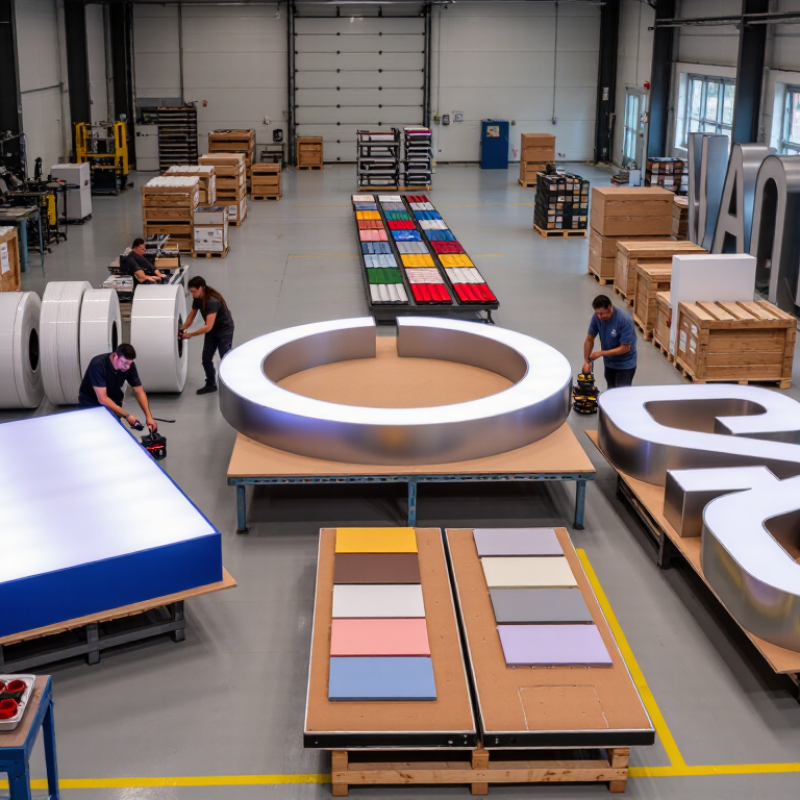
Table of Contents
[Hide]
2026 Best Sign Fabrication Services for Global Buyers
Choosing sign fabrication services for global projects starts with clear specifications, not attractive renderings. Share exact dimensions, artwork files, mounting details, and the viewing distance. Ask how the fabricator checks color consistency, edge quality, and letter alignment. Small sample panels can reveal issues that digital proofs miss. Ask about materials, too. Aluminum, acrylic, and illuminated components behave differently during transport and outdoor use.
Good communication matters across time zones. Request a named project contact, realistic production milestones, and written approval points. Ask for photographs of completed work and inspection records from comparable projects. Clarify packaging, crate dimensions, shipping terms, and who handles damage claims. Details like protective film on glossy faces can prevent avoidable scratches. A strong quote explains exclusions instead of hiding them. Vague timelines deserve a closer look.
Global buyers should confirm that proposed materials and installation methods suit the destination’s climate and local requirements. Salt air, intense sun, and freeze-thaw cycles can shorten a sign’s useful life. Ask for maintenance guidance and replacement-part availability before approving production. A polished sample can still hide a weak process. I would not judge a supplier by price alone; yet, comparing every detail takes time, and even careful planning cannot remove all shipping risks. Decide which trade-offs are acceptable before committing.
2026 Best Sign Fabrication Services for Global Buyers
| Sign fabrication service | Common fabrication methods | Common materials and components | Typical applications | What global buyers should verify |
|---|---|---|---|---|
| Illuminated channel letters | Metal or plastic letter fabrication, face and return assembly, LED installation, wiring, and testing | Aluminum, acrylic, LED modules, power supplies, and mounting hardware | Building façades, storefronts, and interior brand displays | Letter dimensions, illumination style, mounting details, local electrical requirements, and access for maintenance |
| Cabinet and lightbox signs | Frame fabrication, panel cutting, graphic application, internal lighting, and enclosure assembly | Aluminum or steel frames, acrylic or polycarbonate faces, graphics, and LED lighting | Retail façades, directories, transit locations, and indoor displays | Overall dimensions, face material, lighting access, wind exposure, installation method, and replacement-panel availability |
| Wayfinding and safety signs | Panel cutting, printing or engraving, finishing, and assembly of posts or mounting systems | Aluminum, acrylic, PVC sheet, engraved laminates, reflective films, and tactile elements where specified | Hospitals, campuses, offices, public facilities, parking areas, and industrial sites | Language and symbols, viewing distance, accessibility rules, sign schedule, reflectivity needs, and local safety requirements |
| Large-format graphics and banners | Digital printing, lamination where required, trimming, hemming, and grommet or rail finishing | Printable vinyl, banner textiles, mesh, adhesive films, and rigid print panels | Promotions, event graphics, window displays, vehicle graphics, and temporary construction signs | Print size, viewing distance, indoor or outdoor exposure, surface compatibility, color proofing, and finishing details |
| Monument and freestanding signs | Cabinet or panel fabrication, structural framing, finish application, and preparation for site installation | Aluminum, steel, acrylic, stone, masonry, and composite panels, depending on the design | Property entrances, campuses, commercial developments, and roadside identification | Site conditions, foundation and structural design responsibility, local permits, transport dimensions, and installation scope |
| Digital display housings and sign systems | Enclosure fabrication, display integration, ventilation or thermal management, cable routing, and mounting assembly | Metal enclosures, display panels, protective glazing, brackets, and electrical components | Information displays, retail messaging, transport information, and menu boards | Display supply responsibility, operating environment, service access, network requirements, and applicable electrical and environmental ratings |
| Custom metal and dimensional signs | CNC routing, laser cutting, waterjet cutting, welding, forming, finishing, and dimensional assembly | Aluminum, stainless steel, brass, acrylic, and other specified sheet or solid materials | Architectural lettering, plaques, reception signs, and custom interior or exterior features | Material grade, thickness, finish sample, edge quality, attachment method, and corrosion exposure |
| Project engineering, prototyping, and installation support | Drawing review, shop drawings, prototypes, packaging planning, installation documentation, and coordination with local installers | Depends on the sign type and project specification | Multi-site rollouts, complex custom signs, export orders, and projects requiring coordinated installation | Drawing approval process, prototype sign-off, export packaging, shipping terms, documentation, and division of installation responsibilities |
Selection note: Sign specifications, materials, electrical components, permits, and compliance requirements vary by design and destination market. Confirm project-specific requirements with the fabricator and the relevant local authorities before production.
Related Posts
-
What Are the Top Sign Fabrication Services in 2026?
-
What Are the 2026 Top Traffic Sign Materials?
-

10 Tips for Improving Transportation Safety Infrastructure
-
10 Best Work Zone Safety Products for Global Buyers
-
2026 Top Trends in Outdoor Signage Systems for Effective Branding Strategies?
-
What Are the 2026 Top Outdoor Signage Systems Worldwide?