
What Are the Best Pavement Marking Systems in China?
Choosing the best pavement marking systems in China requires more than comparing product prices. Roads face varied climates, traffic loads, maintenance schedules, and construction conditions. A marking that performs well on a dry urban avenue may fail on a wet mountain route. That assumption is too simple.
China uses several practical options, including solvent-based paint, waterborne coatings, thermoplastic markings, cold plastic materials, and two-component systems. Thermoplastic is common on busy roads because it offers strong visibility and reasonable wear resistance. Its application also depends on correct heating, surface preparation, and glass bead distribution. Waterborne paint can reduce odor and simplify application, but moisture and curing conditions need close control. Two-component materials often suit intersections, bike lanes, and areas requiring stronger durability. They cost more, though.
Real performance comes from the complete system. Engineers should examine retroreflectivity, skid resistance, film thickness, drying time, color stability, and nighttime visibility. A white lane line should remain clear after repeated braking, dust, rain, and winter treatment. Yellow markings need consistent color under headlights and street lighting. Field inspections matter. Small application errors can create early peeling or uneven bead coverage.
Project teams should verify products against applicable Chinese standards, design documents, and road authority requirements. Laboratory data helps, but site trials reveal practical weaknesses. Even experienced contractors can overlook drainage, pavement texture, or traffic reopening time. Therefore, the best choice is not always the most advanced material. It is the system that matches local conditions, installation skills, maintenance plans, and verified performance. Some decisions may still need revision after seasonal observation. That is good engineering.
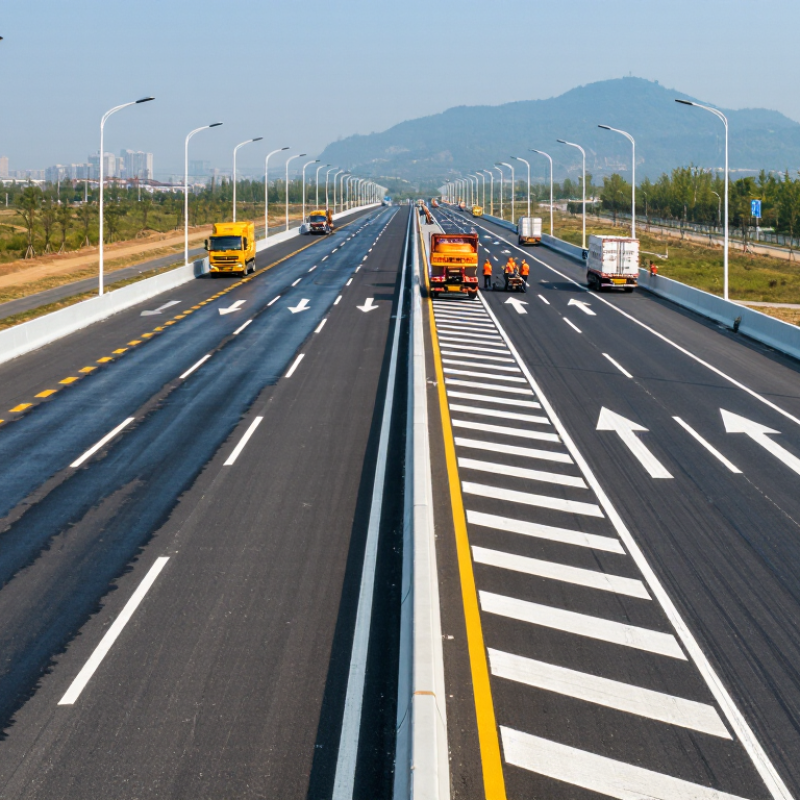
Table of Contents
[Hide]
Pavement Marking Systems Used in China
In China, pavement marking systems are selected by traffic volume, climate, road surface, and maintenance access. The most common urban and highway solution is hot-applied thermoplastic marking. It is heated, sprayed or screeded, then embedded with reflective glass beads. This system dries quickly and suits lane lines, arrows, zebra crossings, and edge markings. On busy expressways, contractors often specify thicker profiles where nighttime visibility and wear resistance matter. However, poor surface cleaning can cause early peeling. That lesson is easy to overlook.
Waterborne paint is widely used on municipal roads, parking areas, and projects with lower odor requirements. It offers simple application and shorter equipment preparation, but moisture and low temperatures can delay curing. Cold-applied coatings remain practical for small repairs and short-term traffic changes. Two-component reactive markings provide stronger adhesion and chemical resistance, making them useful at toll areas, intersections, and heavily trafficked approaches. They cost more and demand accurate mixing. Small ratio errors can create soft or brittle lines.
A reliable installation begins with field testing. Technicians check skid resistance, bead distribution, film thickness, drying time, and nighttime retroreflectivity. They also inspect drainage because standing water quickly exposes weak preparation. In northern regions, freeze-thaw movement changes the choice of binder and thickness. In coastal cities, salt and humidity deserve equal attention. The “best” system is therefore conditional, not universal. Site records should include weather, material temperature, application rate, and repair history. In practice, marking plans sometimes look perfect on paper but fail beside bus stops, where braking and turning are severe.
What Are the Best Pavement Marking Systems in China? - Pavement Marking Systems Used in China
| Pavement Marking System | Typical Application in China | Common Road Locations | Typical Service Life | Typical Drying or Curing Time | Traffic and Weather Resistance | Relative Cost | Main Advantages and Limitations |
|---|---|---|---|---|---|---|---|
| Hot-Applied Thermoplastic Marking | Widely used for standard lane lines, edge lines, arrows, symbols, and pedestrian crossings on urban and interurban roads. | Expressways, national and provincial highways, city roads, intersections, and parking areas. | Approximately 1–3 years under normal traffic conditions; heavy traffic and snowplow use may shorten service life. | Usually open to traffic after approximately 5–15 minutes, depending on thickness, pavement temperature, and weather. | Good wear resistance and strong compatibility with reflective glass beads; performance decreases when the pavement is wet, dirty, or heavily polished. | Medium | Fast application and a strong balance between cost and durability. Requires heating equipment and careful temperature control during installation. |
| Spray Thermoplastic Marking | Used where a thinner, smoother, and faster-applied thermoplastic layer is preferred. | High-speed roads, expressways, urban arterials, and large-scale maintenance projects. | Approximately 1–2 years, depending on traffic volume, film thickness, surface preparation, and aggregate texture. | Typically approximately 1–10 minutes after application in suitable conditions. | Good initial retroreflectivity and rapid installation; generally less durable than thicker structured or screed-applied thermoplastic on heavily trafficked surfaces. | Medium | Efficient for long continuous lines and mechanized work. Requires suitable pavement temperature and stable spraying equipment. |
| Water-Based Traffic Paint | Commonly selected for low- to medium-traffic roads, temporary markings, maintenance work, and projects with lower volatile-organic-compound requirements. | Urban streets, parking lots, bicycle lanes, residential roads, and temporary traffic-control areas. | Approximately 6–18 months, with substantial variation caused by traffic, rainfall, surface porosity, and cleaning operations. | Approximately 20–60 minutes for surface drying in favorable conditions; longer in humid or cool weather. | Lower resistance to abrasion, standing water, and frequent tire turning than thermoplastic and two-component systems. | Low | Low equipment and material cost with easier environmental management. Requires dry pavement and adequate drying time before traffic opening. |
| Solvent-Based Traffic Paint | Used for selected maintenance, temporary, and low-volume applications where rapid solvent evaporation is acceptable. | Urban roads, parking facilities, industrial yards, and short-term traffic management zones. | Approximately 6–18 months, depending on formulation, film thickness, traffic intensity, and pavement condition. | Approximately 10–30 minutes for initial drying under favorable conditions. | Generally better early moisture tolerance than water-based paint, but environmental and worker-safety requirements must be carefully managed. | Low to Medium | Fast initial drying and practical maintenance use. Emissions, storage, and application controls are more demanding than for water-based paint. |
| Two-Component Cold Plastic Marking | Used for durable lane lines, arrows, symbols, crosswalks, bus-lane markings, and areas requiring high resistance to turning and braking. | Intersections, bus stops, toll plazas, urban arterials, ramps, and high-friction zones. | Approximately 2–5 years, depending on traffic loading, aggregate exposure, thickness, and substrate preparation. | Typically approximately 20–60 minutes for traffic opening; full mechanical performance develops progressively after curing. | Very good abrasion, chemical, and weather resistance; can provide strong skid resistance when broadcast aggregate is used. | High | Long service life and good performance in high-stress locations. Material cost and application quality requirements are higher than for conventional paint. |
| Methyl Methacrylate Cold Plastic | Used where rapid curing and durable performance are required, especially during short maintenance windows. | Busy intersections, tunnels, ramps, bridge decks, airport pavements, and high-demand urban locations. | Approximately 2–5 years, subject to traffic, pavement movement, surface preparation, and formulation. | Often approximately 15–45 minutes, depending on temperature, catalyst ratio, layer thickness, and ventilation. | Excellent resistance to abrasion, low temperatures, moisture, and many chemicals; odor and application controls may be required. | High | Very fast return to traffic and strong durability. Higher material cost and stricter handling requirements limit use on routine low-cost projects. |
| Profiled or Structured Thermoplastic | Applied as raised, patterned, or structured markings to improve wet-night visibility, audible warning, and tactile feedback. | Expressway edge lines, lane-diversion zones, rumble-style warning lines, tunnels, and high-risk curves. | Approximately 2–4 years, depending on profile design, snowplow exposure, traffic volume, and pavement texture. | Usually approximately 5–20 minutes after cooling, depending on installation thickness and ambient conditions. | Improved water drainage from the marking surface and enhanced driver awareness; raised profiles may be vulnerable to mechanical damage in severe conditions. | Medium to High | Better wet-weather visibility and safety feedback than flat markings. Requires specialized application equipment and accurate thickness control. |
| Preformed Marking Sheets and Symbols | Used for precise symbols, arrows, legends, decorative traffic-calming patterns, and locations where uniform appearance is important. | Urban intersections, school zones, parking areas, bicycle facilities, toll facilities, and pedestrian crossings. | Approximately 1–3 years, depending on product type, bonding method, traffic stress, and pavement condition. | Adhesive-applied products can be opened to traffic shortly after installation; heat-applied products require cooling before traffic. | Good visual consistency and accurate shapes; durability is highly dependent on surface cleaning, bonding, and pavement texture. | Medium to High | Fast and accurate installation for complex markings. Material and installation costs are usually higher than those of painted or conventional thermoplastic lines. |
Note: Service-life, drying-time, and cost ranges are typical engineering estimates for Chinese road applications. Actual results vary with traffic volume, pavement type, climate, surface preparation, marking thickness, glass-bead application, maintenance frequency, and project specifications.
Related Posts
-
10 Essential Tips for Choosing the Right Pavement Marking Systems
-

What Are the Top Sign Fabrication Services in 2026?
-
2026 Best Traffic Engineering Solutions for Global Buyers
-
What Is Roadway Safety Equipment and Why Is It Important?
-
How to Choose the Right Reflective Traffic Signs for Your Needs?
-
10 Tips for Improving Transportation Safety Infrastructure